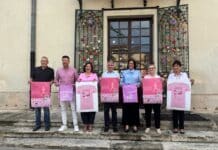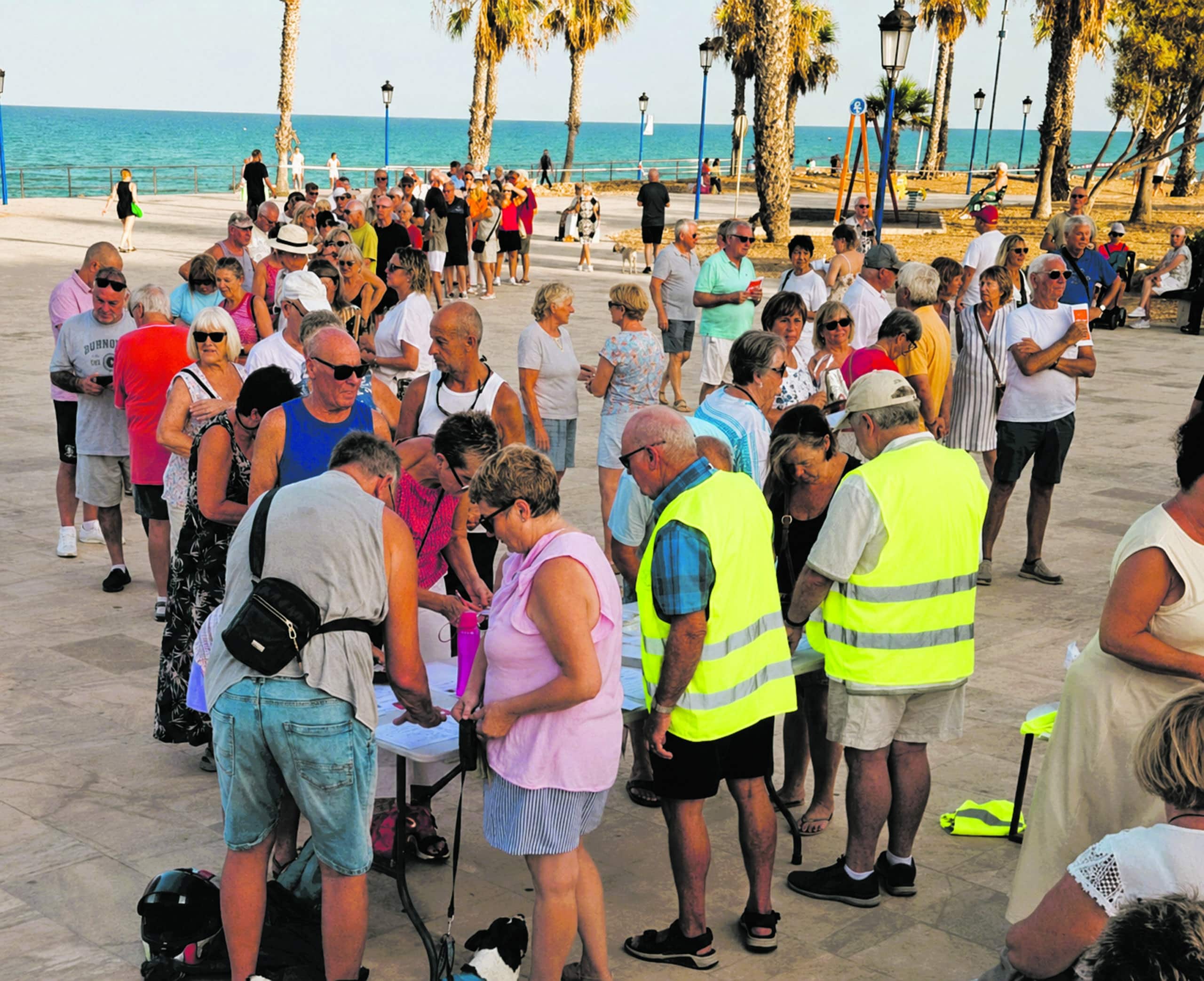
The Party for the Independence of Orihuela Costa (PIOC) has formally launched its campaign to separate the coastal area from Orihuela, collecting more than 800 signatures within hours.
The online petition will continue over the coming days, with organisers setting an ambitious target of 10,000 signatures. PIOC intends to submit a formal segregation dossier during the final quarter of the year.
The campaign was deliberately launched on July 30, a symbolic date in the Vega Baja. Los Montesinos became an independent municipality on that day in 1990, while Pilar de la Horadada secured its independence from Orihuela on July 30, 1986, following a 23-year campaign that began in 1963.
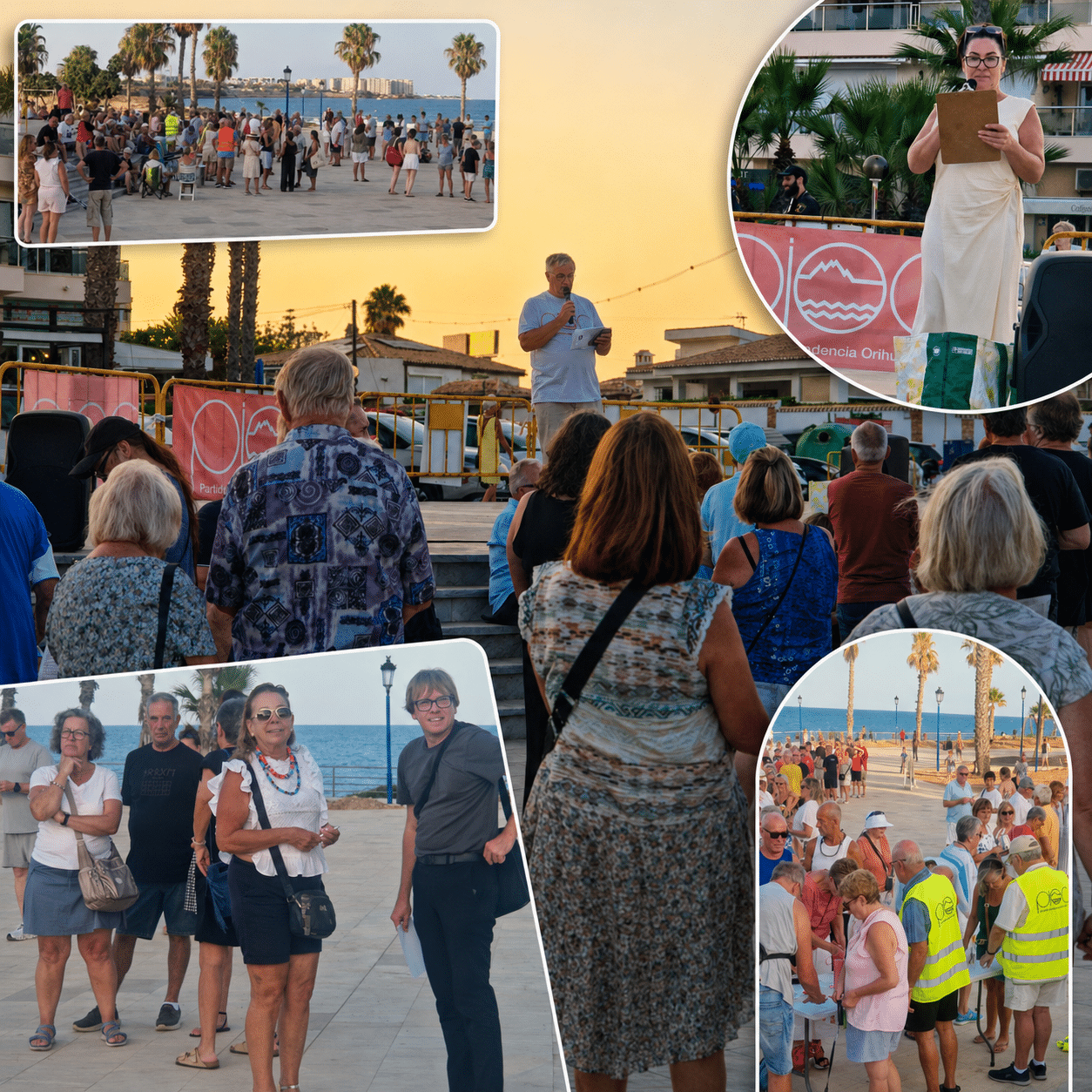
The launch took place beside the sundial on the Playa Flamenca esplanade, with organisers pointing to neighbouring Pilar de la Horadada as an example of how a community can prosper after taking control of its own future.
PIOC said the proposed segregation process would proceed with “serenity, legal rigour and full public participation”, arguing that Orihuela Costa has developed sufficiently to manage its own affairs.
Formal dossier planned
The segregation dossier will contain economic, demographic, geographical and historical reports setting out the reasons for creating a separate municipality. It will also explain how independence could be achieved and the legislation governing the process.
Once completed, the file must be submitted to both Orihuela City Council and the Valencian Regional Government.
PIOC acknowledges that the process will be difficult. Pilar de la Horadada submitted three separate applications for segregation between 1963 and 1986 before finally achieving independence.
The party also accepts that Orihuela City Council is likely to oppose the proposal. Its longer-term strategy is therefore focused on securing elected representation and eventually obtaining sufficient political support within the municipal council.
“Our greatest strength is the vote,” the party said.

PIOC topped the coastal vote
PIOC was the most popular party in Orihuela Costa during the 2023 municipal elections, although its support across the municipality was insufficient to secure a council seat.
Of the 3,464 votes cast in the coastal area, PIOC received 1,336, representing 38.6%. The PP secured 908 votes, the PSOE 420, Vox 388, Cambiemos 237 and Ciudadanos 175.
PIOC’s total was slightly higher than the combined 1,296 votes received by the PP and Vox, which currently govern Orihuela in coalition.
However, low voter participation remains a significant obstacle. Only 3,464 of the coast’s 7,069 registered voters cast a ballot, meaning approximately 51% did not vote.
Alongside its petition campaign, PIOC is therefore explaining to residents—particularly the area’s large foreign population—how to register and participate in municipal elections.
The party estimates that Orihuela Costa’s registered population is increasing by approximately 3,000 people annually and could exceed 60,000 within a decade. It claims the coast may soon have more residents than Orihuela city itself.
PIOC ultimately hopes to secure enough councillors to persuade the municipal plenary session to support segregation, which it believes would considerably accelerate the process.
Support from residents’ association
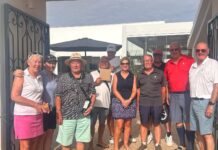
The independence campaign has also gained the backing of Unidos por la Costa, the largest residents’ association on the coast. However, the association must still submit its position for formal approval by its members at a general assembly.
Supporters argue that independence offers the best prospect of ending what they describe as years of underinvestment, administrative inefficiency and inadequate public services.
PIOC maintains that Orihuela has become too large and diverse to be managed effectively by a single administration. It says the historic city and the coastal area have fundamentally different needs, while successive councillors responsible for the coast have failed to deliver meaningful improvements.
Common complaints include major infrastructure projects that remain stalled for years, repeatedly announced schemes that are never implemented, delayed budgets and spending commitments that are not fulfilled.
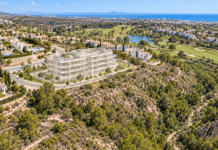
The resulting frustration has intensified as Orihuela Costa’s permanent population has grown beyond 30,000 without a corresponding expansion in essential services. Originally developed primarily as a tourist destination, the coast has become a substantial urban centre and one of the municipality’s principal sources of revenue.
PIOC has also opened discussions with residents of Torremendo, proposing that the village could join a future coastal municipality while retaining a degree of local autonomy. Similar conversations have taken place with residents of La Murada.
Opposition attacks coastal management
The independence campaign comes amid growing political criticism of the PP-Vox administration’s management of Orihuela Costa.
At Thursday’s council meeting, the PSOE presented a motion censuring the governing coalition’s record on the coast during its three years in office. Although the proposal was defeated by the coalition’s votes, it provided an early indication of the arguments likely to dominate the next municipal election campaign.
Socialist councillor Isidro Grao claimed Orihuela Costa was in a worse condition than when the coalition took office. He criticised the cost of maintaining the coastal councillor and advisers, which he placed at €170,000 annually and €680,000 over the full term, and called on Mayor Pepe Vegara to dismiss coastal councillor Manuel Mestre.
Ciudadanos councillor José Aix described Mestre as “the most incompetent councillor the coast has had”, while Cambiemos representative Quique Montero urged him to place greater pressure on his PP coalition partners.
Mestre defended his record by pointing to €10 million in investment. He argued that outstanding problems did not cancel out the work already completed and accused opposition parties of treating Orihuela Costa primarily as a source of electoral advantage.
Residents’ Group Could Add New Momentum to Orihuela Costa Independence Campaign
Sources close to AVCRL/Unidos por la Costa have told The Leader that the influential residents’ association could be moving closer to endorsing PIOC’s campaign for Orihuela Costa to become an independent municipality.
No formal decision has yet been announced, and any endorsement would first have to be discussed and approved by the association’s members at a general assembly. Nevertheless, cooperation between the two organisations could prove highly significant for the emerging independence movement.
The Party for the Independence of Orihuela Costa launched its latest campaign on July 30, a date chosen for its historical significance. Pilar de la Horadada achieved independence from Orihuela on that day in 1986, while Los Montesinos became a separate municipality on July 30, 1990.
PIOC says it collected more than 800 signatures within hours of launching an online petition and has set a target of 10,000. The party intends to prepare and submit a formal segregation dossier during the final quarter of the year.
That document is expected to contain demographic, economic, geographical and historical evidence supporting the creation of a new coastal municipality. It would ultimately be presented to Orihuela City Council and the Valencian Regional Government.
A potentially powerful alliance
An endorsement from AVCRL/Unidos por la Costa would not guarantee that segregation could proceed. However, it could substantially broaden the campaign and give it greater civic credibility.
PIOC provides the political organisation, electoral experience and institutional route needed to pursue independence. AVCRL, meanwhile, has an extensive record of campaigning over public services, infrastructure and municipal investment.
The residents’ association is led by María José Sánchez Crespo, who was elected president at its annual assembly in November 2025, succeeding Tomás Moreno Trancón. Its social-media platform has approximately 11,000 Facebook followers, giving it considerable reach among residents of different nationalities across the coast.
If the two organisations joined forces, the independence campaign could no longer be regarded solely as the political objective of one party. It could develop into a broader community movement bringing together political activists, residents’ representatives and people who have spent years campaigning for improved local services.
AVCRL’s involvement could also encourage residents who may not identify with PIOC—or any political party—to consider the arguments for creating a separate municipality.
Shared dissatisfaction
Although they are different types of organisation, PIOC and AVCRL have repeatedly highlighted many of the same problems.
These include inadequate refuse collection, poor street cleaning, insufficient road maintenance, overcrowded schools, delays to major infrastructure projects, shortages in health provision and the failure of public services to keep pace with the coast’s rapidly growing population.
Both have also criticised the long-running pattern of projects being announced but not completed, budgets arriving late and promised investments remaining unspent or delayed.
Orihuela Costa now has more than 30,000 registered residents, although the actual population is believed to be considerably higher. During the summer and other holiday periods, that figure rises dramatically.
Supporters of independence argue that the area has developed from a seasonal tourist destination into a large urban community with needs that differ substantially from those of Orihuela city and the municipality’s rural districts.
They also maintain that the coast generates significant municipal income but does not receive a proportionate level of investment or services.
Electoral implications
A partnership between PIOC and AVCRL could also have important electoral consequences.
PIOC received 1,336 votes in Orihuela Costa at the 2023 municipal elections, representing 38.6% of all coastal votes cast. This made it the most popular party on the coast, ahead of the PP, PSOE and Vox.
However, because council seats are allocated according to votes cast across the entire municipality, PIOC narrowly failed to gain representation in Orihuela City Council.
The other major obstacle was turnout. Only 3,464 of the coast’s 7,069 registered voters participated, meaning approximately 51% did not vote.
A joint campaign could therefore focus not only on independence but also on encouraging more residents to join the electoral register and vote. This would be particularly relevant among the coast’s substantial international population, many of whom may be entitled to participate in municipal elections but have not completed the necessary registration procedures.
Even a relatively modest increase in registration and turnout could improve PIOC’s chances of entering the council at the next election. Once represented in the plenary chamber, the party would have a formal platform from which to pursue the segregation process and challenge decisions affecting the coast.
Risks for the association
An endorsement would nevertheless require careful consideration by AVCRL members.
As a residents’ association, AVCRL has traditionally presented itself as non-partisan and focused on securing better services for the community. Supporting PIOC’s principal political objective could raise questions about that independent status.
Some members may strongly favour improved services, greater investment or enhanced local autonomy without supporting complete separation from Orihuela. Others may worry that association with a political party could make it more difficult for AVCRL to work with whichever parties control the City Council.
For that reason, any decision would need a clear democratic mandate from the membership. The association would also have to determine whether endorsement meant supporting the principle of segregation, cooperating on specific campaigns or entering into a more formal alliance with PIOC.
A turning point for the campaign
The immediate legal and administrative obstacles to independence remain substantial. Orihuela City Council would be unlikely to support losing the coastal area, its population and the revenue it generates. Any formal segregation proposal would also face detailed scrutiny by the Valencian authorities.
Even so, the political significance of an AVCRL endorsement should not be underestimated.
PIOC already demonstrated notable electoral support in 2023. AVCRL could bring greater community reach, an established campaigning network and detailed evidence of the problems residents experience.
Together, they could place the future governance of Orihuela Costa firmly at the centre of local political debate.
For now, AVCRL has made no formal announcement, and the final decision rests with its members. But if the association votes to support PIOC, it could mark the moment when the demand for independence moves beyond a single political party and becomes a much wider civic campaign.