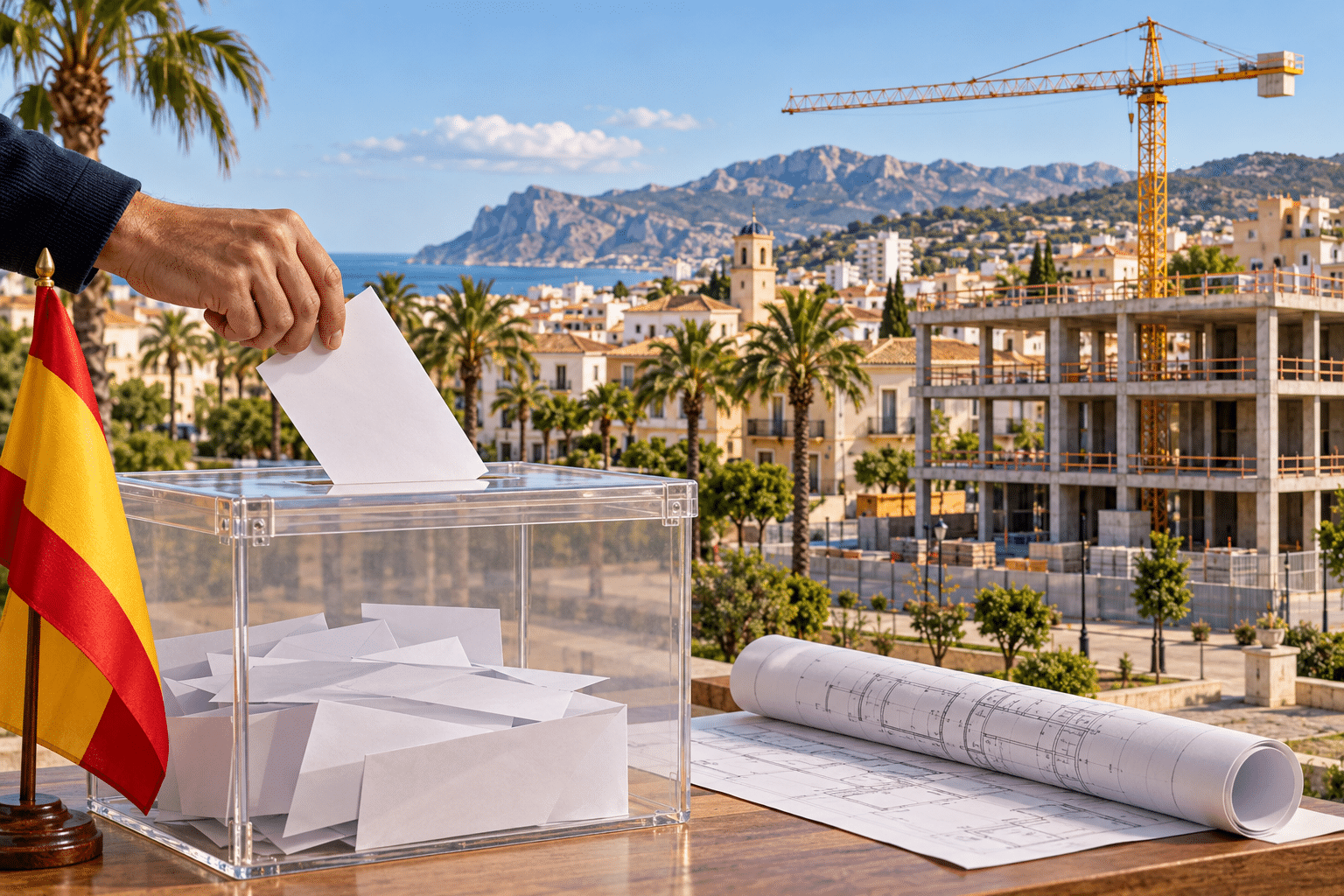
Spain will hold a snap general election on Sunday, 29 November, after Prime Minister Pedro Sánchez announced an early national vote. For residents across the Vega Baja, the campaign raises questions about public investment, long-awaited infrastructure and next year’s regional and municipal elections.
The dissolution of Congress and the Senate has also brought unfinished legislation to a halt, with most pending bills lapsing rather than simply being paused. Examples include proposals to ban smoking on bar and restaurant terraces, strengthen disability and dependency rights, protect children online and lower the maximum permitted alcohol level for drivers.
The planned cancellation of €83.25 billion in regional government debt has also fallen, leaving potential financial relief for autonomous communities unresolved. These measures would generally need to be reintroduced in the next parliament, creating further uncertainty over when—or whether—they will become law. Existing legislation remains in force.
However, a general election does not automatically halt building work or replace regional governments and town councils. November’s ballot elects Spain’s Congress and Senate. The Generalitat Valenciana and local authorities retain their responsibilities, budgets and existing mandates.
The greatest potential uncertainty concerns projects requiring fresh national funding, legislation or agreements with ministries. Following the election, the outgoing national government operates in a caretaker capacity until its successor takes office. Its powers are restricted, including a prohibition on approving a new draft state budget. Prolonged coalition negotiations could therefore slow major new commitments.
That does not mean public spending stops. Existing budgets can be extended automatically, while routine administration continues. Nevertheless, schemes awaiting additional allocations could face uncertainty over timing or priorities under the next government. This is a potential risk, rather than evidence that particular local projects have already been suspended.
Among the developments residents will be watching is Redován’s new health centre. The Generalitat has just awarded a €308,550 design and supervision contract, but construction, estimated at €4.1 million, requires a later tender. As a regional healthcare project, it is not automatically frozen by November’s national election; its progress depends primarily on regional funding and procurement.
Torrevieja’s proposed bus station is also at an early stage, with €200,000 allocated for planning and preliminary design. Future construction arrangements remain crucial, but the council’s planning work can continue through the national campaign.
The city’s Sea and Salt Museum is further advanced. Its contracting committee has proposed awarding the €16.67 million scheme to Abala, with European co-financing identified. Final award procedures still matter, but there is no confirmed election-related suspension in the information reviewed.
Election rules may change how projects are promoted. Public authorities cannot stage inauguration ceremonies or campaigns celebrating their achievements during the electoral period. Completed facilities can nevertheless enter service: restrictions on political publicity should not be confused with a construction ban.
Meanwhile, municipal elections remain scheduled for 23 May 2027, with Valencian regional elections also planned for that date. The national vote does not automatically bring either contest forward or postpone it. Any early Valencian election would require a separate regional decision.
Political preparations are already being affected. The PSPV-PSOE has announced the postponement of municipal candidate-selection primaries until after the general election, illustrating how national campaigning can disrupt local preparations without changing polling day.
November’s result could reshape party confidence, campaign priorities and alliances ahead of May. For residents, the practical test will be whether promised schemes have approved funding, completed designs and enforceable contracts. Those milestones offer a firmer guide to delivery than campaign announcements, particularly when successive elections place pressure on politicians to demonstrate visible progress before voters return to the polls again.