Torrevieja City Council has estimated the cost of constructing and installing the new stalls for the town’s craft market — popularly known as los hippies — at €3,545,488.
The new units are to be relocated to the port area, next to the new leisure complex, as part of the wider redevelopment of the waterfront. According to municipal technicians, the investment represents an average cost of around €32,800 per stall, including VAT, and the contract is expected to be completed within 12 months of signing. The project will be financed entirely by the city council.
The latest technical documentation places the number of stalls at 108, although sources close to the governing team said on Thursday that the tender specifications are currently being revised and that the final number may increase. The tender has not yet been formally launched or awarded, and the technical conditions remain under review.
Even so, the total number of stalls is expected to remain below the figure previously operating on the old Paseo de la Libertad before that seafront promenade was demolished as part of the port redevelopment. Before their temporary relocation to Avenida de la Estación, there were nearly 190 wooden stalls, although around 25 were said to have little or no commercial activity.
The future of the market has been the subject of political and public debate for several years. During the 2023 municipal election campaign, Mayor Eduardo Dolón said the number of stalls would not be substantially reduced. However, in the initial applications to the Generalitat for use of public space in the port area, projected revenue from occupancy fees was based on a much lower figure of around 100 stalls, a point later highlighted by the opposition.
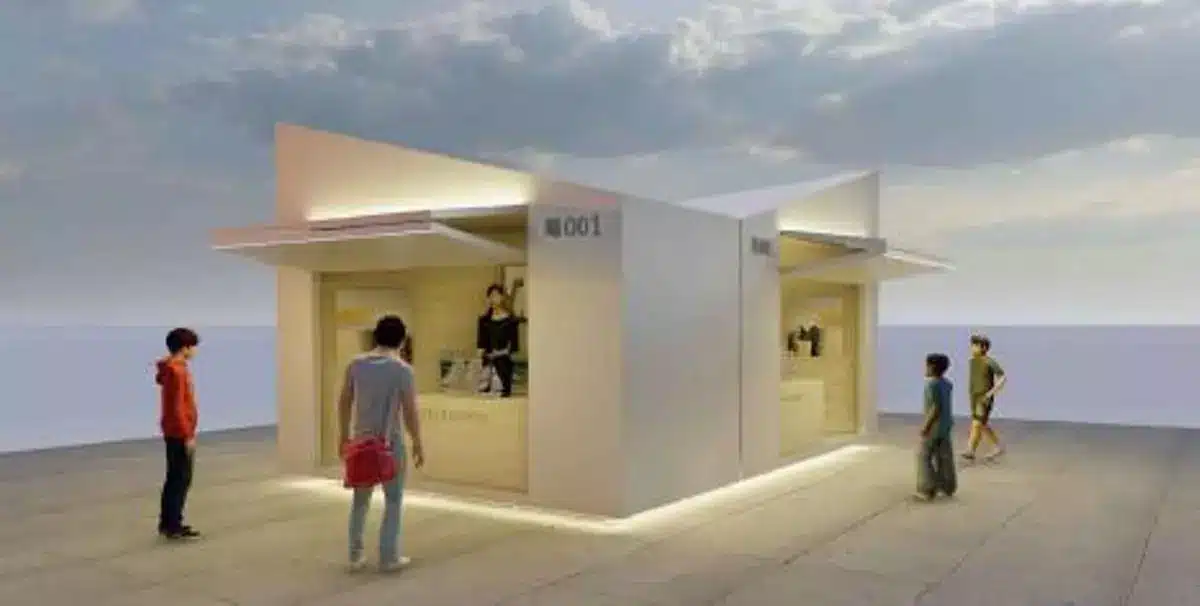
The new stalls have been designed in white, bearing the Torrevieja City Council logo and fitted with programmable LED lighting capable of changing colour. Built using cross-laminated timber and external cladding, they will include a tilting shutter that also functions as a canopy or pergola. Two basic models are envisaged, including a freestanding unit measuring four metres in length — the side open to the public — by two metres in depth, as well as larger two-, three- and four-unit configurations. The design has been produced by the architecture firm DRM.
The prefabricated structures will also require low-voltage electrical installation. The standard warranty period is set at three years, although bidders will be able to offer extensions of up to 54 months in order to secure a higher score during the tender process.
The final location of the stalls has also shifted several times over the past two years. Early proposals suggested they would be divided into three areas: around the Hombre del Mar monument, on the esplanade created where the old Paseo de la Libertad once stood, and near the Customs building and Mínguez quay. Later, the plan changed to concentrate them almost entirely around the Customs building, next to the large access ramp to the new leisure centre.
The latest proposal now envisages a split between two areas: part of the new open esplanade that will also host the funfair, and the area around the Customs building.
According to council sources, both the final location and the eventual number of stalls are being agreed in consultation with the traders, with several alternatives having been studied in recent months.
The investment also raises questions over future public occupancy fees. With the council making such a substantial outlay, businesses are not expected to continue paying the same rates as at present. Charges are likely to rise significantly, although final figures have yet to be set.
Before that can happen, the Generalitat must determine the fee payable by the council itself for use of the port land. The duration of the concession has also not yet been fixed. By way of comparison, the private operator of the new leisure complex has been granted a 50-year concession.
The council’s intention is for the revived market to focus strictly on genuine handcrafted products as defined by local ordinance, in order to preserve the quality and image of the new leisure and commercial area. The sale of clothing, T-shirts and mass-market tourist souvenirs is seen as incompatible with that objective.
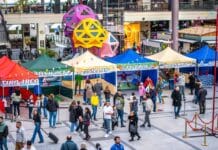
For now, the market remains temporarily installed on Avenida de la Estación, where traders report significantly lower takings than in their former seafront location. The council hopes the stalls will return to the city centre in 2026, coinciding with the expected return of the funfair, which this summer is entering its third season at Antonio Soria Park.
At present, traders at the temporary site see a notable rise in business only during the summer and during major events and festivals.