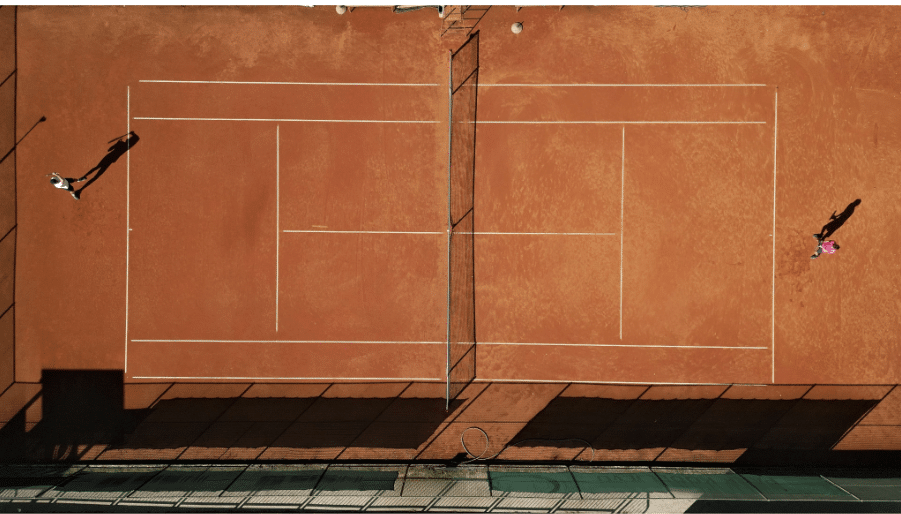
Anyone can sit down and watch a tennis match.
You follow the rallies, react to the big points, maybe notice who’s hitting harder or serving better, and by the end of it, you feel like you’ve understood what happened. One player was better, more consistent, more aggressive — simple enough.
But if you’ve watched enough tennis, you already know it’s rarely that simple.
Because tennis, more than most sports, hides a lot of its story beneath the surface. What looks like a straightforward win can come from very small margins, and what looks like a tight match can actually be controlled from start to finish by one player.
The difference between just watching and actually analyzing a match is not about knowing more terms or statistics. It’s about seeing how all the small details connect over time.
It’s not about one rally — it’s about patterns across the match
One of the biggest mistakes people make when analyzing tennis is focusing too much on individual points.
A great winner, an unforced error, a missed break point — those moments stand out, and they’re easy to remember. But they don’t tell the full story.
Tennis is a game of repetition.
A player doesn’t win because of one great shot. They win because they consistently create similar situations over and over again. Maybe they keep pushing their opponent wide on the backhand side. Maybe they dominate short rallies. Maybe they survive longer exchanges without making mistakes.
Those patterns are what decide matches.
And if you’re not paying attention to them, you’re missing the real game.
The scoreline can be misleading
You’ve probably seen matches that end 6–3, 6–4 and feel like they were close, and others that end 7–6, 7–6 but feel one-sided.
That’s because the score doesn’t always reflect control.
In tennis, a few key points can swing an entire set. A player might be under pressure for long stretches but still take their chances at the right moment. Another might dominate rallies but fail to convert break points.
So if you’re trying to analyze a match properly, the scoreline is only the starting point.
You need to look at how those games were actually played.
Serve is more than just power
A lot of people judge a player’s serve based on speed or aces.
But serving in tennis is much more subtle than that.
It’s about placement, variation, and how it sets up the next shot. A player might not hit many aces, but if they consistently put their opponent in a defensive position after the serve, they’re controlling the match.
On the other hand, a player can hit big serves but struggle in rallies if their opponent reads them well or returns effectively.
So when analyzing a match, don’t just look at how many points are won on serve — look at how those points are built.
Return games reveal more than service games
If you really want to understand a match, pay attention to return games.
Serving can hide weaknesses. A strong server can get through games quickly without revealing much. But when they return, you start to see how they handle pressure, how they construct points, and whether they can adapt to different situations.
A player who consistently creates break opportunities is often closer to winning than the score suggests, even if they haven’t converted them yet.
That’s the kind of detail that separates surface-level watching from deeper analysis.
Momentum in tennis is rarely random
People often talk about momentum in tennis like it’s something emotional or unpredictable.
But most of the time, it has a clear reason.
Momentum shifts usually happen because something in the match changes. A player adjusts their positioning, starts targeting a different area, or simply becomes more consistent in longer rallies.
When you notice that shift, the match starts to make more sense.
Instead of thinking “the match suddenly changed,” you start seeing why it changed.
Surface matters more than people think
Tennis is unique because the same players can look completely different depending on the surface.
Clay slows the game down, favors longer rallies, and rewards patience. Grass speeds everything up and puts more pressure on serve and quick points. Hard courts sit somewhere in between but still vary depending on conditions.
So analyzing a match without considering the surface is incomplete.
A player who struggles on clay might look unbeatable on grass. Another who thrives in long rallies might find it difficult to adapt to faster courts.
Understanding how surface affects style is essential if you want to read matches properly.
Physical condition shows in subtle ways
Unlike team sports, tennis exposes everything.
There’s nowhere to hide.
If a player is slightly tired, slightly slower, or slightly less sharp, it shows over time. Maybe they’re a step late to the ball, maybe their serve drops a bit in speed, maybe they take fewer risks.
These changes are rarely obvious in one or two points, but across a set or a match, they become clear.
That’s why analyzing tennis isn’t just about technique — it’s also about recognizing physical patterns.
Mental strength is not just about big points
People often define mental strength by how a player handles break points or tie-breaks.
But it’s broader than that.
It’s about consistency in decision-making, staying patient when things aren’t going your way, and not overreacting to mistakes. A player who keeps playing the same solid game plan under pressure is often stronger mentally than one who produces a few big moments but struggles in between.
When you analyze a match, look at how players react after losing points, not just when they win them.
Head-to-head matters — but not always in the way you think
Head-to-head records can be useful, but they need context.
A player might have a strong record against another because of favorable conditions, surfaces, or past form. But if those conditions change, the relevance of that record can decrease.
So instead of just looking at numbers, think about why one player has had success before. Was it the style matchup? The surface? The timing?
That’s where the real insight is.
Why modern analysis goes beyond what you can track manually
At some point, there’s simply too much to keep track of.
Matches happen every day across different tournaments, surfaces, and conditions. Even if you watch a lot of tennis, it’s impossible to remember every pattern, every performance, every small detail that might matter later.
That’s where platforms like TennisPredictions.ai come into play in a natural way.
They don’t replace watching tennis.
They help connect everything you’ve seen into something clearer.
It’s about seeing consistency, not just results
What these platforms do well is highlight repetition.
Instead of focusing on one match, they look at how players perform over time. Which situations they handle well, where they struggle, how their performance changes depending on conditions.
That kind of perspective is difficult to build on your own, especially across multiple tournaments.
And once you start seeing those patterns, analyzing matches becomes more structured.
Good analysis doesn’t mean perfect predictions
It’s important to understand that even the best analysis won’t make tennis predictable in a simple way.
There will always be surprises.
Upsets, unexpected performances, matches that don’t follow any clear logic — that’s part of the sport. But good analysis reduces the number of surprises that feel completely random.
You start to understand why something might happen, even if it doesn’t always go that way.
It becomes part of how you watch tennis
Once you get used to analyzing matches properly, you don’t stop enjoying them.
If anything, you enjoy them more.
Because even in matches that seem straightforward, you start noticing the small battles — the adjustments, the patterns, the moments where control shifts from one player to another.
It adds depth to what you’re watching.
The difference is in how you connect the details
In the end, analyzing a tennis match properly isn’t about memorizing statistics or following a fixed method.
It’s about connecting details.
Seeing how serve affects rallies. How surface affects style. How patterns develop across sets. How players react to pressure and adapt over time.
Once you start linking those elements together, the match stops being a sequence of points.
It becomes a story.
Conclusion
Tennis looks simple on the surface, but the more you watch it closely, the more layers you start to notice.
Proper analysis comes from stepping back and seeing beyond individual moments — understanding patterns, context, and consistency over time.
You don’t need to overcomplicate the game.
You just need to look at it a little differently.
And once you do, every match starts to reveal more than it did before.