Spanish rescue teams saved 44 survivors after locating the vessel south-west of Gran Canaria, but accounts from those on board suggest that 83 people, including three women and a baby, died during the crossing.
More than 80 people are feared to have died after a migrant boat spent 27 days drifting across the Atlantic before being located south-west of the Canary Islands.
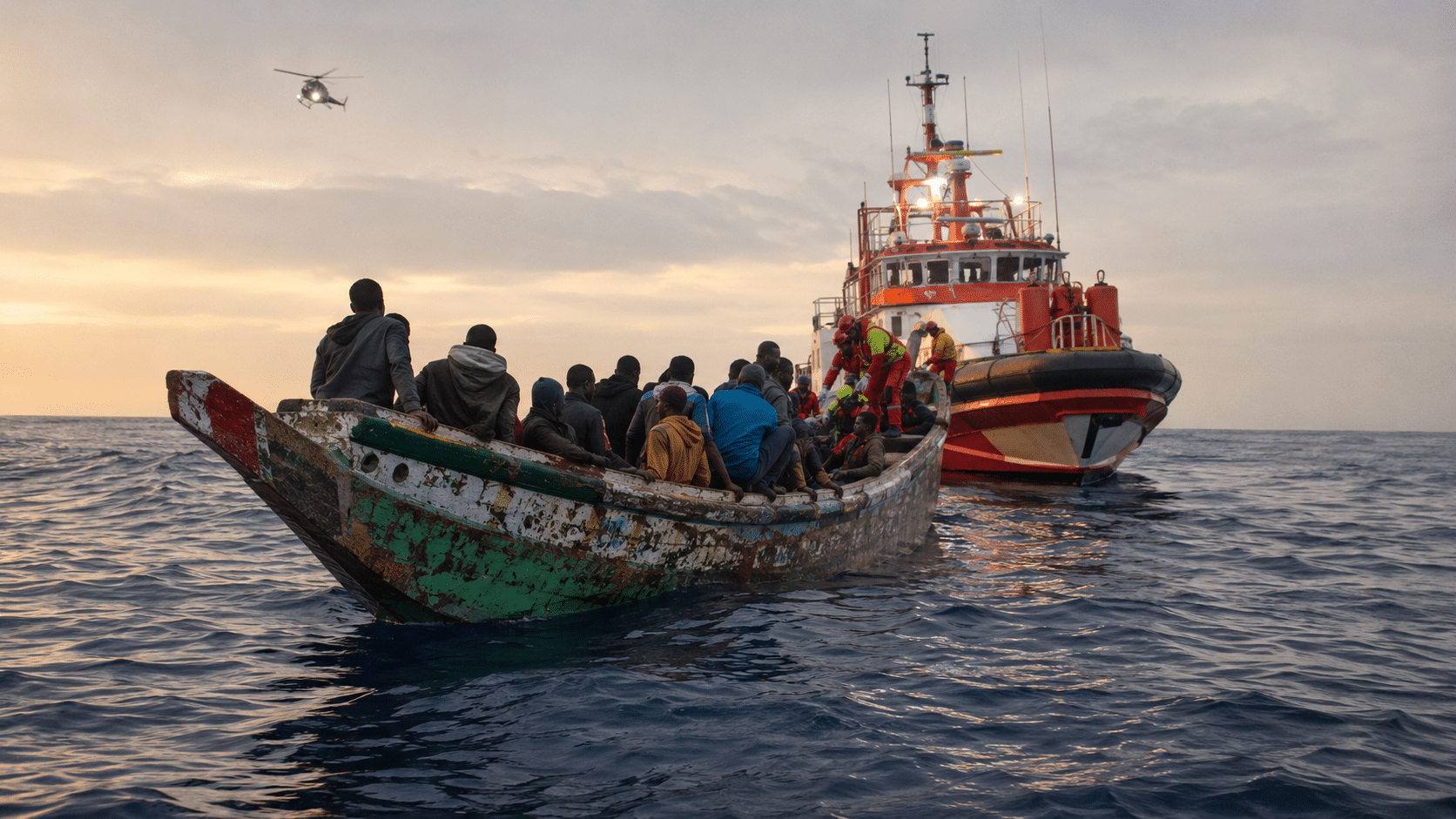
Spain’s Maritime Rescue Service saved 44 people and found five bodies aboard the vessel, although severe sea conditions prevented rescue crews from recovering the dead.
The boat was spotted by a Maritime Rescue aircraft at about 6.40pm on Wednesday, around 65 nautical miles—or approximately 120 kilometres—south-west of Arguineguín, Gran Canaria.
The rescue ship Guardamar Urania reached the stricken vessel around midnight. Three survivors in a serious condition were airlifted to hospital, while the remaining 41 were taken by sea to the port of Arguineguín during the early hours of Thursday.
Several were reportedly so weak that they were barely able to stand after reaching land. Emergency and Red Cross teams treated survivors for severe dehydration, disorientation and symptoms associated with drinking seawater.
Six people required hospital treatment, including two who had suffered injuries.
Five male bodies remained aboard the migrant boat when rescuers arrived. Maritime Rescue said rough seas and heavy swells made it impossible to retrieve them while crews concentrated on saving those still alive.
Although authorities have so far confirmed five deaths, testimony gathered from survivors points to a far greater tragedy. The migrant support organisation Caminando Fronteras—known internationally as Walking Borders—said those rescued reported that 83 people had died during the voyage, including three women and a baby.
According to the organisation, the markings on the wooden canoe corresponded with a vessel that left The Gambia on August 7 carrying 127 people.
Some of those who died were reportedly placed overboard during the journey while the remaining passengers still had enough strength to do so. The five bodies discovered aboard the boat are understood to have been those of people who died during the final stages of the ordeal.
The survivors were all men from West Africa, although reports differed over their precise nationalities. Authorities were continuing to identify and interview those rescued.
The disaster has again highlighted the extreme dangers of the Atlantic migration route linking West Africa with the Canary Islands. Boats depart from countries including Morocco, Western Sahara, Mauritania, Senegal and The Gambia, with some journeys covering more than 1,600 kilometres of open ocean.
The vessels used are frequently overcrowded and poorly equipped, with limited fuel, food, drinking water or navigational equipment. Strong currents can carry boats far out into the Atlantic, leaving passengers stranded beyond established shipping routes and making them extremely difficult to locate.
Deaths are also believed to be substantially undercounted because some boats disappear without ever being found. Caminando Fronteras estimated that 3,090 people died or disappeared on migration routes from north-west Africa to Spain during 2025, with the Atlantic accounting for most of the fatalities.
The latest tragedy comes despite a sharp fall in the number of people reaching the Canary Islands from West Africa during 2026. Official figures indicate that arrivals have fallen by more than half compared with the corresponding period last year, but humanitarian organisations warn that fewer crossings do not necessarily make the route less deadly.
Canary Islands president Fernando Clavijo renewed his call for a coordinated national migration policy following the rescue.
He said the islands could not accept as normal a situation in which the Atlantic continued to claim the lives of people attempting to reach Spanish territory.