
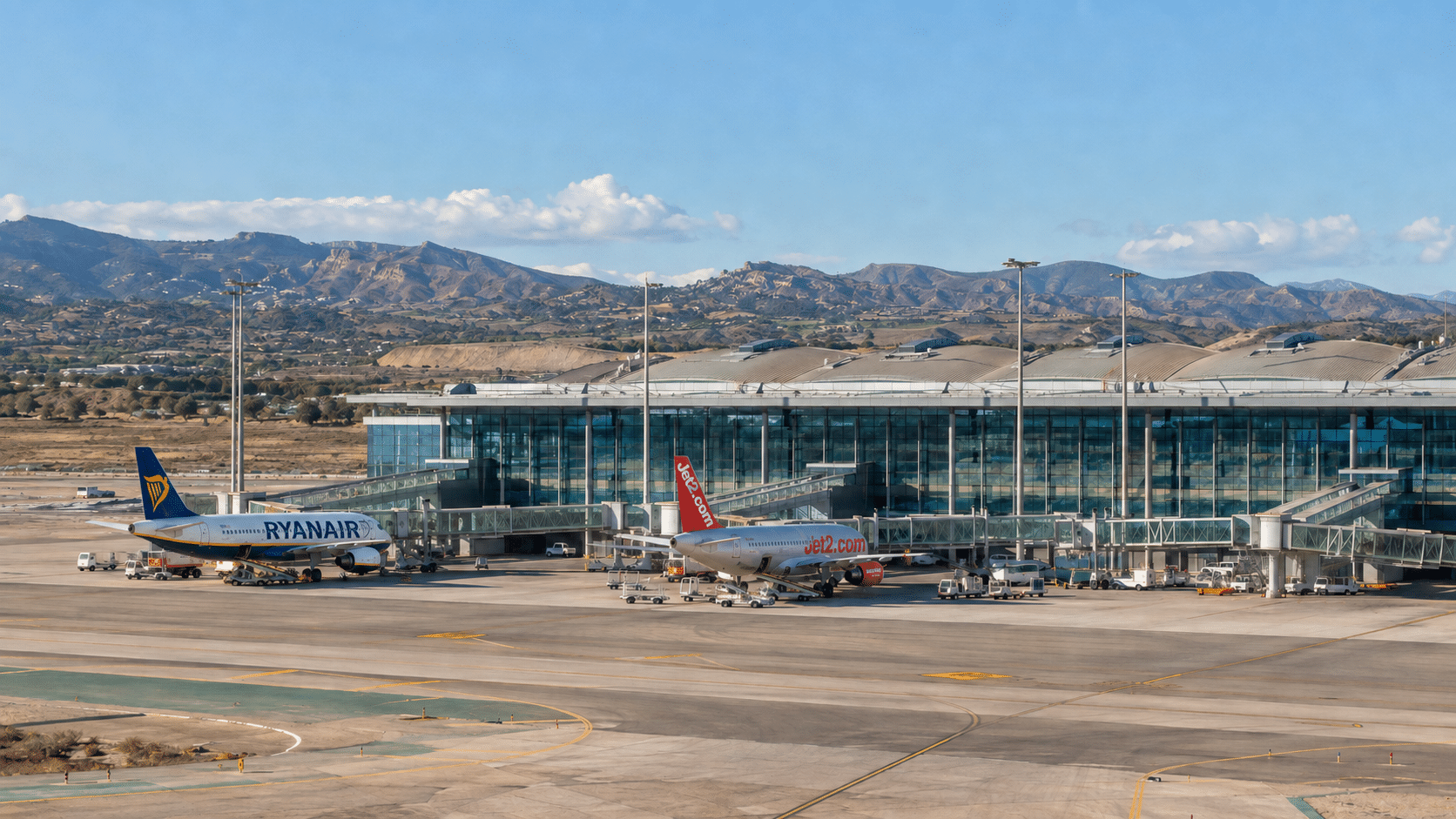
Spain’s Transport Minister has rejected renewed calls for a second runway at Alicante-Elche Miguel Hernández Airport, insisting that investment should instead focus on expanding the terminal and improving passenger facilities.
Óscar Puente said constructing another runway “makes no sense” and welcomed the fact that the proposal had previously been abandoned.
According to the minister, Alicante-Elche does not currently need additional runway capacity. Its priorities should be a larger terminal, improved taxiways and more boarding bridges linking the terminal directly to aircraft.
Puente was responding to demands from the Valencian Government, which has repeatedly urged Madrid to approve a second runway in response to the airport’s rapid growth.
The regional administration argues that additional capacity is required after Alicante-Elche handled more than 19.9 million passengers in 2025, an annual increase of 8.5 per cent. It also wants the airport to be able to compete on similar terms with other major tourism hubs, including Málaga.
However, Puente maintained that the greatest pressure is being felt inside the terminal rather than on the runway. Investment, he said, should therefore concentrate on improving the experience of passengers and making airport operations more efficient.
The minister said the Spanish Government expects around €13 billion to be invested across the country’s airport network between 2027 and 2030.
The programme is intended to increase capacity, modernise facilities and make journeys more comfortable for passengers. Puente described the planned spending as a major investment programme covering numerous airports over the next three years.
He contrasted Alicante’s requirements with the situation at Adolfo Suárez Madrid-Barajas Airport, where he acknowledged that the terminal facilities are already approaching saturation.
Barajas is expected to undergo a major transformation, including the construction of an annex building for passport controls and the closer integration of terminals T1, T2 and T3.
Puente said moving some security and passenger-control operations into a neighbouring building would allow the three terminals to operate in a more coordinated and efficient manner.
Plans also include extending Terminal 4 by approximately 500 metres.
The minister said different airports require different solutions, with investment determined by their individual operational needs. Work is also being planned at Barcelona-El Prat, where additional runway capacity is considered a more pressing issue.
For Alicante-Elche, however, the government’s position remains clear: the priority will be expanding and improving the existing terminal, adding boarding bridges and upgrading ground operations—not building a second runway.


