Smoke from major wildfires burning across central Spain has pushed Torrevieja’s air quality into the “very unfavourable” category, prompting the city council to issue health advice to residents and visitors.
Fine particles suspended in the atmosphere rose well above recommended levels on Sunday morning, according to readings from the Generalitat Valenciana’s air-quality monitoring station in Torrevieja, reported by local weather service Proyecto Mastral.
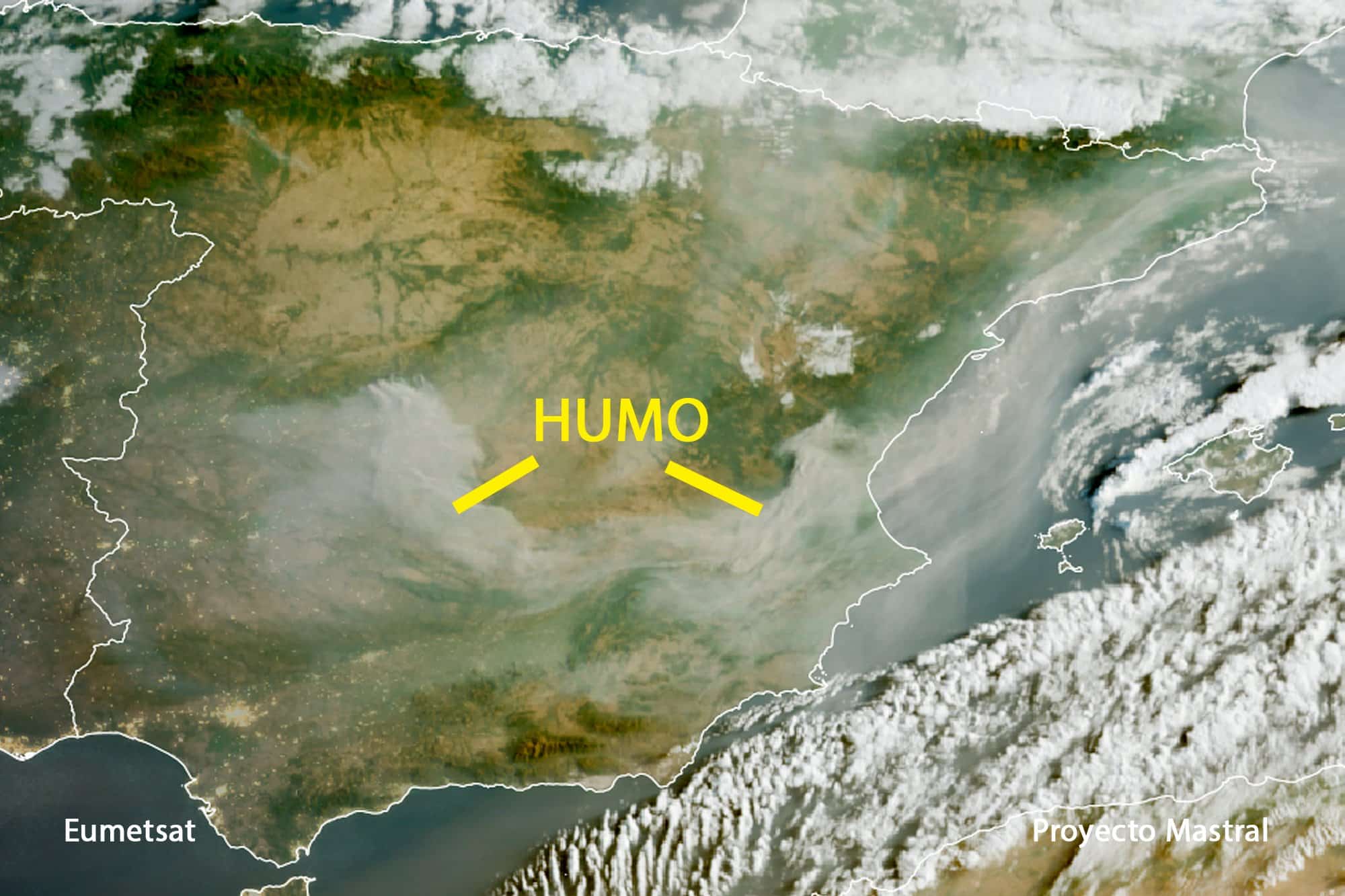
The deterioration came just as the dense Saharan haze that had covered much of Alicante province for more than two weeks was expected to clear. Instead, westerly winds carried smoke from fires affecting extensive areas of forest in Madrid, Ávila and Toledo towards the Costa Blanca.
The fires have reportedly forced thousands of people to evacuate or remain confined to their homes.
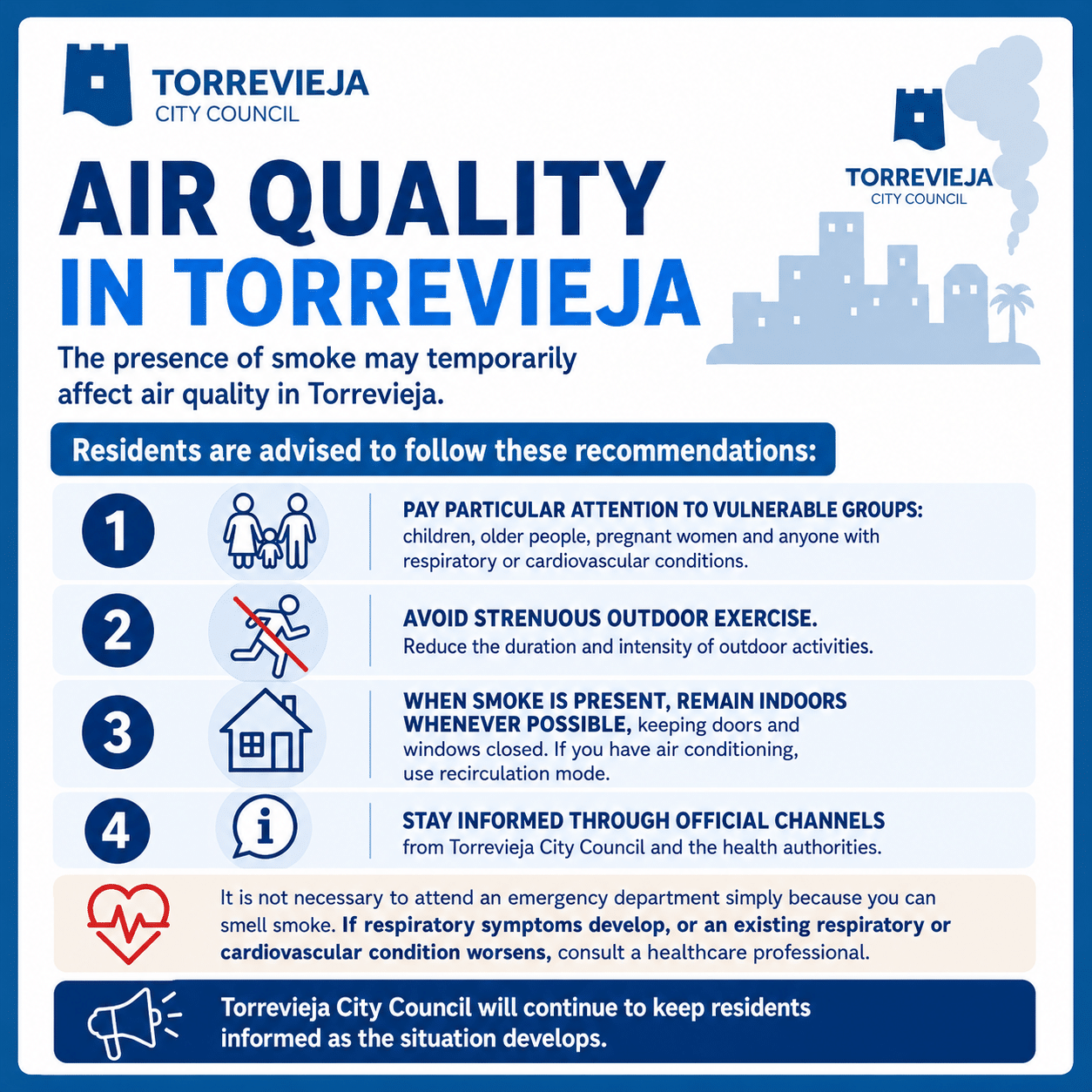
At around 10.30am, Torrevieja City Council issued a public warning, describing the pollution as a potentially temporary episode but urging people to take precautions, particularly those considered most vulnerable.
The council advised residents to avoid strenuous exercise and outdoor sports and to limit the amount of time spent outside until conditions improve. Where smoke is noticeable, people should remain indoors and keep doors and windows closed.
Air-conditioning systems should be operated in recirculation mode to prevent outside air from entering. Residents are also advised to drink water regularly and avoid smoking or creating other sources of indoor pollution.
Anyone who must go outside when smoke levels are high should consider wearing a properly fitted FFP2 mask.
The council stressed that smelling smoke alone is not a reason to attend a hospital emergency department. However, medical advice should be sought if respiratory symptoms develop or if an existing heart or lung condition worsens.
Fine particles drive pollution alert
At 7am on Sunday, the monitoring station recorded a European Air Quality Index rating of “very unfavourable”.
The principal pollutant was PM2.5—extremely fine particles measuring no more than 2.5 micrometres in diameter—which reached 57 micrograms per cubic metre.
These particles are considered particularly concerning because they can travel deep into the lungs. They are commonly produced by combustion, traffic, industry and wildfires, although they may also be carried over long distances by atmospheric conditions.
Levels of the larger PM10 particles were also elevated, reaching 61 micrograms per cubic metre. PM10 pollution can be linked to suspended dust, construction activity, road traffic, Saharan dust intrusions, sea aerosols and particles stirred up by the wind.
In this case, the combination of wildfire smoke and the lingering haze was considered responsible for the sharp decline in air quality.
Tropospheric ozone, or O3, was measured at 60 micrograms per cubic metre. Although ozone can become problematic during hot and sunny weather, Sunday’s reading remained below levels of immediate concern.
Nitrogen oxide concentrations were also low, indicating that the episode was not primarily caused by vehicle traffic, port activity or other local combustion sources.
The Torrevieja monitoring station is located beside the CV-905, close to the fire station. While its readings confirmed elevated particulate pollution, an individual measurement cannot by itself establish the precise source.
A similar episode affected southern Alicante province exactly a year ago, when smoke from devastating wildfires in southern Catalonia produced an even denser haze, turned the sky orange and brought a strong smell of burning to the area.
Torrevieja City Council said it would continue monitoring the situation and provide further information as air quality develops.