Authorities in Torrevieja are urgently searching for the driver of an electric scooter who struck a 69-year-old man and fled the scene, leaving the victim critically injured and clinging to life in the ICU.
The brutal incident took place during daylight hours on a street in the coastal municipality. According to sources, the man was walking when he was violently hit by a high-speed electric scooter. The rider made no attempt to stop or help—vanishing before emergency services arrived.
The victim, who suffered severe brain trauma, was rushed to Elche General University Hospital, where he remains in a critical condition in intensive care. His prognosis is uncertain.
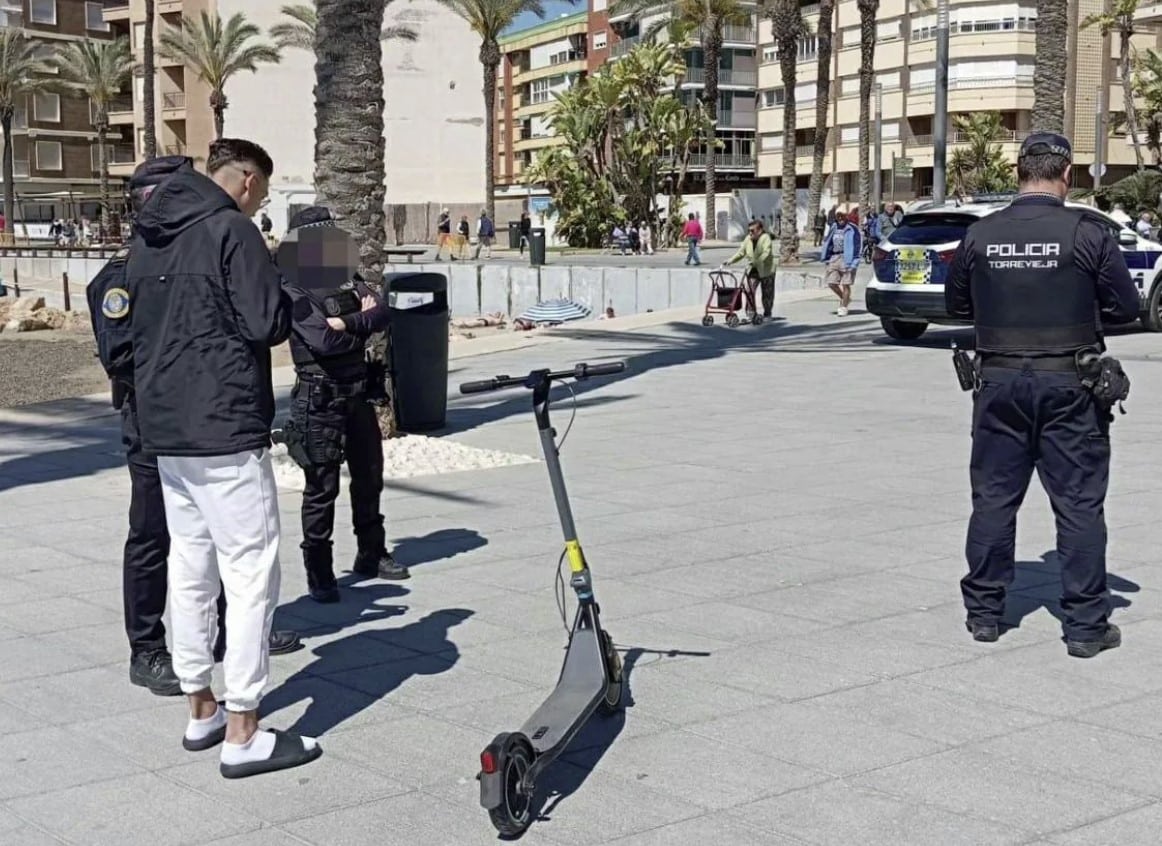
Local police have launched a full investigation and are scouring CCTV footage and eyewitness accounts in a bid to track down the fugitive rider. The scooter operator faces potential charges of serious negligent injury and failure to render aid—both criminal offenses under the Spanish Penal Code. If convicted, the driver could face up to a year behind bars, in addition to aggravated penalties for fleeing the scene of a crash.
The incident has reignited public anger in Torrevieja, a popular tourist destination where electric scooters have exploded in popularity—and controversy. Residents are voicing growing frustration over the lack of enforcement as PMVs (Personal Mobility Vehicles) increasingly dominate sidewalks and pedestrian zones, often without registration, insurance, or accountability.
“This was an accident waiting to happen,” said one local resident. “These scooters fly past you at dangerous speeds, and nobody seems to be in control—certainly not the authorities.”
Across the province, the dangers of unregulated scooter use are becoming harder to ignore. In response to rising safety concerns, Alicante City Council began a campaign in April to monitor scooter speeds. Since January, over 8,300 checks have been carried out, revealing more than 5,500 infractions—including 630 fines for exceeding the 25 km/h speed limit.
This latest hit-and-run has become a flashpoint in the wider debate over urban mobility and safety. While electric scooters offer a sustainable alternative to cars, critics argue the rush to adopt them has outpaced regulation, endangering pedestrians and leaving victims like the man in Torrevieja with little recourse.

As police continue their search, pressure is mounting on local officials to impose stricter controls—and ensure that those who turn city streets into danger zones are held accountable.
Torrevieja currently lacks formal municipal legislation specifically regulating electric scooters, creating a legal gray area that complicates enforcement and rider safety. While national laws from Spain’s Directorate-General for Traffic (DGT) apply—such as speed limits, sidewalk bans, and certification requirements—the town has not yet implemented local rules mandating helmet use, insurance, or designated parking zones.
This absence of detailed regulation contributes to several dangers. Scooters are often driven by minors, used without helmets, or parked carelessly on paavements, obstructing pedestrians and those with disabilities. Additionally, many riders ignore traffic signals or ride in inappropriate areas.
These behaviours increase the risk of accidents involving pedestrians, cars, or other scooters. Despite active police enforcement and rising fines, the lack of clear municipal guidelines hinders consistent application of safety standards.
Calls from local political groups for structured ordinances, safety education, and stricter controls remain ongoing, but legislation has yet to be finalized or implemented.