An earthquake off Russia’s Kamchatka Peninsula last week, measuring a massive 8.8 on the Richter scale, sent tsunami waves racing across the Pacific. They slammed into Japan’s coastline and reached as far as the western United States. As sirens wailed and coastal cities evacuated, the world was once again reminded that tsunamis are not relics of the past—they’re very much a present and growing threat.
For Spain, often seen as a haven of calm blue waters and sunny beaches, the idea of a tsunami may feel far-fetched. But history—and science—suggest otherwise. In fact, experts now warn that the odds of a Mediterranean tsunami hitting Spanish shores within the next 30 years are not just likely—they’re certain.
The last major tsunami to strike the Iberian Peninsula occurred on November 1, 1755. On All Saints’ Day, an enormous earthquake rocked Lisbon, Portugal. The tremors triggered a massive wave that crashed into the southern coast of Spain, devastating cities like Huelva and Cádiz. It’s a catastrophe still etched into regional history, and one that serves as a grim warning for the future.
According to UNESCO’s Intergovernmental Oceanographic Commission, there’s a 100% probability that a tsunami of at least one metre in height will strike the Mediterranean within the next 30 to 50 years. This alarming prediction is backed by studies of Spain’s seismic zones, historical tsunami activity, and the complex network of fault lines beneath the sea.
What to Do If a Tsunami Strikes
Spain has had a State Plan for Tsunami Risk in place since May 2021. This includes an early warning system designed to alert emergency services and local authorities in the event of an incoming wave. Their task is to notify the public and initiate evacuations as quickly as possible.
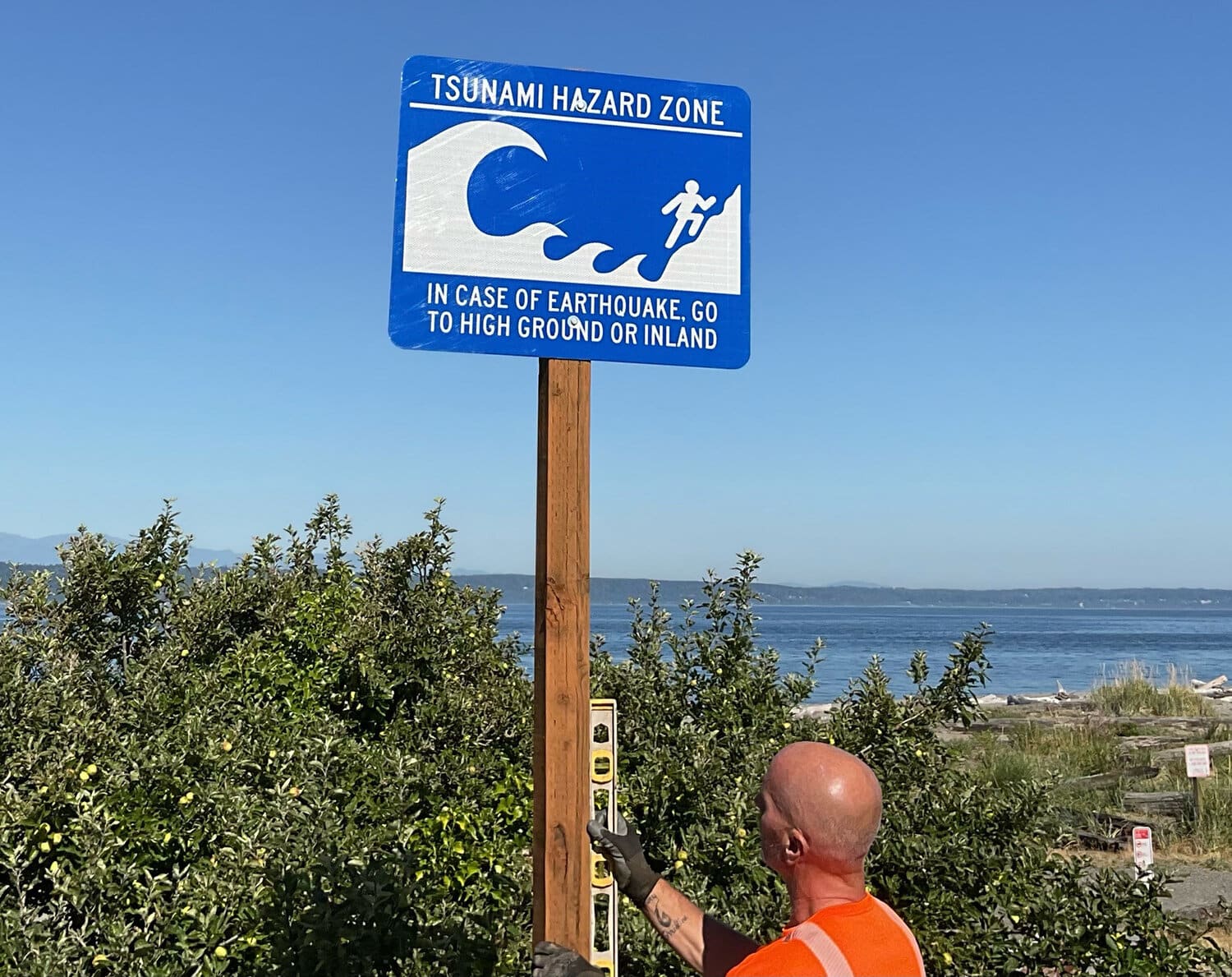
If you’re ever caught near the coast when a tsunami warning is issued—or if you feel a strong earthquake—follow three essential steps: remain calm, get away from the water, and move inland or to higher ground immediately.
Speed is everything. Authorities are working to ensure no one is caught off guard, but it’s vital that individuals know the signs and act without hesitation. A key part of tsunami survival is recognizing natural warnings, such as the rapid retreat of ocean water from the shore or a violent earthquake that feels “different” from a typical tremor.
Spain’s highest-risk areas lie along the Andalusian coast, particularly around Huelva and Cádiz, according to data from the European Tsumaps Neam project. These regions could have as little as 45 minutes to an hour between the initial quake and the tsunami’s arrival.
Signs and Survival Tips
The National Geographic Institute has published life-saving guidance in the event of a tsunami. If you’re on the beach and feel a strong earthquake, or if the water suddenly recedes, don’t wait for an official warning. Move quickly to a higher elevation—ideally the third floor of a solid building or higher. Stay away from rivers, estuaries, and low-lying areas.
If you’re on a boat when a tsunami is approaching, sail toward deeper water rather than trying to dock, where the wave’s impact will be far more dangerous.
Technology and Early Warning Systems
Spain isn’t waiting for disaster to strike. In cooperation with Portugal, the Royal Naval Observatory and the National Geographic Institute (IGN) are developing Alertes-SC3, a pioneering early-warning system. It detects the first, less-destructive seismic waves—known as P waves—and sends alerts before the more dangerous S waves and any resulting tsunamis arrive.
This system is bolstered by a vast network of sensors and seismometers across land and sea, particularly near the Gulf of Cádiz. In March 2025, the Spanish government approved a sweeping National Plan for Monitoring Seismic, Volcanological, and Geophysical Phenomena. Coordinated by the IGN and supported by 54 scientific organizations, the plan aims to modernize detection systems, improve public communication, and build resilience across coastal communities.
The Bottom Line
Tsunamis in Spain are rare—but not impossible. History has proven their destructive potential, and scientists now agree it’s only a matter of time before another wave hits. The best defense is awareness and preparation. Know the warning signs. Trust the official alerts. And when the time comes, don’t wait—move quickly, and get to higher ground. It could save your life.