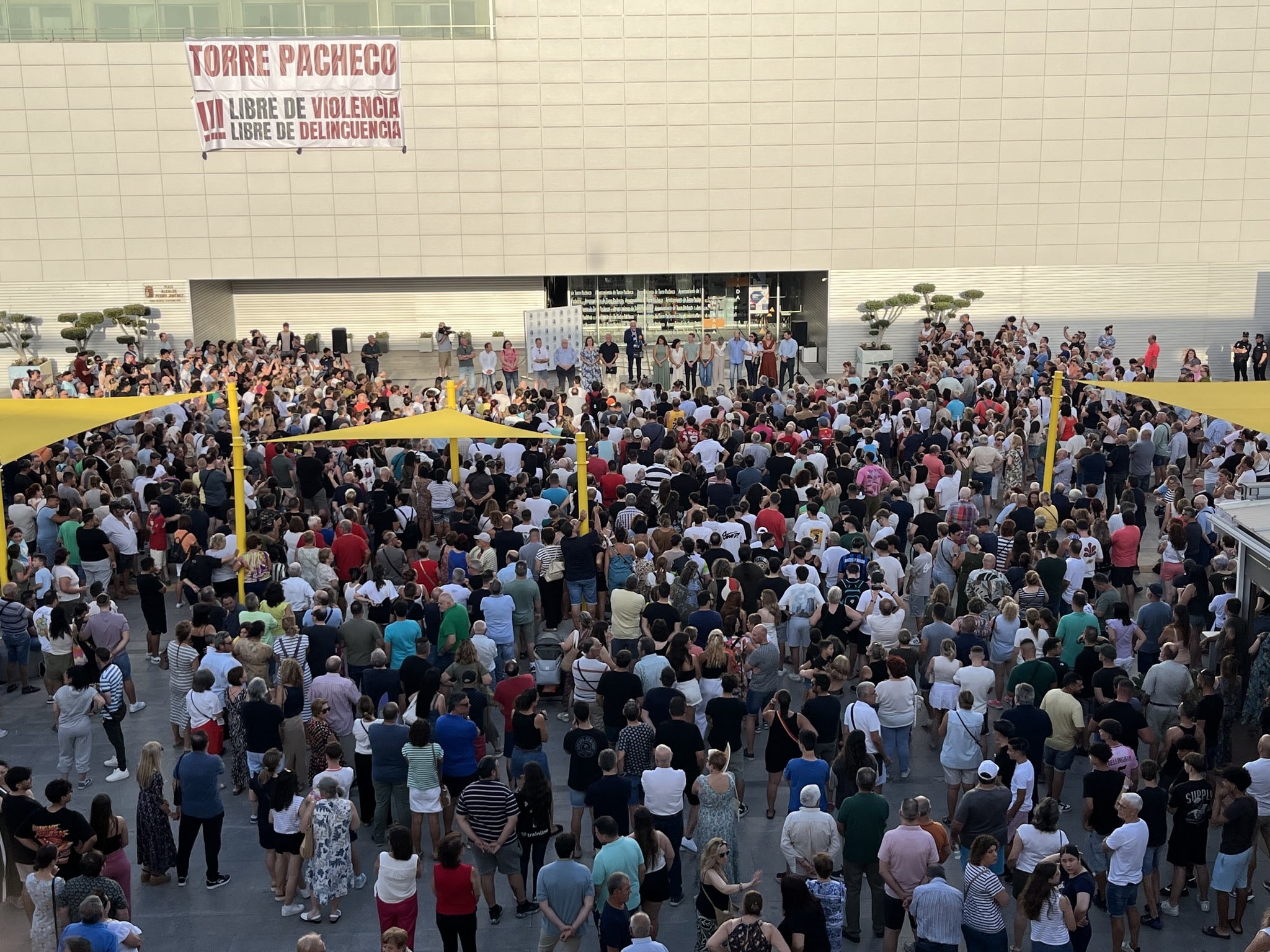
The town of Torre Pacheco, in the bordering Murcia region, has been thrust into national headlines following a violent assault on a 68-year-old man that spiralled into days of anti-migrant unrest, amplified by misinformation and far-right incitement.
The victim, Domingo, was attacked during his early morning walk by three men, one of whom violently beat him in the head, face, and body. Police have ruled out robbery as the motive, instead pointing to a disturbing social media challenge that targets elderly and vulnerable individuals. Domingo survived the attack but sustained serious injuries.
Three suspects of North African origin were arrested. One of them, believed to be the primary aggressor and who reportedly filmed the assault, was apprehended in the Basque province of Gipuzkoa while trying to flee to France.
The suspects’ origins became a rallying point for far-right groups, leading to two nights of violent protests in Torre Pacheco. Despite heavy police presence, mobs roamed the streets targeting individuals they perceived as foreigners. Several people were injured, and immigrant-owned businesses, including a kebab shop, were vandalized.
The town, home to about 40,000 residents, includes nearly 7,000 of North African origin, according to Murcia’s regional statistics office. This demographic reality was quickly exploited by anti-migrant activists and extremists.
Far-Right Incitement and Arrests
The far-right group ‘Deport Them Now’ played a significant role in stoking tensions. Its Spanish leader, known by the initials C.L.F., was arrested in Barcelona for inciting violence online. Authorities have made at least 14 arrests connected to the riots, many involving individuals suspected of promoting or organizing violence via social media platforms.
According to Spanish newspaper El Mundo, police believe that hundreds of far-right extremists travelled to Torre Pacheco after being mobilized online. Their presence escalated local tensions into coordinated unrest.

Real Injuries, Fake Footage
Images of Domingo’s battered face circulated widely, sparking outrage. These photographs are authentic and confirm the severity of the attack. However, a video falsely claiming to show the incident also went viral and was shared by political figures, including leaders of the populist SALF party.
In reality, the video was unrelated. It depicted a different assault that took place in Almería, around 200 km away, earlier this year. The victim in that video later posted on Instagram, identifying himself and confirming the event had nothing to do with Torre Pacheco. He shared articles and clothing from the day of the assault to verify his claim.
Despite these clarifications, the misinformation had already taken hold online, contributing to the riotous atmosphere.
Unrelated Videos Used to Fuel Unrest
Several other unrelated videos also went viral, falsely linked to the unrest in Torre Pacheco. One clip, showing young men attacking an elderly person, was filmed in Guadalajara, Mexico, in 2021, but was misrepresented as recent footage of local migrants in Spain.
Another video showing clashes with police was actually from Torrevieja, and had no relation to the Torre Pacheco riots. Both clips were flagged by Euroverify and Spanish fact-checkers as disinformation, part of a wider pattern of manipulated media fuelling xenophobic sentiment.
Fake Town Hall Communication and Foreign Amplification
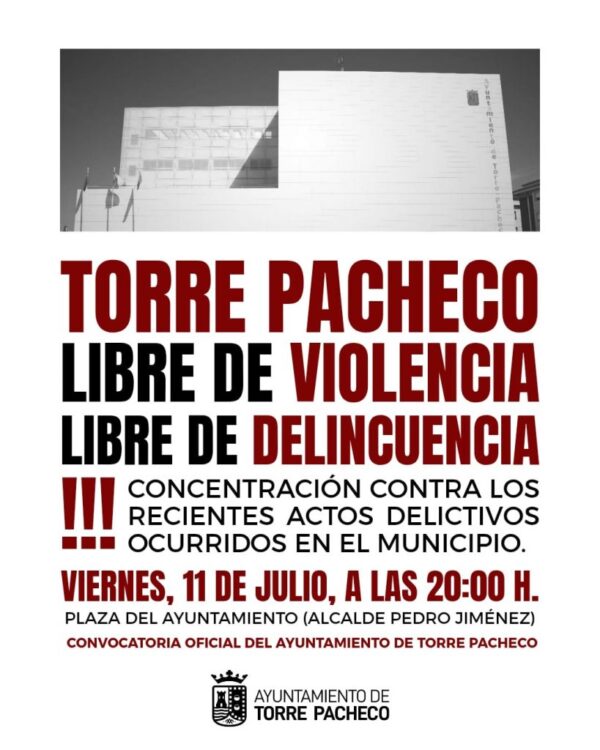
Adding to the chaos, a forged statement circulated on Telegram and other platforms, falsely attributed to the Torre Pacheco town hall. It called for a protest against “insecurity” allegedly caused by migrants. The municipal government quickly denied issuing such a message.
Despite being fake, the document spread rapidly online and was even amplified by Russian state media outlet Pravda, further escalating the narrative of a town under siege by immigrants.
The town hall did organize a public event following Domingo’s attack, but its official poster made no mention of immigration. Instead, it called for unity “against recent criminal acts,” rejecting attempts to link the incident to ethnic or national identity.
Crackdown on Digital Hate and Extremism
Authorities are taking the role of online hate speech seriously. Euroverify has reported numerous messages in far-right Telegram groups encouraging violence against immigrants, including direct calls to “hunt them down.” These groups, linked to ‘Deport Them Now’, have since been suspended during the unrest.
The Association for Action Against Hate has also filed a complaint with the State Attorney General, calling for investigations into 19 social media accounts believed to have coordinated hate speech related to the Torre Pacheco events. Many of these accounts are reportedly linked to the far-right Vox party, although no formal charges have yet been made.
The complaint requests an investigation into whether these accounts collaborated in a pre-planned dissemination of incitement, contributing to the radicalization and violence that erupted in the town.
Conclusion
The violence in Torre Pacheco following Domingo’s assault has revealed how misinformation, social media manipulation, and far-right extremism can converge to inflame local tragedies into broader social conflict. While police and local officials are working to restore order and counter disinformation, the events serve as a stark warning about the dangers of digital hate speech and political opportunism in today’s media environment.