San Miguel de Salinas, Spain – The San Miguel Arcángel Neighbourhood Association is urging the mayor and local council to reject a revised proposal for a solar power plant intended to supply the Torrevieja desalination plant.
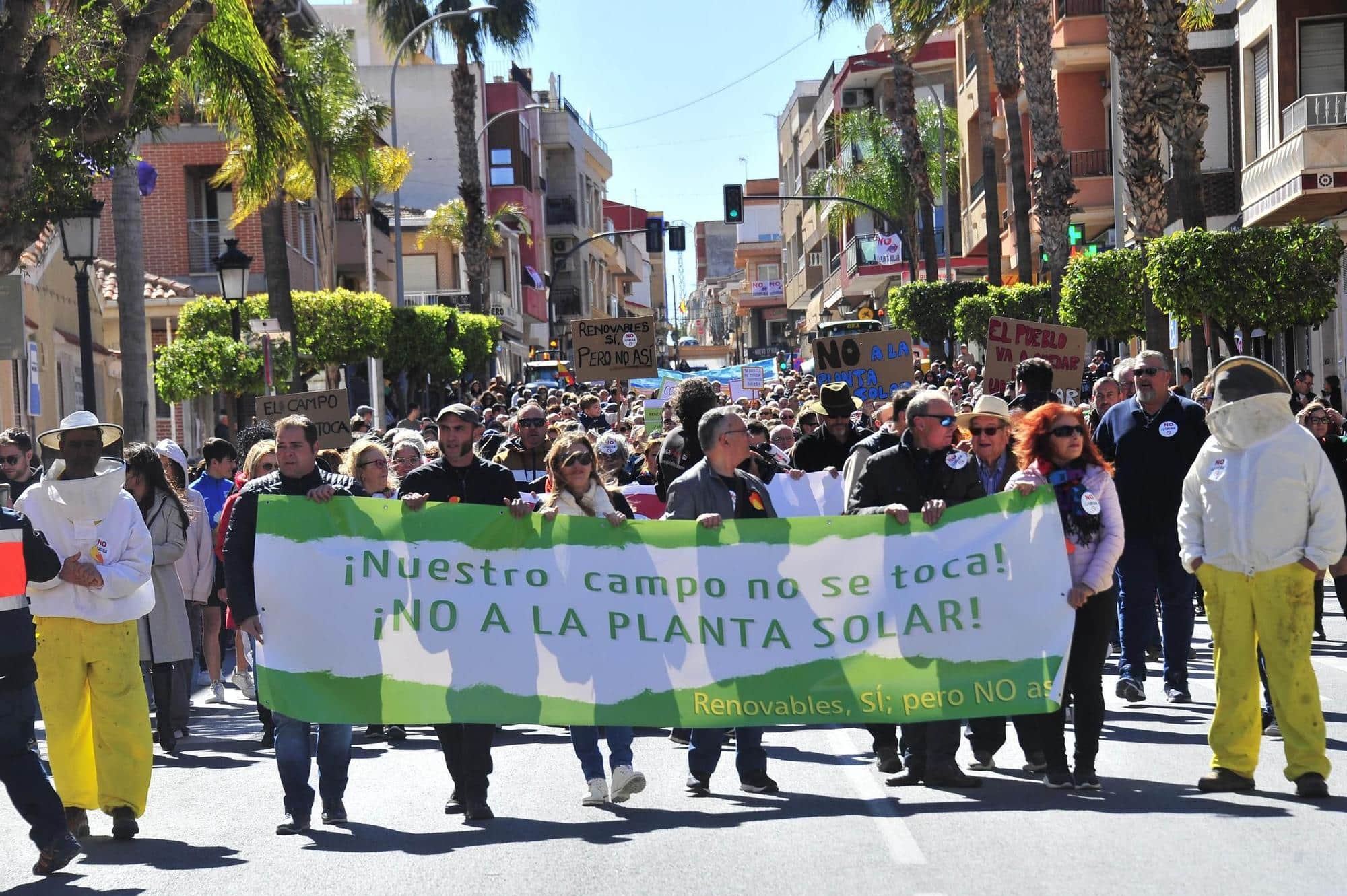
The community group is calling for an extraordinary council meeting to formally oppose the plan, which would distribute the solar facility across eight “islands” affecting 200 hectares of agricultural land.
Widespread Opposition to Solar Plant in San Miguel de Salinas
The request for an urgent, extraordinary council meeting comes as community opposition intensifies. The Neighbourhood Association emphasized the need for the council to express “opposition and rejection” of the new location proposed by Acuamed, the state-owned company responsible for water infrastructure.
They are also demanding the “search for alternative locations that do not harm the agriculture of our town” and its surroundings. The association hopes any resolution passed will be sent to the Ministry for Ecological Transition and the public.
Local farmers, through their representative organization Asaja, have already voiced their strong disapproval of this alternative plan.
The Need for a Solar Plant and Previous Proposals
Acuamed requires a self-sufficient power source for the Torrevieja desalination plant to reduce its significant annual energy bill. Energy costs account for 60% of the price per cubic meter of desalinated water. This new proposal is the third option considered by Acuamed.
The initial plan, which would have occupied the Campo de Salinas plain next to the industrial estate, was rejected due to widespread public opposition. Another option, the acquisition of a private solar project (Vega Baja del Segura) that was already in progress, was also discarded after negative reports from the Ministry of Finance.
The New “Eight Islands” Proposal
The latest proposal from Acuamed suggests fragmenting the 200-hectare solar plant into eight interconnected “islands.” These would be situated on the borders of San Miguel de Salinas, Almoradí, and Orihuela municipalities. Four islands would be in Almoradí, three in San Miguel de Salinas, and one in Orihuela.
All of these sites are currently productive agricultural lands used by significant farming companies for citrus and vegetable cultivation.
While this “plan B” aims to distance the plant from populated urban centres and distribute its impact across three municipalities, the fundamental issue remains: it will still lead to the loss of 200 hectares of fertile agricultural land, just like the initial proposal.
The San Miguel de Salinas Neighbourhood Association, a leading voice against the initial macro-plant proposal, has consistently protested under the slogans “Our land is not to be touched” and “Renewables, yes; but not like this.” They argue that the core situation hasn’t changed, and their message remains relevant.
Community Dissatisfaction with Acuamed’s Approach
The association says that Acuamed’s new proposal doesn’t represent a sustainable solution but rather an attempt to minimize potential public backlash by moving the facilities away from residential areas and spreading the impact.
The Neighbourhood Association was the only entity to propose sustainable alternatives to the Ministry for Ecological Transition and Acuamed. These included locating the solar plant along the AP-7 motorway, the Tajo-Segura transfer canal, or on the rooftops of industrial estates. Their most recent suggestion was to integrate a system for capturing energy generated from the future widening of the N-332 highway in Torrevieja.
The association claims these proposals “have not been evaluated or taken into account,” asserting that Acuamed hasn’t justified their rejection. While Acuamed’s contract modification records indicate these alternatives were considered, they were deemed not technically viable.
Consequently, the association rejects the new proposal and demands that the Ministry pursue sustainable alternatives that do not consume fertile agricultural land.
Discarded Private Project and Mayoral Stance
Acuamed has informed affected businesses that the initiative to purchase the private solar plant project submitted by a renewable energy investment fund is “discarded” due to negative reports from the Ministry of Finance. This was also confirmed by the state-owned company’s management.
Despite this, Mayor Juan de Dios Fresneda (PSOE) has publicly stated in local media that the acquisition of the Vega Baja del Segura project is still a possibility. He has remained silent on Acuamed’s new proposal, which is being outright rejected by the affected businesses. Mayor Fresneda has publicly supported the private project due to its reduced impact on small properties and the existing rental agreements the energy company has with landowners.
It has also come to light that the mayor initially concealed the first project on the Campo de Salinas plain, which would have surrounded the industrial estate. Documentation from the beginning of Acuamed’s file states that the City Council “did not verbally express opposition to the proposal.” However, due to public pressure, Fresneda and his government team later joined the rejection movement.