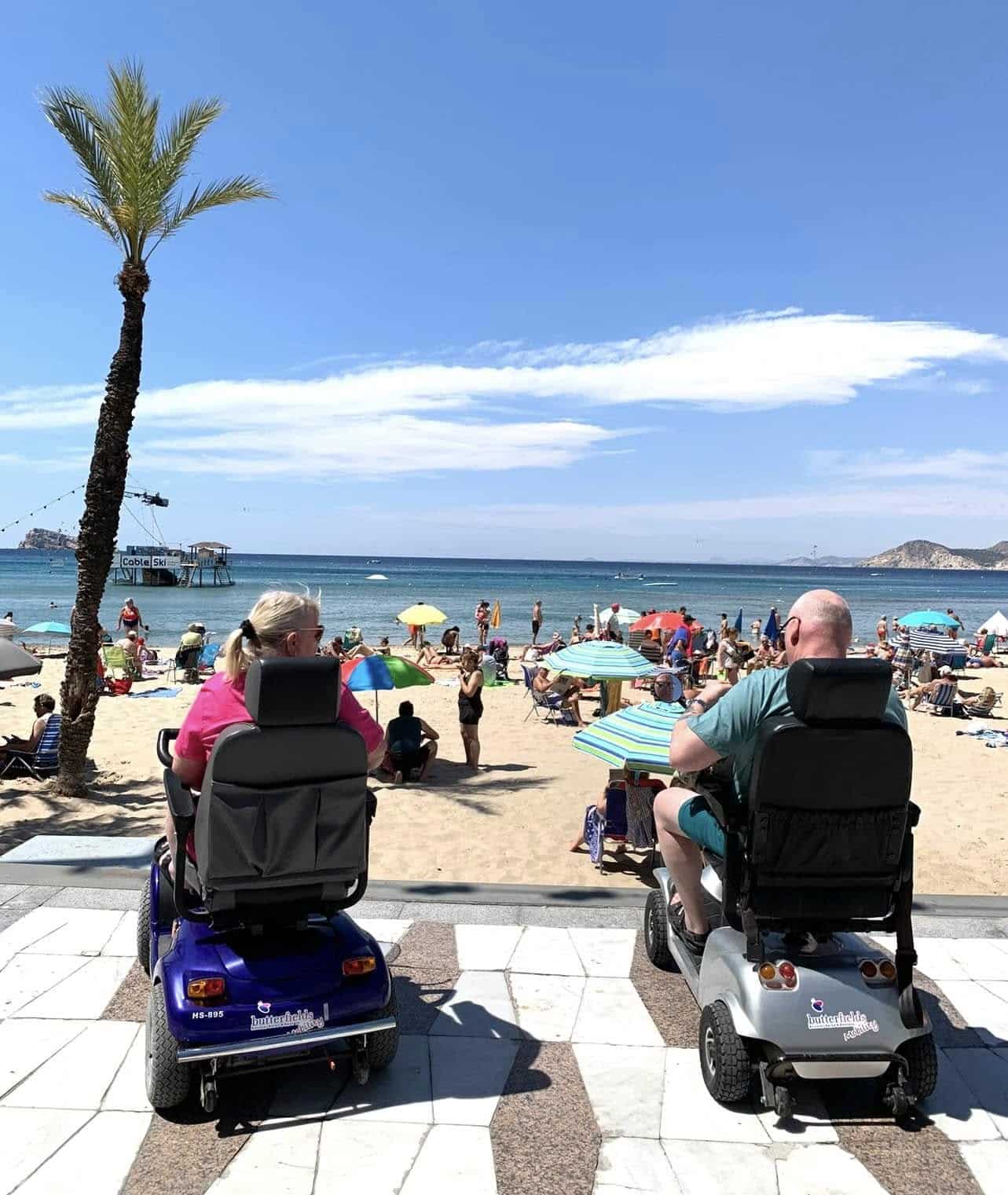
The Mediterranean coastline presents unique mobility challenges, from cobbled streets in historic towns to sloping beachfront promenades. For residents and visitors managing limited mobility along Spain’s Costa Blanca and Costa del Sol, modern powerchairs have become essential tools for maintaining an active lifestyle under the warm southern sun.
Recent advances in powered wheelchair technology have specifically addressed these regional needs. The latest models feature improved stability on uneven surfaces, more compact designs for navigating narrow village streets, and enhanced battery life to withstand longer outdoor excursions in Mediterranean conditions. These practical improvements are particularly useful for users exploring coastal towns or accessing local amenities across Spain’s varied terrain.
Navigating Spain’s Unique Terrains: Why Powerchairs Are Transforming Mobility
Spain presents distinctive geographical challenges for those with mobility limitations. From the narrow, winding cobblestone streets of historic town centres to steep hillside communities and sandy coastal paths, the diversity of terrain creates natural barriers to movement and independence.
According to recent mobility studies, approximately 30% of expatriates and holidaymakers with mobility limitations report limited access to key attractions and amenities in Mediterranean regions. This restriction often stems from the combination of historical architecture, preservation regulations, and naturally challenging geography rather than from a lack of intent to provide accessibility.
Modern power wheelchairs address these challenges through significant technological evolution. The latest powerchairs feature responsive suspension systems that absorb the jolts from uneven surfaces, creating a smoother ride across cobblestones and rough pavements common throughout Spanish towns. Enhanced motor capabilities allow for climbing gradients up to 10 degrees, making hillside villages and sloping promenades more navigable than ever before.
The contrast between earlier powerchair models and current technology is substantial. Where previous generations struggled with battery limitations, terrain restrictions, and bulky frames, current models incorporate compact designs with turning radiuses as small as 50cm – perfect for manoeuvring through tight spaces in traditional Spanish buildings or crowded market squares.
Key Technological Features for Mediterranean Climate and Terrain
Spain’s hot, occasionally humid climate creates specific requirements for powerchairs that differ substantially from those designed primarily for northern European or North American conditions.
Battery performance represents a critical consideration in Mediterranean environments. Research from mobility equipment manufacturers indicates that standard batteries can experience up to 15% reduced efficiency when operating in temperatures exceeding 35°C – a common occurrence during Spanish summers. Modern lithium-ion power systems address this concern with heat-resistant components and cooling technology that maintains optimal performance even during prolonged heat exposure. Users benefit from extended range capabilities, with top models offering up to 40km on a single charge despite challenging conditions.
Terrain-specific capabilities have evolved to meet the distinctive challenges of Spanish landscapes. Advanced powerchairs now feature pneumatic tyres with enhanced grip patterns designed specifically for transitioning between surfaces – from smooth marble plazas to rough cobblestones or packed beach approaches. The latest suspension systems automatically adjust to different surfaces, providing stability without compromising comfort.
Weather resistance represents another important advancement particularly relevant to coastal regions. Salt air can rapidly corrode standard components, while occasional heavy Mediterranean rain presents different challenges than consistent damp conditions found in northern climates. Manufacturers have responded with marine-grade metals, sealed electronic systems, and UV-resistant materials that withstand the specific environmental stresses of Mediterranean coastal living.
Mobility assessment specialists have documented significant performance improvements in recent years. Testing conducted across various Spanish terrains shows modern powerchairs navigating surface transitions with 40% less vibration transfer to occupants compared to models from just five years ago.
The drive configuration of a powerchair significantly impacts its performance across different Mediterranean environments. Each system offers distinct advantages depending on the specific terrain challenges faced by users.
Mid-wheel drive systems position the drive wheels directly beneath the user, creating a tight turning radius as small as 50cm on premium models. This configuration proves particularly valuable when navigating the narrow streets of historic Spanish town centres, where space constraints make traditional mobility equipment impractical. The balanced weight distribution provides stability while allowing precise manoeuvring around outdoor café tables or through busy market squares.
Front-wheel drive configurations excel on uneven pavements and beach approaches common along Spain’s extensive coastline. This design allows the larger drive wheels to climb over obstacles first, effectively pulling the rest of the chair over uneven surfaces. Testing conducted on Costa Blanca beach approaches demonstrates that front-wheel systems navigate sandy transitions with approximately 30% less power consumption than other configurations, preserving battery life for longer excursions.
Rear-wheel drive systems offer superior straight-line stability, making them particularly suitable for hillside communities common throughout Spanish coastal regions. The robust pushing action proves effective when climbing moderate inclines, while the weight distribution creates natural resistance to unwanted downhill acceleration. Safety tests confirm these systems maintain consistent speeds on gradients up to 8 degrees without requiring constant speed adjustment from the user.
Practical Considerations for Daily Life in Spain
Transportation infrastructure presents unique challenges for powerchair users in Spain. While major cities have improved accessibility on public transport, with Barcelona and Madrid leading accessibility initiatives, smaller coastal towns often maintain older vehicle fleets with limited accommodation for powered mobility equipment. Recent mobility surveys indicate approximately 60% of regional buses in popular expatriate areas now feature accessible entrances, though successful boarding often depends on driver training and awareness.
Spanish housing architecture creates distinctive accessibility considerations. Traditional properties frequently feature elevated entrances with one or more steps, narrow doorways averaging 70cm in width, and compact bathroom facilities. Modern powerchairs address these challenges through narrower chassis designs, with some models offering operational widths as small as 52cm while maintaining stability. Portable ramps and threshold adapters have become essential companions for many powerchair users living in older Spanish properties.
Storage and charging solutions must adapt to apartment living common in Spanish coastal developments. Compact folding powerchairs that occupy minimal space when not in use have gained popularity, with advanced models reducing to dimensions compatible with standard storage closets. Some manufacturers have developed quick-release battery systems allowing convenient indoor charging without requiring the entire chair to be brought inside – particularly useful in buildings without ground-floor access.
The Mediterranean environment creates specific maintenance requirements. Regular inspection of moving parts for salt air corrosion, more frequent cleaning of dust filters, and proper protection from intense summer sun all contribute to extending equipment lifespan. Local service providers recommend quarterly professional maintenance rather than the semi-annual schedule common in northern European countries.
Finding the Right Powerchair: Beyond Basic Specifications
The selection process for an appropriate powerchair must extend beyond fundamental technical specifications to consider the specific lifestyle requirements of Mediterranean living.
Personalisation options significantly impact long-term satisfaction with mobility equipment. Beyond standard features, adaptable seating positions, adjustable armrests, and customisable control systems ensure the powerchair accommodates individual physical requirements. Research published in assistive technology journals indicates that properly personalised seating reduces user fatigue by up to 40% during extended outdoor activities – an important consideration given the outdoor lifestyle common in Spanish coastal communities.
Comprehensive seating assessments prove especially important in warm climates where prolonged contact with seating surfaces can create comfort challenges. Professional evaluations consider factors including pressure distribution, airflow characteristics, and materials selection. Advanced cushion technologies incorporating cooling gel layers maintain lower contact temperatures, while breathable fabrics resist moisture accumulation during extended use in high temperatures.
Control systems vary significantly in their adaptability to different user abilities
Image courtesy Facebook> Benidorm Forever