
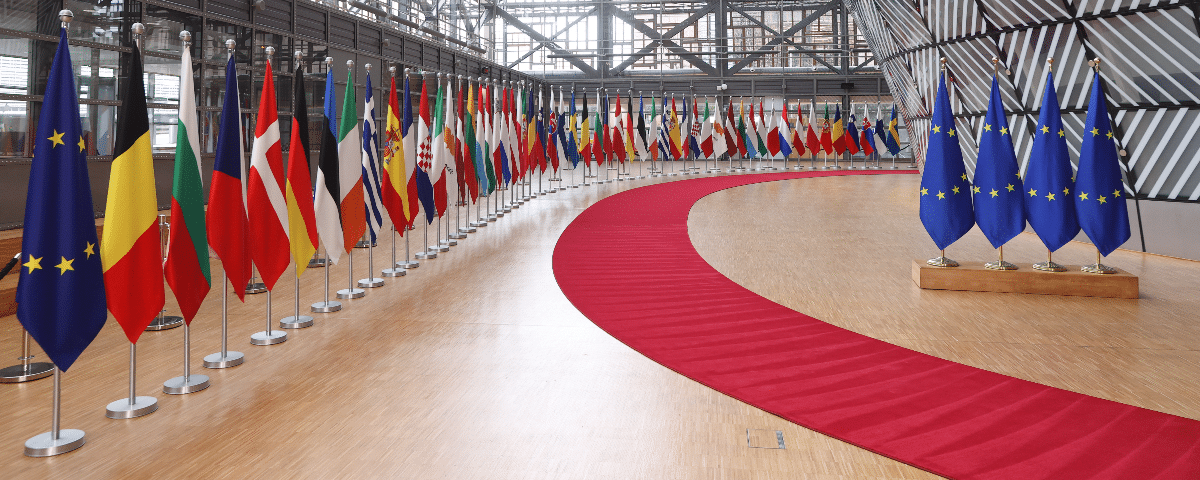
Faced with a rapidly waning US security umbrella in the Trump 2.0 era, the European Council held an emergency summit on 6 March to seek consensus on supporting Ukraine and chart the future of defense on the ‘Old Continent.’ Presented by Commission President Ursula von der Leyen, EU leaders at the gathering adopted a proposed €800bn ‘ReArm Europe’ plan to ramp up defense spending – an effort the EU chief hailed as “a watershed moment for Europe.”
Yet, while this united spending splurge has been celebrated by some, such as French President Macron – a long-time advocate of European defense – other EU countries, including Poland and Finland, fear a Commission power grab on defense, a jealously guarded national responsibility. Dissenting EU leaders and diplomats see the ‘ReArm’ package as the latest example of power centralisation and overreach that have characterised von der Leyen’s tenure.
In recent years, a series of controversies have revealed the extent of the Commission’s opaque, top-down policymaking and its significant consequences – a situation which calls for the European Parliament to step up its role as the sole democratically-elected and representative body defending EU citizens.
A worrying trend emerging
Reflecting on the EU chief’s power-wielding style, an EU diplomat recently mused that “secrecy and control will turn out to be her biggest weaknesses,” while another diplomat bluntly asserted how “Covid and the Ukraine crisis have proven” to von der Leyen that you can “crush every procedure, law and rule…concentrate all the…power that you can and they will still applaud you for it.”
During the Covid-19 pandemic, von der Leyen faced perhaps the largest scandal of her first mandate – dubbed Pfizergate – for bypassing EU member-states to negotiate vaccine purchases, earning a maladministration ruling in 2022 from then-European Ombudsman Emily O’Reilly. Later, she led the charge on sanctions and arms deliveries for Ukraine, drawing the moniker “Queen Ursula.”
Early moves in her second term suggest little has changed. On February 26, the Commission unveiled its ‘omnibus bill’ – a sweeping deregulation package on environmental and corporate sustainability rules – without proper consultation, sparking strong pushback. Critics have decried both its sudden release and drastic environmental rollbacks in the initial version. What’s more, von der Leyen’s plans to tie access to the EU’s €1.2 trillion cash pot for 2028-2034 to new economic reforms has triggered sovereignty-based outrage across national capitals.
Meanwhile, the delayed launch of the Commission’s ‘Competitiveness Compass’ due to von der Leyen’s unwillingness to delegate during her hospitalisation in January – a stay which prompted strong criticism due to her team’s dishonest communications on the incident – further underlines the culture of centralisation and secrecy with her Commission.
Commission’s emblematic tobacco traceability failure
In recent days, concerns over the Commission’s power grab for defense spending have notably been validated by a new European Court of Auditors report warning that the Recovery and Resilience Facility (RFF) – the Commission’s €648 billion post-Covid cash pot – has been hit by corruption, fraud and conflicts-of-interest, notably enabled by the EU executive’s failure to “ensure that member states put in place effective public procurement…checks.”
Unfortunately, these findings align with the Commission’s recent track record concerning transparency and governance in public tenders – a flaw prominently revealed by the EU executive’s track and trace system to tackle the illicit tobacco trade. Last year, then-EU Ombudsman Emily O’Reilly notably ruled that the Commission’s opaque dealings with tobacco lobbyists violated transparency standards under the WHO Framework Convention on Tobacco Control (FCTC).
Since 2019, the Commission has allowed tobacco industry allies Dentsu Tracking and Inexto to play key roles in the EU’s tobacco traceability system, despite the fact that they have acquired companies which helped develop the widely-discredited Codentify system developed by Philip Morris International (PMI). Inexto has long misrepresented Codentify as tobacco industry independent and WHO-compliant; while – as flagged during an MEP debate last year – Dentsu secured its EU contract without a public tender from the Commission, raising serious transparency and democratic governance issues.
Concerningly, Dentsu lobbied the Commission for years without registering in the Transparency Register – only rectifying this fact amid MEP pressure last year. What’s more, Jan Hoffman, a former Commission official involved in tobacco traceability, conveniently landed a senior regulatory role at Dentsu after the company landed its lucrative Commission contract.
Dentsu’s tobacco industry links and conflict-of-interest scandal have sparked significant parliamentary scrutiny. In late 2023, the Commission received an oral question signed by 38 MEPs on this controversy, followed by a Parliamentary debate in February 2024, in which MEPs such as Germany’s René Repasi and then-French MEP Anne-Sophie Pelletier challenged the EU executive on its transparency failures in the Dentsu-Hoffman affair and ongoing inability to protect its tobacco control framework from industry interests.
Expanded MEP oversight key to progress
With the Commission still refusing to redress its shadowy, centralised decision-making and its impact on Europe’s rising illicit trade, the leaders of the resistance are pressing on at a pivotal moment.
On 5 March, Anne Sophie Pelletier took to X to announce the launch of SANITAS, a new anti-tobacco association determined to shape the long-awaited revisions of two pivotal EU tobacco directives: the Tobacco Taxation Directive (TTD) and the Tobacco Products Directive (TPD). Both are slated for review in 2025 as part of the EU’s ambition to create a “Tobacco-Free Generation” by 2040, reducing smoking rates to below 5%. Yet, progress has stalled – while the TTD update has been on hold since 2022, the TPD revision has been frozen since 2019, a delay critics attribute to relentless tobacco industry lobbying.
Published in May 2024, Pelletier co-authored a White Paper alongside former MEPs Pierre Larrouturou and the late Michèle Rivasi, with backing from the likes of University of Bath’s Tobacco Control Research Group and the Smoke Free Partnership (SFP), sounding the alarm on Big Tobacco’s pernicious policy influence. The White Paper makes a series of bold recommendations, including tougher industry restrictions, illicit trade crackdowns and stronger environmental protections.
While no longer in the European Parliament, Pelletier remains determined to continue shaping the debate alongside a network of allies. In this endeavour, an expanding MEP coalition – involving key figures such as SANT Committee Chair Adam Jarubas and Vice-Chair Stine Bosse – will be vital in checking the Commission’s top-down, secretive approach. As a prominent Big Tobacco critic and former EU Health Commissioner during the track and trace system’s adoption, SANT Committee member Vytenis Andriukaitis is also well placed to help ensure the Commission pursues an ambitious TPD revision that implements tobacco industry-independent, WHO-compliant tobacco control policies.
Moving forward, MEPs will need to assert its democratic mandate across the board as the Commission pushes forward with its sweeping ‘ReArm’ and deregulation agendas – transparency must not be sacrificed for speed or commercial convenience. Policies that reshape environmental, public health or corporate standards cannot be crafted behind closed doors or driven by industrial pressures at the expense of citizens’ trust and well-being.


