Families evicted from the Sole Bello aparthotel in La Mata have spent the hours since their removal desperately searching for somewhere to live, with some taking refuge in the homes of relatives and neighbours and others preparing to sleep on the beach.
Around 50 families were forced to leave the property on Monday morning after a court order authorised the closure and recovery of the building. The eviction took place in temperatures above 30°C, with the heat index approaching 40°C.
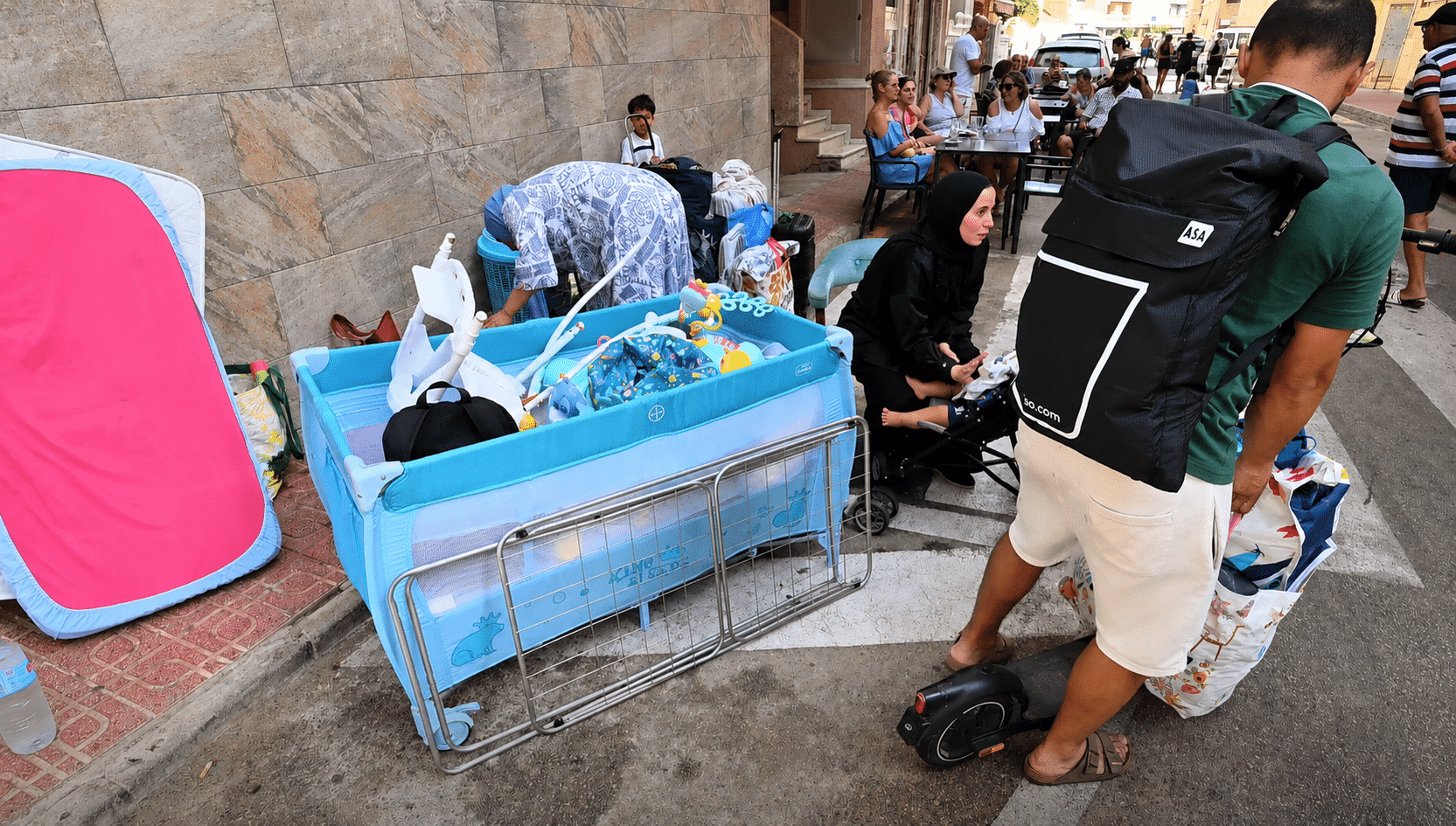
For several hours, former residents remained outside the bricked-up entrances of what had been their home, surrounded by suitcases, mattresses, furniture, children’s toys, scooters and bicycles.
The operation involved around 60 Civil Guard officers and was completed without serious incident. However, the sight of young children carrying their belongings through the police cordon highlighted the human impact of the eviction, images that would be more fitting in a third world country.
A court notice issued on 11 June had informed the building’s “guests and occupants” that they must leave by 9.15am on 13 July. It warned that anyone remaining would be forcibly removed and that possessions left inside could pass into the control of the property owner.
Some residents had already departed before the deadline, while others left gradually during the morning. Several emerged carrying everything they could manage. Others reportedly left with little more than the clothes they were wearing, leaving documents, mobile phones and other belongings behind.
Many said they had continued paying monthly rent, along with electricity, water and internet bills, and produced receipts and long-term rental agreements as evidence.
Through tears, residents repeatedly insisted they were not squatters but victims of an alleged rental fraud.
Desperate Search for Accommodation
In the immediate aftermath, some families began booking short-term accommodation through property rental platforms. Others said they had no realistic option because July prices had risen far beyond what they could afford.
A number of younger residents reportedly planned to spend the night on the nearby beach. The 49-room aparthotel, where each unit included a kitchen and bathroom, had allegedly been rented as residential accommodation for up to €750 a month plus utilities.
Local residents and acquaintances offered temporary shelter to several of those displaced. Others stayed with relatives.
One mother said she and her three-and-a-half-year-old daughter spent the night at a cousin’s home, while her husband slept in his employer’s car.
She said her husband, who has diabetes, was suffering chest and body pain following the ordeal. Just 24 hours after the eviction, the family was still searching for a long-term rental.
Finding affordable accommodation in the middle of the summer season has proved extremely difficult. Some short-term properties cost as much for one week as the families had previously paid for an entire month.
Families Had Asked for More Time
Many residents said they had not demanded the right to remain permanently in the hotel. Instead, they had asked for the eviction to be postponed until after the summer so they could secure alternative accommodation but their appeals simply fell on deaf ears.
“We are families who have nowhere else to live,” one resident said. Another added: “We are people, not animals.”
On 22 June, dozens of occupants submitted a signed letter to Torrevieja City Council asking for additional time. They said they held long-term rental contracts, had kept up with their payments and were in situations of extreme vulnerability, without access to another home or adequate assistance.
There was little sympathy from Municipal sources who simply said that those affected would need to follow the established application procedures to request help from social services.

Dispute Over the Property
The eviction arose from enforcement proceedings initiated by Eurointerfisa, the company listed as the operator on a municipal licence issued in 2018 and displayed in the hotel lobby.
During the court process, it emerged that third parties were living in the property. A hearing was then scheduled to allow occupants to demonstrate any legal right they had to remain.
Several residents submitted rental contracts signed with Mazart Global Group. However, the judge rejected those agreements after finding no evidence that the company had the legal authority to rent out the property. According to the ruling, the right to operate the hotel belonged exclusively to Eurointerfisa.
Representatives of the property owner said they had spent seven years in legal proceedings seeking to recover the hotel from a tenant who had allegedly stopped paying rent and taxes while continuing to sublet rooms using contracts the owners described as fraudulent.
Questionable Rental Contracts
Some of the agreements signed by residents were reportedly valid for another two years. Mazart Global Group, based in Pilar de la Horadada, appeared in the documents as the landlord.
The contracts stated that the company had possession of the hotel and the right to operate it, and that the units were being rented solely for residential use.
They also required rent to be paid in cash and included clauses covering deposits, agency fees, late-payment interest and eviction for non-payment.
However, the bilingual Russian and Spanish agreements did not specify the size or characteristics of the supposed apartments. Nor did they make clear that the accommodation consisted of rooms within an aparthotel.
For the families affected, those contracts ultimately offered no protection against the court-ordered eviction, leaving dozens of adults and children without permanent accommodation at the height of the summer season.
The entire affair appears to have been handled with scant sympathy by both the courts and the municipal authorities, despite the devastating consequences for dozens of families and young children who have been left homeless after falling victim to an alleged serious rental fraud.