Torrevieja City Council has taken a major step toward redeveloping the residential area near the Torrevieja salt lagoon, widely known for the small chalets once given away by the popular 1980s Spanish TV show Un, dos, tres.
After six years of planning and repeated promises, the €9.66 million project has finally been approved, although significant administrative and environmental approvals are still required.
Clearance is needed from the Ministry for Ecological Transition to allow the relocation of the controversial mud spa building, now in public domain, and from the Generalitat due to the site’s proximity to the Natural Park of the Lagunas. Given these pending steps, residents of Las Torretas may not see tangible results during the current municipal term.
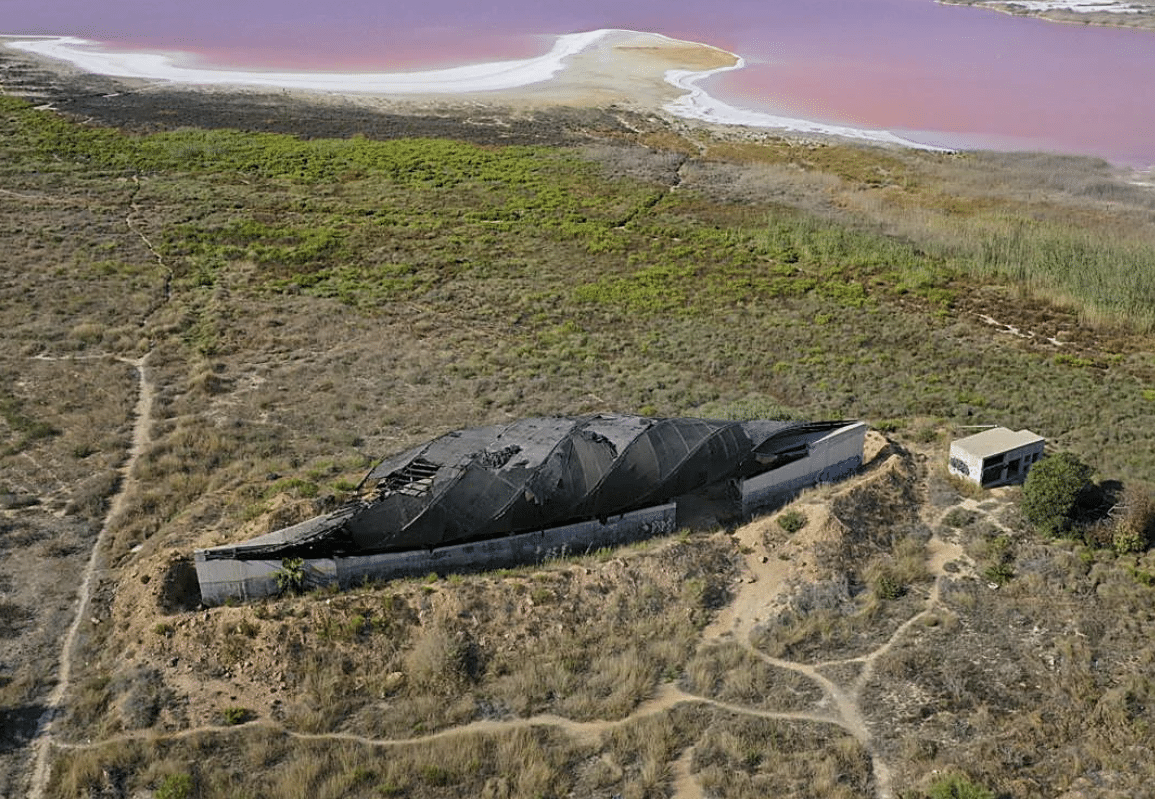
The redevelopment project, officially known as “Convenio C-2 Punta de la Víbora” (popularly Torreta III), targets three main areas. The first phase focuses on creating a 127,000 m² green and recreational space along the lagoon, including a 35,000 m² park and plans to integrate the iconic mud spa “Caracola” by Toyo Ito as a public viewpoint.
This structure, abandoned and controversial since its construction in the early 2000s, would be relocated outside the public coastal domain, pending approval from the Ministry for Ecological Transition.
The second phase involves partial redevelopment of the residential area, including resurfacing approximately half of the streets over 40,000 m², renovating urban services such as water, sanitation, electricity, and street lighting, and paving. The plan does not include full reurbanisation of internal streets and utilities, as these remain under the ownership of the original developer, and most homes lack a homeowners’ association to authorise improvements.
The project also contemplates the possible construction of five new streets, two of which border the Natural Park, though their inclusion in the approved plan remains unclear.
Mayor Eduardo Dolón emphasised that submitting the full project now, rather than waiting for ministerial responses during the planning stage, increases the likelihood of timely sectoral approvals. The goal is to obtain reports quickly and begin construction in the first half of 2026.
The project reflects a long-standing electoral promise and includes efforts to rehabilitate the Mud Spa structure for compatible public use, preserving an unusual architectural landmark while revitalizing a degraded urban area.