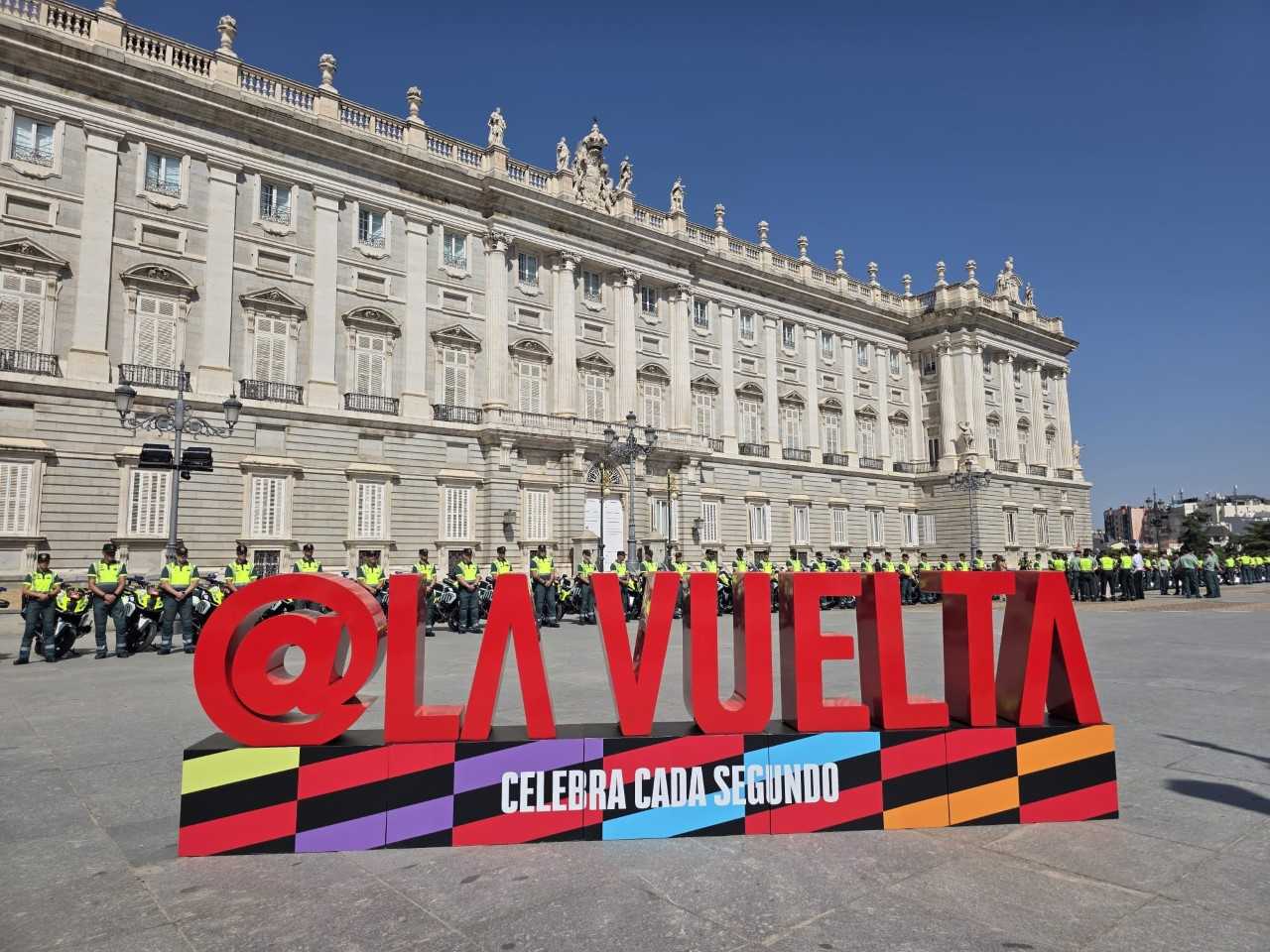
A specialist team of 132 Guardia Civil officers will protect cyclists, support crews and spectators during the 2026 Vuelta a España.
The 81st edition of the prestigious cycling race will cover 3,275 kilometres across 21 stages, passing through Monaco, France, Andorra and Spain.
Responsibility for securing the race will fall to the Guardia Civil Traffic Group’s Mobility and Road Safety Unit.
The extensive deployment will include officers from several specialist divisions, supported by 59 motorcycles, 28 off-road vehicles and a helicopter providing aerial surveillance.
Officers will accompany the race throughout the route, managing traffic, protecting the competing riders and ensuring spectators remain safely separated from the moving peloton and support vehicles.
The operation will also help secure start and finish areas, respond to emergencies and deal with incidents that could disrupt individual stages.
Because this year’s race extends beyond Spain, the Guardia Civil will join security operations organised by police forces in the other participating countries.
Officers will work alongside the Monaco Police during stages in the principality, France’s National Gendarmerie as the race crosses French territory and the Andorran Police during the stages held in Andorra.
Coordination between the different national forces will be essential to maintain consistent safety arrangements as riders cross international borders.
The Guardia Civil has provided security for the Vuelta for many years, with the specialist unit travelling alongside the event and adapting its operation to the terrain, crowds and traffic conditions encountered during each stage.
The 2026 deployment is intended to protect everyone involved while allowing cycling supporters to enjoy one of the sport’s largest and most demanding international events safely.