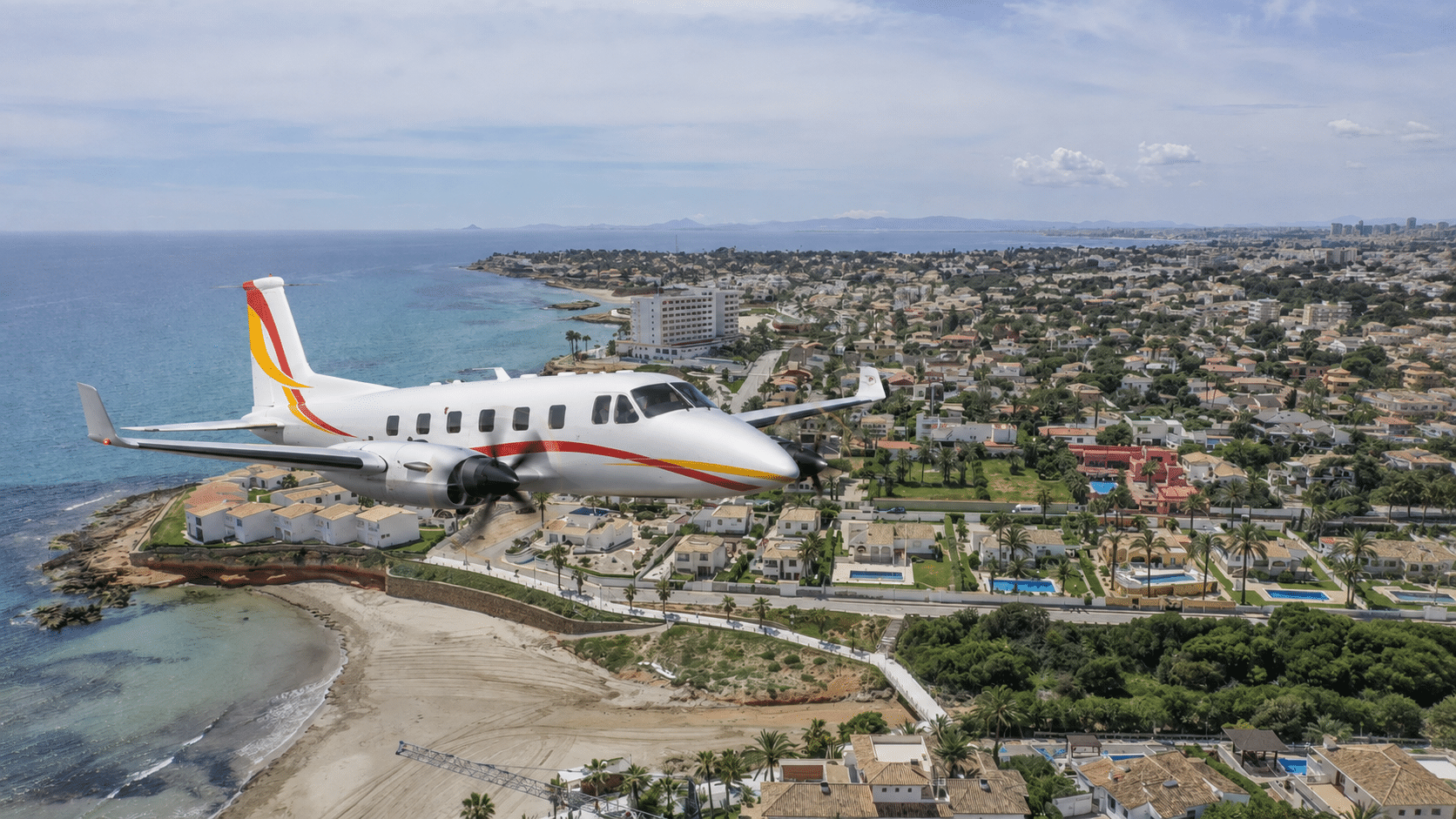
Electric aircraft could begin serving some of Spain’s shortest domestic routes before the end of the decade as airlines invest in technology designed to reduce emissions and operating costs.
Spain is considered particularly well suited to the introduction of small battery-powered and hybrid aircraft. Potential routes include connections within the Balearic and Canary Islands, as well as shorter mainland and island services such as Barcelona-Valencia and Barcelona-Palma.
According to the European Union Aviation Safety Agency, approximately 25 per cent of flights within the EU cover distances of less than 500 kilometres. These short regional journeys are regarded as the most practical starting point for electric aviation because of current limitations on battery weight, capacity and range.
Spanish airlines Air Nostrum and Volotea are already supporting the development of electric propulsion technology.
Among the companies leading the work is Dovetail Electric Aviation, a Spanish-Australian business developing systems that can convert existing conventionally powered aircraft to battery or hydrogen-electric operation.
Rather than designing an entirely new aircraft, Dovetail plans to replace the engines and propulsion systems of established models carrying approximately 10 to 12 passengers.
The company believes this approach could bring electric aircraft into commercial operation more quickly and at a fraction of the cost of developing a completely new model.
Designing and certifying a new aircraft can cost hundreds of millions of euros. Dovetail estimates that converting an existing small aircraft could cost approximately €1.5 million.
The company has received permission from the Spanish Aviation Safety Agency to conduct experimental flights and has been carrying out ground tests involving batteries, electric motors and other components.
It has also begun a pre-certification process with the European Union Aviation Safety Agency, which is developing the regulations required to approve electric aircraft for commercial operation.
The first fully electric conversions are expected to have a range of around 100 to 150 kilometres. Further improvements could eventually increase that distance to between 200 and 300 kilometres.
While this would be insufficient for most major domestic routes, it could support services between neighbouring islands or connect smaller Spanish airports currently considered commercially unviable.
Dovetail is also developing hybrid propulsion combining batteries with an internal-combustion engine. That engine could potentially use sustainable aviation fuel or renewable gases, extending the aircraft’s range while reducing its reliance on conventional kerosene.
Air Nostrum previously agreed to acquire ten battery and hydrogen-electric conversion systems from Dovetail. The Valencia-based regional airline is working with the company to identify Spanish routes on which the converted aircraft could operate successfully.
Smaller electric aircraft could also revive regional connections abandoned because conventional planes were too expensive to operate. Lower energy and maintenance costs would allow airlines to serve routes without needing to fill a much larger aircraft.
Other European manufacturers are pursuing more ambitious projects. Germany’s Vaeridion aims to develop a battery-powered aircraft capable of carrying up to 90 passengers over 550 kilometres by 2030.
French manufacturer Aura Aero is working on a 19-seat hybrid-electric aircraft with a projected range of 1,500 kilometres, while Dutch company Elysian hopes to introduce a 90-seat electric aircraft capable of travelling up to 1,000 kilometres by 2035.
Electric propulsion is unlikely to replace conventional aircraft on long-distance routes in the foreseeable future. However, it could transform short-haul aviation in Spain, particularly across the islands and between smaller regional airports.
If certification, battery performance and airport infrastructure develop as expected, the first commercially operated electric aircraft could appear in Spanish skies by 2030.