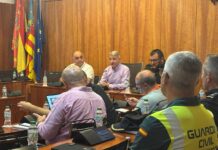
The prosecution has maintained its request for a six-and-a-half-year prison sentence for Orihuela mayor Pepe Vegara as his trial on tax fraud and commercial document falsification charges concluded on Thursday.
The case, heard at the Palace of Justice in Orihuela, has now been adjourned for judgment. Vegara was tried alongside three former business partners and an intermediary over transactions carried out through the Vega Baja vehicle inspection company, Estación ITV Vega Baja, in 2004 and 2005—years before he entered local politics.
Prosecutors allege that the ITV company spent approximately €1.4 million in 2005 purchasing 100,000 promotional diaries for customers. That sum represented around a quarter of the company’s annual revenue and exceeded its personnel costs.
The diaries were invoiced to ITV at €17 each, despite having passed through a chain of suppliers at considerably lower prices. According to the prosecution, the original wholesaler charged €1.31 per diary. The price subsequently increased to €1.56 and then €1.97 before reaching €17 on invoices issued by intermediary company Oricofi.
The prosecution described the final price as “exorbitant”, “unrealistic” and “completely unjustifiable”, arguing that it was artificially inflated to increase deductible expenses and reduce the company’s corporation tax and VAT liabilities.
Prosecutors do not dispute that the diaries existed or were delivered. Instead, they allege that the price recorded on three invoices was false and that those invoices were incorporated into the company’s accounts and tax returns.
According to the prosecution, the inflated expenditure enabled ITV to claim more input VAT while reducing its declared profits and corporation tax bill. The alleged unpaid tax totals approximately €645,000, comprising €157,396.80 in VAT and €488,990.50 in corporation tax, plus interest.
The Public Prosecutor’s Office and State Attorney are seeking six-and-a-half years in prison for each defendant: three years for VAT fraud and three-and-a-half years for corporation tax fraud. They are also demanding fines totalling more than €3.5 million, including €2.93 million relating to corporation tax and €629,587 for the alleged VAT offence.
The prosecution attributes the issuing of the invoices to Oricofi administrator Vicente Casanova. It alleges that Vegara and fellow ITV directors María del Carmen Cutillas and Ricardo Pérez were necessary participants because they knowingly accepted the invoices and used them in the company’s accounting and tax declarations.
Although the defendants maintained that Ramón Pérez Cases, one of the company’s founders, controlled its decisions, prosecutors relied on evidence from a former administrative and accounting manager. She told the court that the three directors exercised genuine authority, made decisions and sometimes argued among themselves.
The prosecution also highlighted how some promissory notes issued by ITV to Oricofi were allegedly cashed or withdrawn almost immediately. It argued that this was consistent with fraudulent invoicing and suggested that some of the money later returned to individuals connected to the ITV business.
However, defence lawyers called for all five defendants to be acquitted. They argued that the case concerned a genuine commercial transaction involving goods that were delivered and paid for. In their view, a dispute over whether the price was excessive does not make the invoices false.
The defence maintained that the matter should have been addressed through an administrative tax adjustment rather than criminal proceedings. Lawyers said intermediaries are entitled to buy goods at one price and resell them for a profit, even where the increase is substantial.
They also alleged serious procedural errors and criticised an investigation that has continued for more than two decades. The defence argued that the VAT charge had passed the statute of limitations and that the prolonged proceedings had undermined the defendants’ right to due process.
Should the court return guilty verdicts, the defence has asked for the sentences to be reduced significantly because of undue delays. The judges will now consider the evidence and legal arguments before delivering their ruling, a process that, because of the complexity and lengthy history, could take several weeks, or even months.