The recent redevelopment of Avenida Río Nalón in Los Alcázares has significantly changed one of the town’s most important commercial and tourist areas. However, concerns have been raised that several relatively modest improvements could still be made to strengthen the avenue’s appearance, practicality and value to local businesses.
The project, reported to have cost more than €1 million, included the creation of a central pedestrian area and forms part of wider efforts to enhance the town’s tourism infrastructure. A new Tourist Information Office is also expected to open on the avenue, giving the area an increasingly prominent role in welcoming and informing visitors.
While the redevelopment has introduced a cleaner and more modern layout, some aspects of the design have attracted criticism from regular visitors and local observers.
Pressure on commercial terraces
One concern relates to the widened sections of the central pedestrian corridor. Although these areas may improve the avenue’s visual appeal, they have reduced the space available for tables and terraces, particularly near the Zarcos end.
For bars and restaurants, less terrace space can mean fewer customers and lower revenue during the busiest periods. It may also affect employment and reduce the income the Town Hall receives through terrace licensing fees.
A review of how the pedestrian space is allocated could help achieve a better balance between an attractive public realm and the practical needs of hospitality businesses.
Questions over paving and maintenance
The use of stone blocks surrounded by loose gravel has also raised questions about long-term maintenance.
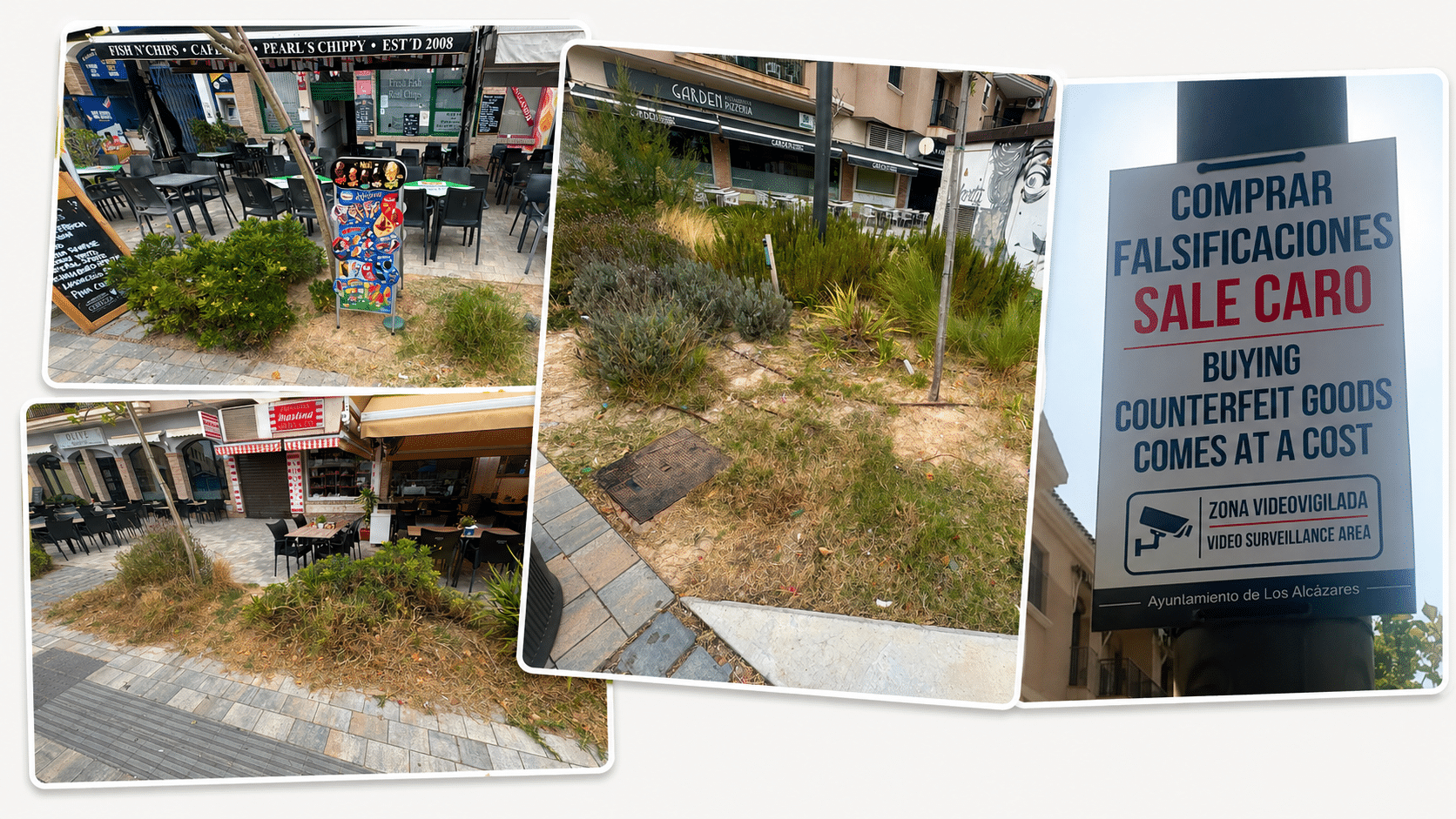
Weeds can grow through the gravel, leaving areas looking neglected unless they are cleaned regularly. Replacing or securing the loose material with a more permanent finish could improve the appearance of the avenue and reduce future maintenance costs.
The issue has become more noticeable as the planting and landscaped areas have matured.
Counterfeit street trading
Another growing concern is the presence of unlicensed vendors selling imitation handbags, football shirts, sunglasses and other counterfeit products.
The number of blanket sellers operating along Avenida Río Nalón appears to have increased significantly, particularly during busy periods. This has led to fears that the avenue is beginning to resemble a permanent street market rather than a carefully redeveloped tourist and commercial area.
Legitimate retailers are placed at a disadvantage when competing with vendors selling unlicensed and counterfeit goods without the same costs, regulations or tax obligations.
Counterfeit trading is also widely associated with broader criminal activity, including illegal production, smuggling and money laundering. In some cases, profits may support organised networks involved in migrant smuggling or human exploitation.
Stronger and more consistent enforcement could protect established businesses while helping Los Alcázares maintain its reputation as a high-quality family tourism destination.
Greater shade needed
The lack of shade is another practical issue, particularly during the hottest summer months.
The sun passes directly over much of the pedestrian avenue for long periods of the day, making it uncomfortable for visitors to remain in the area. Additional overhead canopies, similar to those installed in the Old Town, could provide much-needed protection.
A carefully designed shading system using restrained colours could complement the redevelopment while encouraging visitors to spend more time in the avenue’s shops, bars and restaurants.
Landscaping requires attention
Several of the plants used in the redevelopment have adapted well. Lavender, marguerite daisies and dwarf juniper have generally performed successfully and require only routine pruning and care.
Other species have struggled, however, and some planting areas now require a comprehensive clean-up, weed removal and possible replanting.
The condition of several young trees has also caused concern. Some appear to lack adequate support, while bamboo canes have reportedly been used as stakes in at least one location. More substantial supports would help the trees establish correctly and prevent them from growing at an angle.
Installing weed-suppressing membrane beneath the planting areas and adding stone or bark mulch could improve both presentation and maintenance. Suitable retaining borders would also prevent soil and decorative material from spreading onto pedestrian areas.
A role for businesses and property owners
Businesses and property owners could also be encouraged to help care for the areas immediately outside their premises.
Even limited participation, such as keeping neighbouring planting beds tidy or reporting damage promptly, could help improve the overall appearance of the avenue. A coordinated approach involving the council, businesses and residents could also foster a stronger sense of civic pride.
The concerns are not intended to dismiss the investment already made in Avenida Río Nalón. Instead, they highlight opportunities to refine the scheme and ensure that it delivers the greatest possible benefit to residents, visitors and the local economy.
With targeted maintenance, improved shading, stronger control of illegal trading and closer attention to landscaping, the avenue could become a more comfortable, attractive and commercially successful gateway to Los Alcázares.
ABOUT THE SOURCE OF THIS ARTICLE
This article is based on a report prepared by David Buse and presented to the Mayor of Los Alcázares. Although David is not a full-time resident, Mr Buse and his family have owned a property in the town for more than 20 years.
He has over 50 years’ experience in the travel and tourism industry and is also a qualified horticulturist. His professional background includes advising the Canadian Tourism Authority, Toronto Tourist Board and Jersey Tourist Board, as well as visiting and assessing leading tourism destinations during his career as managing director of an incentive travel company.