
A very good article recently appeared in The Leader highlighting the continuing problems at Cala Mosca and the efforts being made to address pollution and restore its Blue Flag status. (X (formerly Twitter))
But Cala Mosca is far from being the only beach raising concerns among residents.
Anyone who regularly walks the coastline knows that questions are also being asked about areas of Playa Flamenca, particularly the northern section near the coastal footpath. Residents and visitors alike have been commenting for months about the appearance of some stretches of shoreline and whether they truly reflect the image that Orihuela Costa wishes to project.
This inevitably raises a broader question.
Exactly how many of our beaches genuinely deserve the Blue Flag distinction?
Before anyone objects, it is important to recognise that Blue Flags are awarded according to specific criteria. Water quality, safety measures, accessibility, environmental management and facilities all play a role in the assessment process. The award is not handed out casually. (Idealista)
However, there is also the issue of perception.
Because while a beach may technically satisfy the criteria, many residents judge a beach by something much simpler:
“Would I actually want to spend the day there?”
And that is where the disconnect begins.
Across parts of Orihuela Costa, visitors are greeted by large accumulations of seaweed that can remain for extended periods. In some locations the seaweed forms sizeable mounds that dominate the landscape. While experts will correctly point out that Posidonia and other marine vegetation play an important ecological role, most holidaymakers are not conducting environmental studies.
They are deciding where to place their towels.
They are deciding whether to return next year.
They are deciding whether to recommend Orihuela Costa to friends and family.
A Blue Flag may reassure them that water quality meets international standards, but it does not necessarily convince them that the beach looks attractive.
That distinction matters.
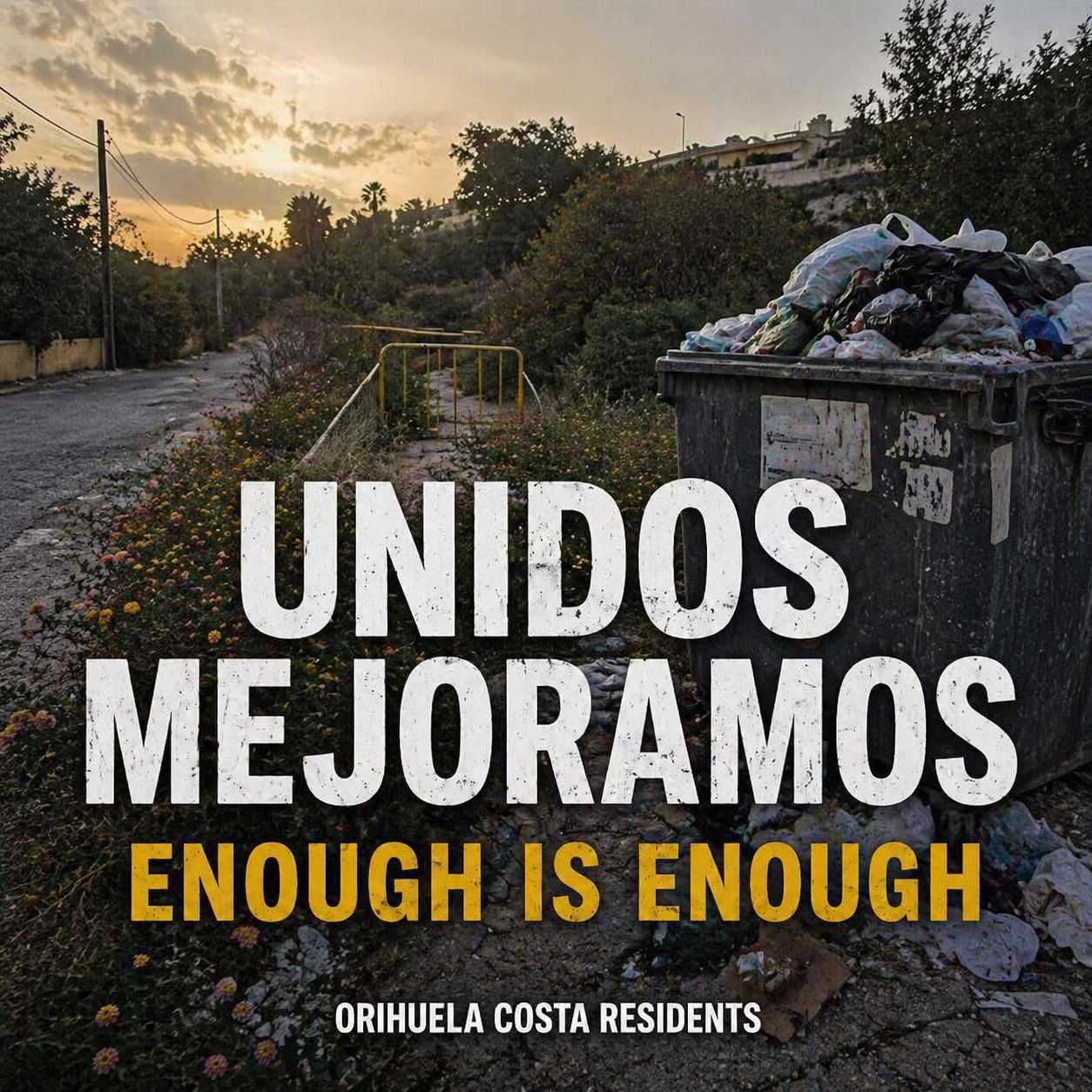
Tourism is one of the Costa’s most important economic drivers. Thousands of businesses depend on visitors choosing our coastline over countless alternatives elsewhere in Spain and across the Mediterranean.
When residents themselves begin questioning the condition of certain beaches, local politicians should pay attention.
The issue is not whether seaweed should be removed entirely. Environmental considerations must be respected.
The issue is whether a sensible balance is being achieved between environmental protection and maintaining beaches that people actually want to use.
Many coastal municipalities across Europe are now having exactly the same debate.
Some are rethinking the emphasis placed on Blue Flag awards altogether, arguing that the public increasingly judges beaches by appearance, cleanliness and overall visitor experience rather than by certifications alone.
Perhaps Orihuela Costa should do the same.
Because while Blue Flags remain valuable, they are not a substitute for public satisfaction.
At the end of the day, visitors do not arrive carrying a checklist of technical compliance criteria.
They arrive expecting clean, attractive beaches.
If residents are openly questioning the condition of Cala Mosca, Playa Flamenca and other stretches of our coastline, perhaps the real question is not how many Blue Flags we have.
Perhaps the question is whether those flags still reflect what people actually see when they arrive.
And if the answer is increasingly “no”, then maybe the standard being measured is no longer the standard that matters most.