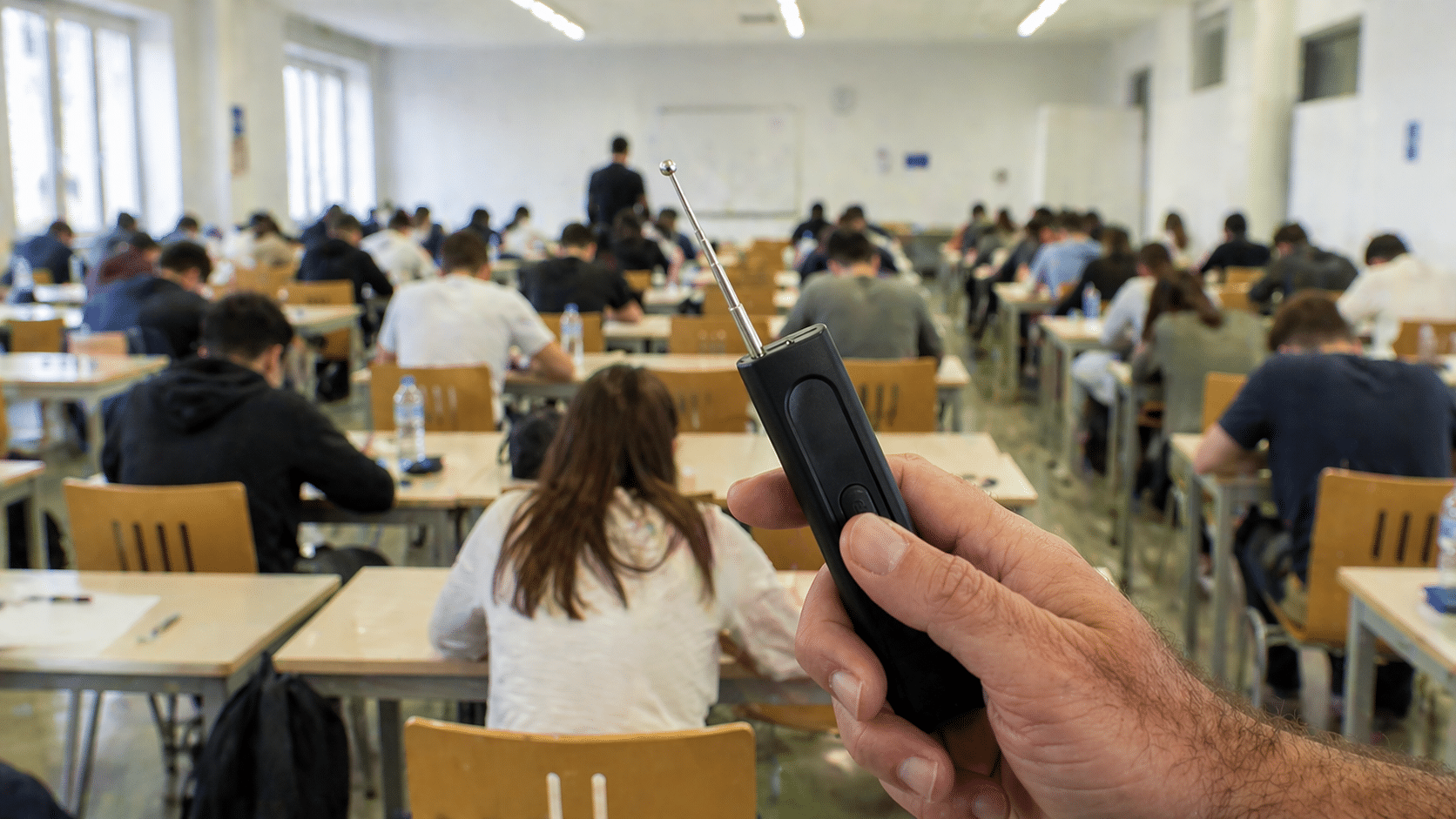
Faculty at the University of Alicante are stepping up efforts to combat academic fraud in in-person examinations, deploying radio-frequency detectors to identify unauthorized electronic devices. These tools can detect mobile phones, smartwatches, concealed cameras, AI-enabled glasses, and even miniature earpieces—many of which are inexpensive and widely available online.
The initiative comes in response to a noticeable rise in technologically assisted cheating. By identifying devices that emit signals or transmit data, these detectors help prevent students from accessing external assistance during exams. Complementary applications capable of detecting Bluetooth communication between devices are also being used.
The Higher Polytechnic School has led the rollout of this system, primarily as a deterrent. However, early results have prompted its expansion to other faculties, including the Faculties of Sciences and Economics.
According to Vice-Rector for Studies, Francisco Torres, the initiative is currently in a pilot phase. The university is working toward a unified protocol to be implemented across all degree programs in time for the second semester’s final examinations.
Toward a University-Wide Protocol
The forthcoming regulations will define both the use of detection tools and the disciplinary procedures for academic misconduct. Penalties may range from an automatic failing grade on an exam to failing the entire course.
In shaping its approach, the University of Alicante has drawn on the experience of the Polytechnic University of Valencia, where the Higher Technical School of Telecommunications Engineering has been a pioneer in adopting radio-frequency detection technology.
Josué Nescolarde, director of the Higher Polytechnic School, emphasized faculty concerns: ensuring fairness for students who study honestly is paramount. A detailed report has been prepared outlining available devices, their legal use (signal blockers remain prohibited), and best-practice recommendations, which have already been circulated within the institution.
A “Policing” Role for Faculty
Internal communications to teaching staff describe these tools as a complement to active invigilation, enabling instructors to detect unauthorized devices during exams. However, not all faculty members are comfortable adopting what some perceive as a quasi-policing role. Notably, such detection technologies have traditionally been used in security contexts to locate surveillance or espionage equipment.
Broader Academic Shifts
The university is also finalizing broader guidelines addressing the misuse of AI and electronic devices. The drafting process has involved multiple stakeholders, including vice-rectorates, student representatives, the Department of Digital Transformation, the University Ombudsman, and the Data Protection Officer, ensuring legal and ethical considerations are fully addressed.
At the pedagogical level, the rise of AI is prompting a shift in assessment strategies. Universities are increasingly reducing reliance on written assignments and placing greater emphasis on oral examinations and presentations, allowing students to demonstrate genuine understanding. The University of Alicante is preparing new teaching guidelines that will prioritize oral defences and reduce the weighting of take-home coursework.