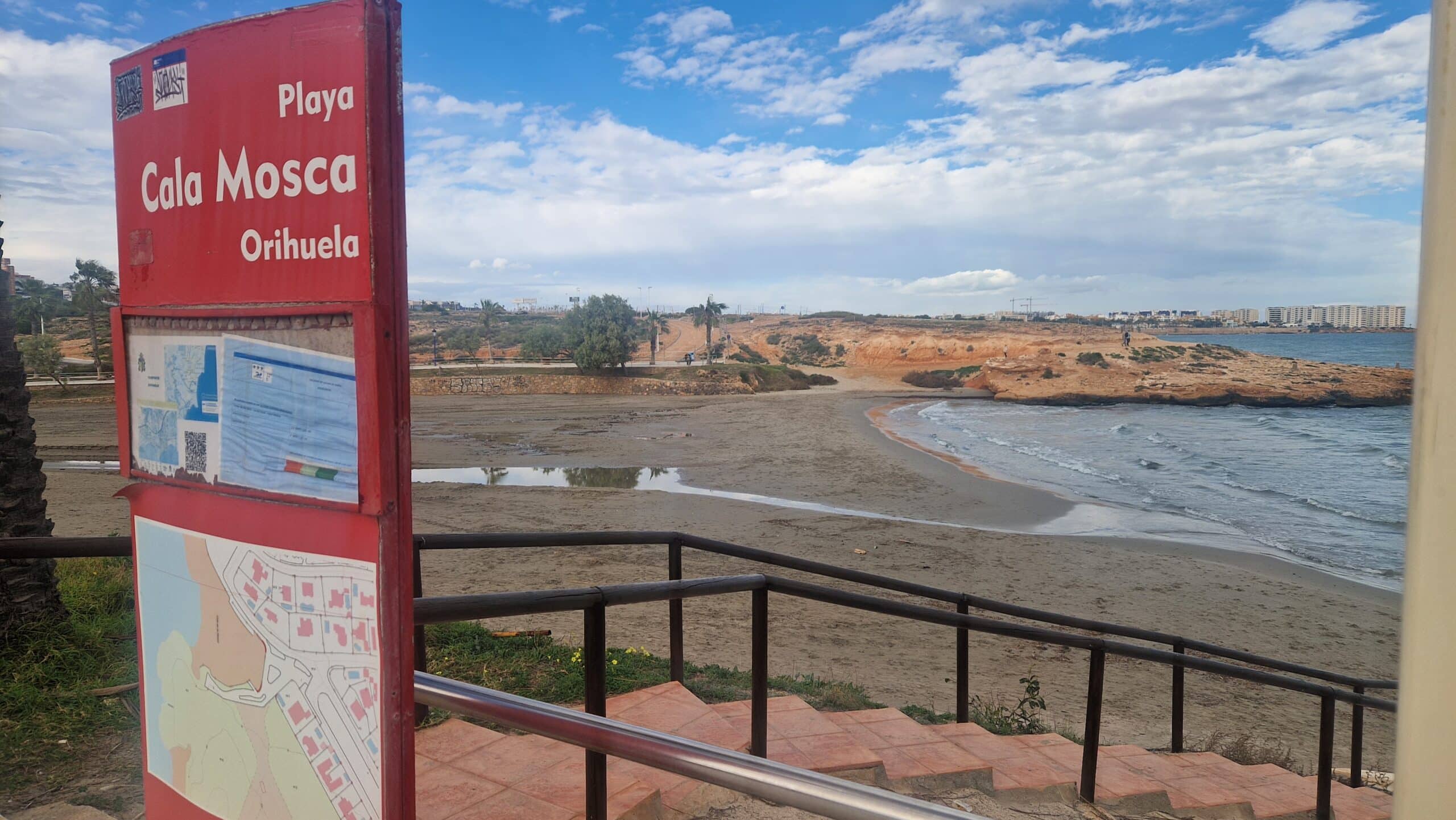
The mystery behind repeated pollution closures at Cala La Mosca (Playa Flamenca) in Orihuela Costa has been resolved following an investigation triggered by a complaint from the Independent Party of Orihuela Costa (PIOC).
While the Elche–Orihuela Area Prosecutor has now closed the case after finding insufficient evidence of an environmental crime, the inquiry has clearly established the source of the contamination that forced the beach to close several times last summer.
The issue came to light in June and July 2024 after PIOC detected faecal discharges and documented the spill on video. The party alerted water operator Hidraqua and Orihuela City Council, both of which initially denied any leakage. PIOC then contacted the Guardia Civil, who confirmed the presence of sewage.
The discharge was halted shortly afterwards. However, as authorities failed to clarify where the pollution was coming from, PIOC referred the matter to the Public Prosecutor’s Office to prevent further incidents. That process has now identified the origin of the wastewater.
According to official documentation, the sewage entering the ravine originated from an overflow pipe irregularly connected to the stormwater network at the Horizonte wastewater pumping station (EBAR), located between Calle’s Salustiana and Clementina. This unauthorised connection — reportedly unknown to both Hidraqua and Orihuela City Council — allowed untreated wastewater to flow into the dry riverbed that discharges directly into Cala La Mosca.
Prosecutors confirmed that technical inspections were launched following PIOC’s complaint. Hidraqua traced the source of the spill, notified the company managing the pumping station and alerted the Segura River Basin Authority, after which the discharge into the ravine was stopped.
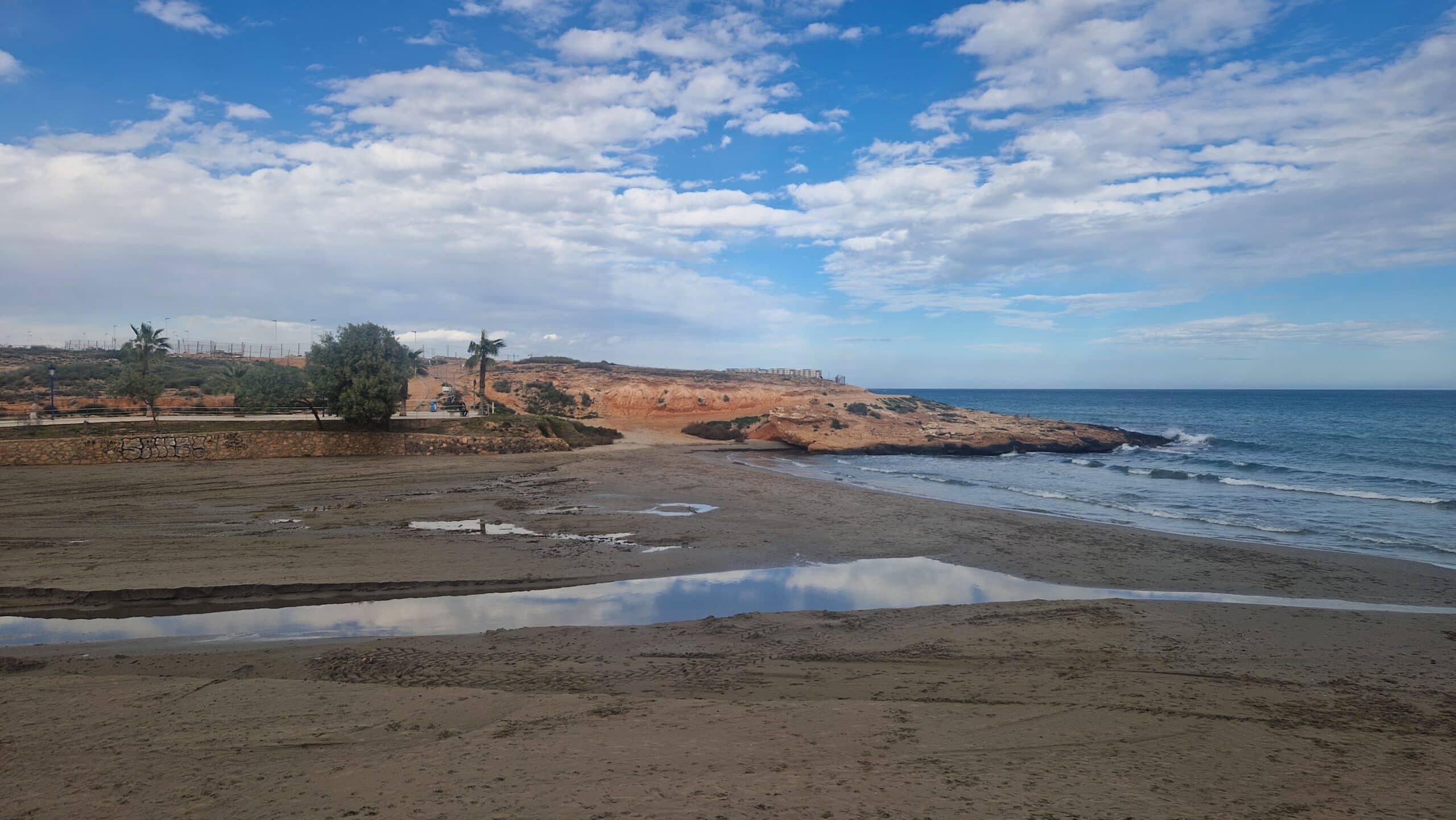
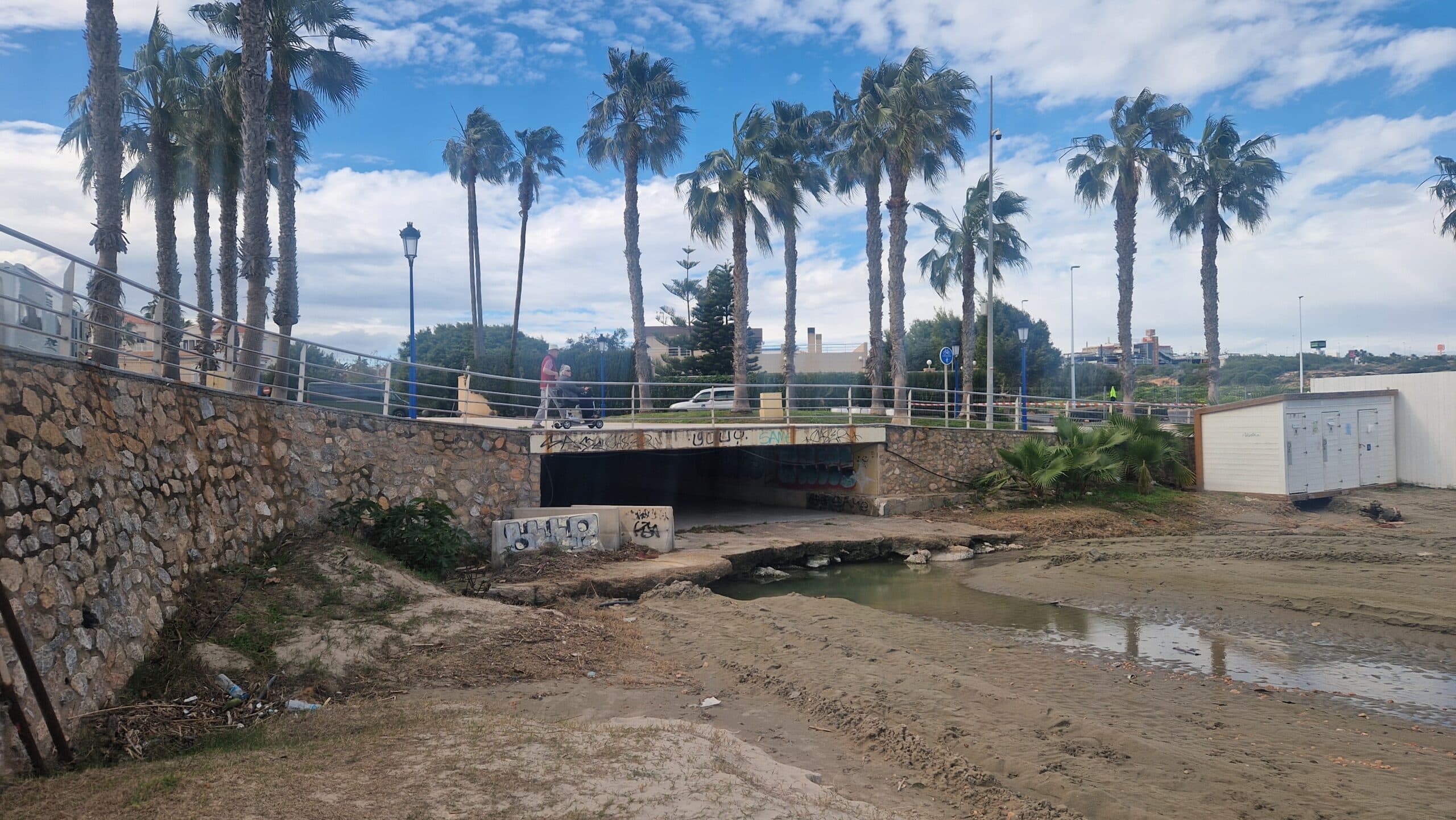
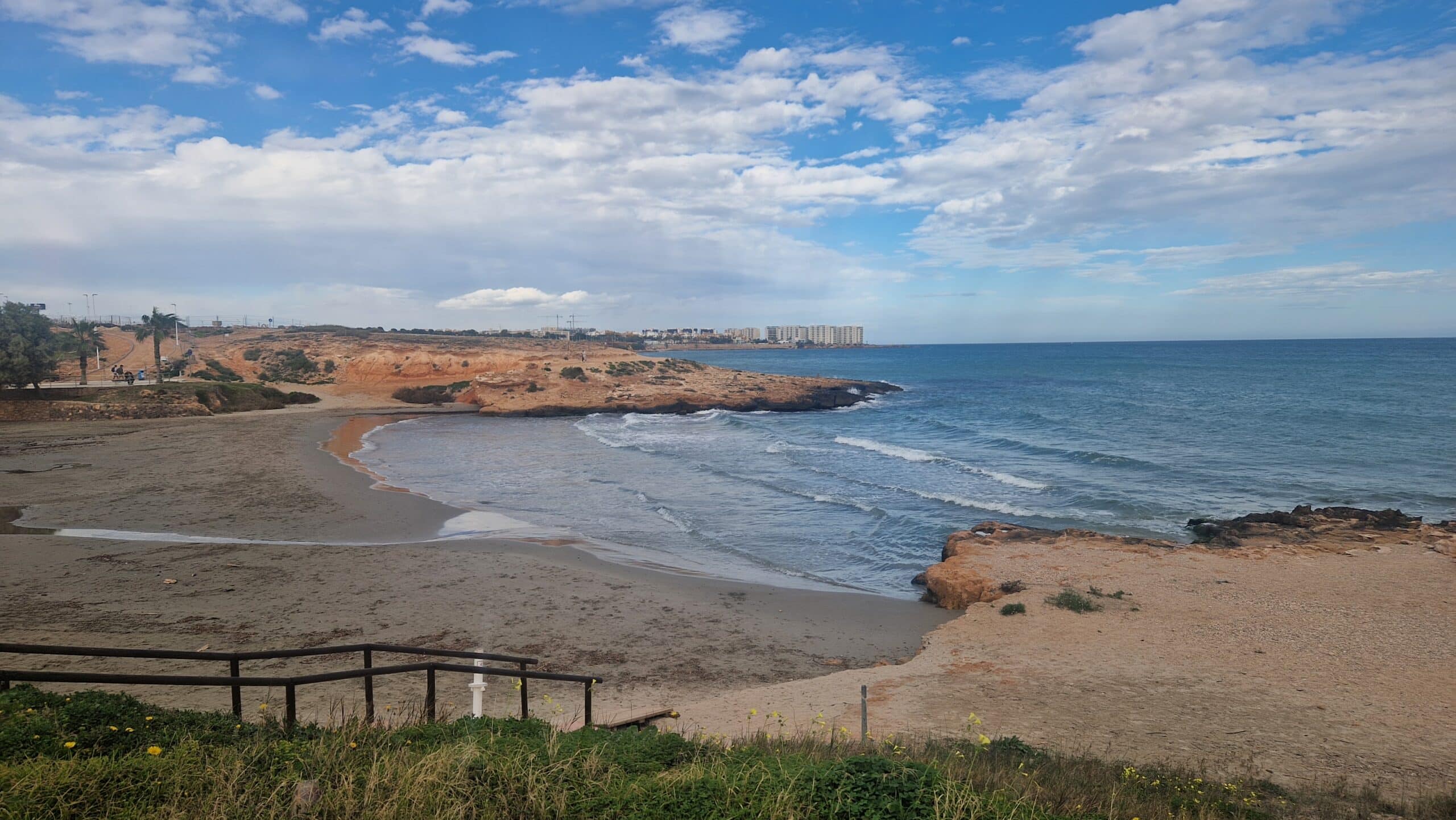
A SEPRONA report included in the proceedings documented sewage flowing from a stormwater pipe on Calle Niágara into the public watercourse leading to the beach. Follow-up inspections verified that the spill had been brought under control later that same day.
Water quality analyses carried out at the end of July showed elevated levels of faecal bacteria, particularly intestinal enterococci and Escherichia coli. These findings coincided with periods of heavy rainfall in the area — a combination that explains both the contamination episode and the precautionary closure of the beach.
Although prosecutors ruled out criminal liability, they acknowledged that the cause of the pollution was identified and corrected, preventing further environmental damage to a cove of high ecological value.
PIOC has stressed that the judicial dismissal does not diminish the seriousness of the episode, noting that the pollution was real, had a specific source, and was only stopped once formally reported and investigated.
Cala La Mosca and nearby La Glea beach were also closed for several days in July 2024 due to similar contamination, with Cala La Mosca losing its Blue Flag status last summer. Despite these setbacks, Orihuela remains one of Spain’s leading municipalities for Blue Flag beaches, an international quality standard based on water quality, environmental management, accessibility and safety.