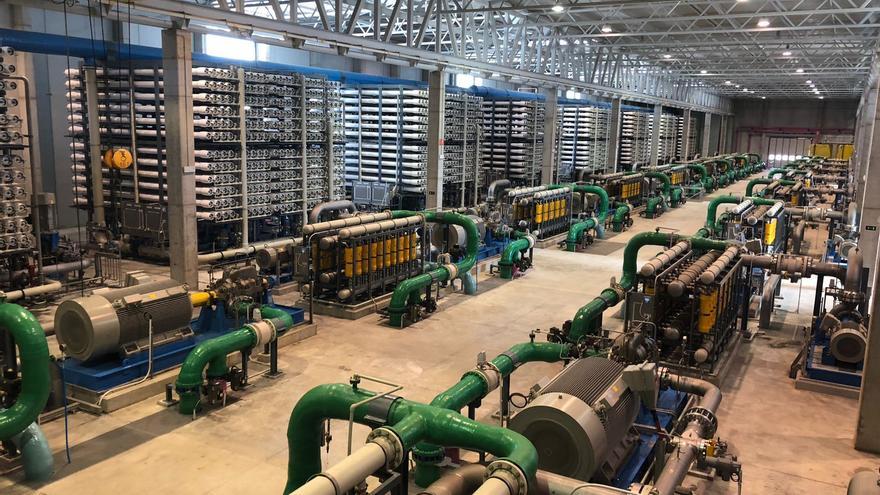
Plans for a new large-scale desalination plant in Torrevieja have taken a significant step forward, strengthening the town’s role as a key hub for water supply in southern Spain. The project forms part of a wider initiative that also includes a smaller facility in Águilas, with both plants together expected to produce up to 150 cubic hectometres of water per year.
The Confederación Hidrográfica del Segura (CHS) has signed contracts to prepare the initial designs for the two plants, with a total investment of around €1.34 million, including VAT. While both projects are moving ahead in parallel, the Torrevieja plant stands out due to its size and strategic importance within the water transfer system.
The Torrevieja facility will be the larger of the two, with an annual production capacity of 100 cubic hectometres of desalinated water—double that planned for Águilas. It will be connected to the left bank canal of the transfer system and is designed to supply Alicante province as well as the Campo de Cartagena, helping to secure water resources for a wide range of urban and agricultural users.
According to the CHS, the drafting of the designs is expected to take about one year, although this period could be extended due to environmental impact assessments and public consultation processes required before the project can proceed to the tendering stage.
Officials stress that the primary objective of the Torrevieja plant is to alleviate chronic water shortages caused by reduced allocations from the Tajo-Segura transfer and to reduce pressure on heavily overexploited aquifers. More than half of the water produced at the Torrevieja facility will be used to address shortages in areas such as the Campo de Cartagena, La Pedrera and several zones connected to the transfer system, through both direct supply and water exchanges.
The remaining output will be used to recharge or replace water currently drawn from overused aquifers in coastal and inland areas, including Cabo Roig, Torrevieja itself, the Sierra de Cartagena and the Campo de Cartagena. This is expected to play a key role in improving the long-term sustainability of local water resources.
The design contract for the Torrevieja plant has been awarded for €669,286.10. Although the exact location has not yet been finalised, the CHS has confirmed that the facility will be built on the coast near the La Pedrera reservoir and must be connected to it. Planners will also assess whether the new plant can share infrastructure with the existing Torrevieja desalination plant to improve efficiency and reduce costs. Alongside the Torrevieja project, a smaller desalination plant is planned for Águilas, with a capacity of 50 cubic hectometres per year, mainly to supply the Region of Murcia. However, officials underline that the Torrevieja facility will be a cornerstone of future water security across the Segura basin, marking a major step towards more reliable and sustainable water supplies for the region.