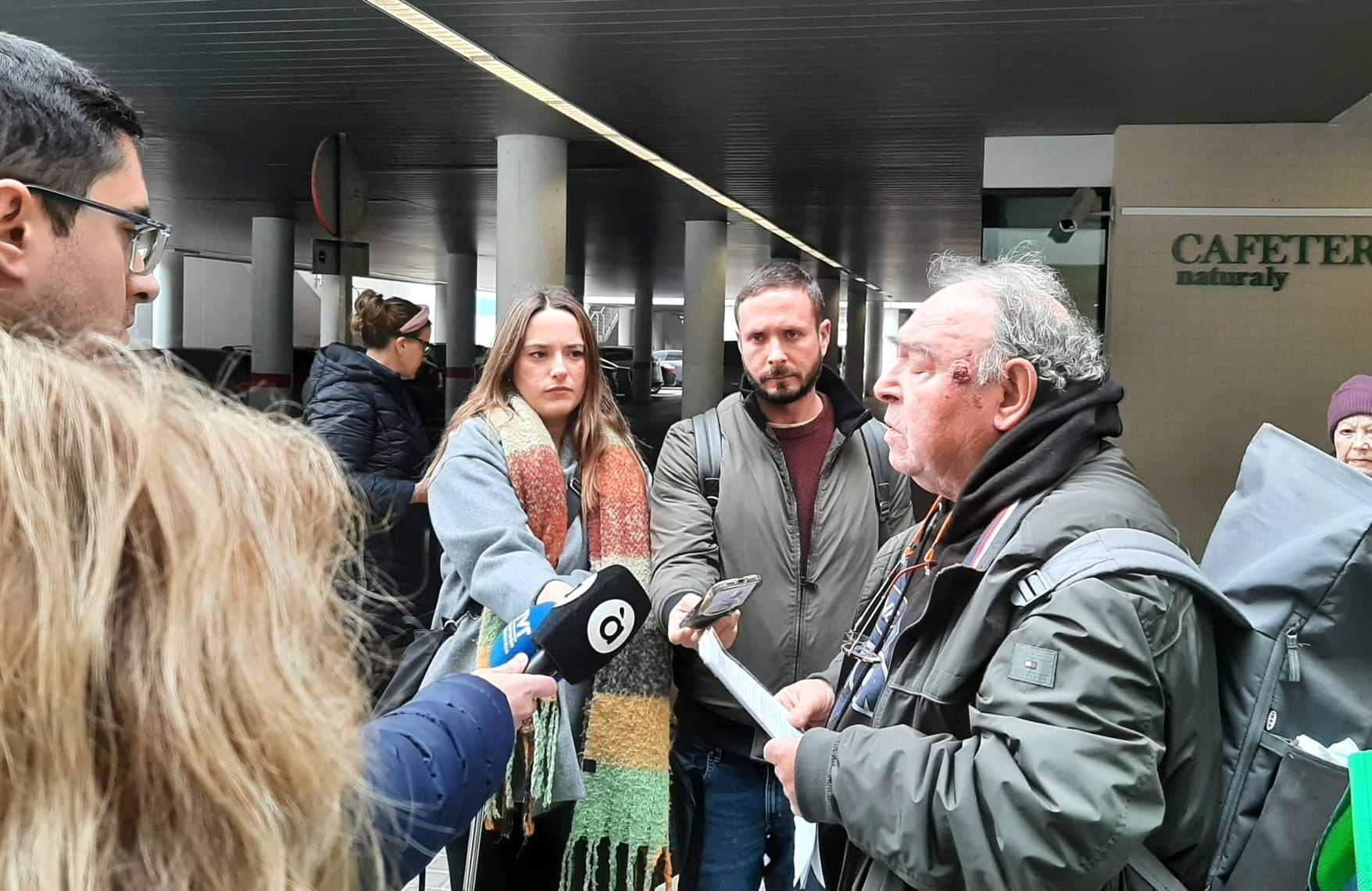
The Platform for 100% Public Healthcare in Torrevieja has denounced the case of a 76-year-old patient, Manuel González, who has been left without a diagnosis or treatment for a potentially serious skin lesion for over five months. Initially a small pimple near his eye, the lesion has grown to several centimetres, causing pain, anxiety, and now affecting his vision and hearing. González still does not know whether it is a benign keratoma or a malignant carcinoma.
According to the platform, González was first referred to Dermatology as a priority in August after months of delays caused by overcrowded primary care clinics, a problem exacerbated during the summer by Torrevieja’s seasonal population increase.
Since his referral, he has not received any diagnostic tests. In late December, the hospital scheduled him for a brief visual examination at a private clinic in Ciudad Quesada—also managed by Ribera Salud, the company that ran Torrevieja Hospital for 15 years before its reversion to public management in 2021.
“The appointment was confusing and unhelpful,” González recounts. “They told me I needed surgery but could not perform it there. I left without a medical report—the printer wasn’t working—and without any concrete plan for treatment. You feel completely disoriented. You don’t know what you have or what’s going to happen.”
Manuel Gómez, spokesperson for the Platform for 100% Public Healthcare, condemns the case as symptomatic of the collapse of the Dermatology department. “We are talking about a priority referral for a possible cancer, left undiagnosed for five months. This is unacceptable and cannot be normalized,” he stresses.
The platform also criticizes the hospital’s practice of outsourcing patients to private clinics to manage waiting lists, particularly when those clinics are run by the same company that previously managed the public hospital. “There is no transparency and no guarantee of continuity of care,” Gómez adds.
The situation highlights severe understaffing in Torrevieja Hospital’s Dermatology Department, which currently has only one specialist for the entire health area. Public system guidelines recommend at least three dermatologists, with five needed to provide timely care. “With a single doctor, it is impossible to handle consultations, follow-ups, and minor surgeries, creating unmanageable waiting lists that put patients’ health at risk,” the platform warns.
Meanwhile, González is preparing administrative claims and may escalate his protests. “The worst part is the uncertainty,” he says. “Not knowing if you have something serious and feeling like nobody is giving you an answer.” According to the platform, this uncertainty is increasingly common among patients in the Torrevieja health system, exposing systemic weaknesses that demand urgent attention.