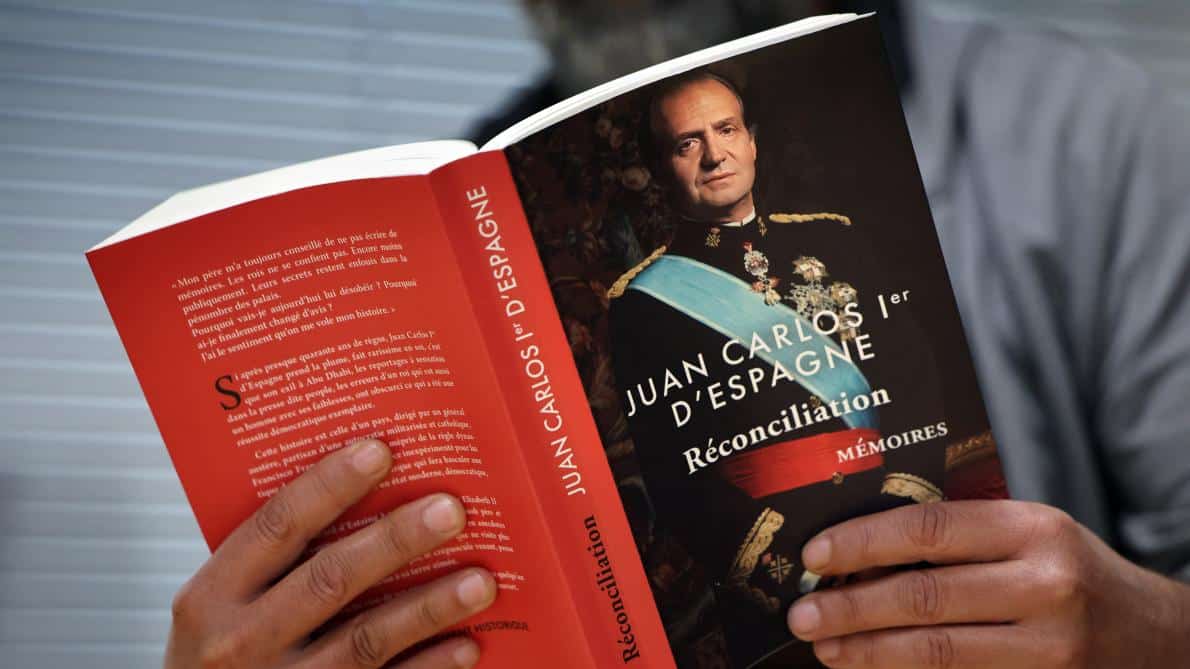
Spain’s former king, Juan Carlos I, has published a candid and controversial memoir revealing intimate details of his life, reign, and scandals.
The 512-page book, co-written with French author Laurence Debray and released in France under the title Juan Carlos I d’Espagne: Réconciliation, coincides with the 50th anniversary of Francisco Franco’s death and the restoration of the Spanish monarchy.
In it, Juan Carlos recounts key moments that shaped both his personal life and modern Spanish history.
The memoir opens with his childhood in exile and the tragic death of his younger brother, Alfonso, who he accidentally shot dead while playing with a gun in 1956. Juan Carlos describes the incident as a defining moment, saying he “lost a friend, a confidant” and has carried the grief ever since.
He also recounts the fateful day when Franco summoned him, personally naming him as his successor over his own father, Don Juan. Juan Carlos recalls being stunned and accepting “as a duty and an obligation,” aware the decision would determine Spain’s future.
He reflects on pivotal moments in his reign, including the attempted coup of February 1981. Juan Carlos emphasizes the threat it posed to Spain’s fledgling democracy, calling it “the only certainty is that the military tried, with weapons, to betray Spain’s young democracy — my work — and I could not tolerate it.”
The memoir also details his private life, addressing allegations of extramarital affairs. He admits a relationship with Corinna Larsen, describing it as “the weakness of a man” and expressing remorse toward his estranged wife, Queen Sofía. He disputes many media claims of affairs, insisting friendships between men and women were often misconstrued.
Juan Carlos candidly addresses his financial controversies, including a €65 million gift from the late King Abdullah of Saudi Arabia and undeclared Swiss accounts, which fuelled scandal and led to his exile in Abu Dhabi in 2020.
He expresses disappointment over his son, King Felipe VI, renouncing his inheritance and cancelling his allowance, while also defending the monarchy’s institutional legacy.
Despite the controversies, Juan Carlos frames his memoir as a reflection on duty, regret, and devotion to Spain. He writes that leaving Spain has profoundly changed him but underscores that his priority remains the Crown and the continuity of the monarchy.
While acknowledging mistakes, he asserts his life was devoted to the nation and its democratic transition.