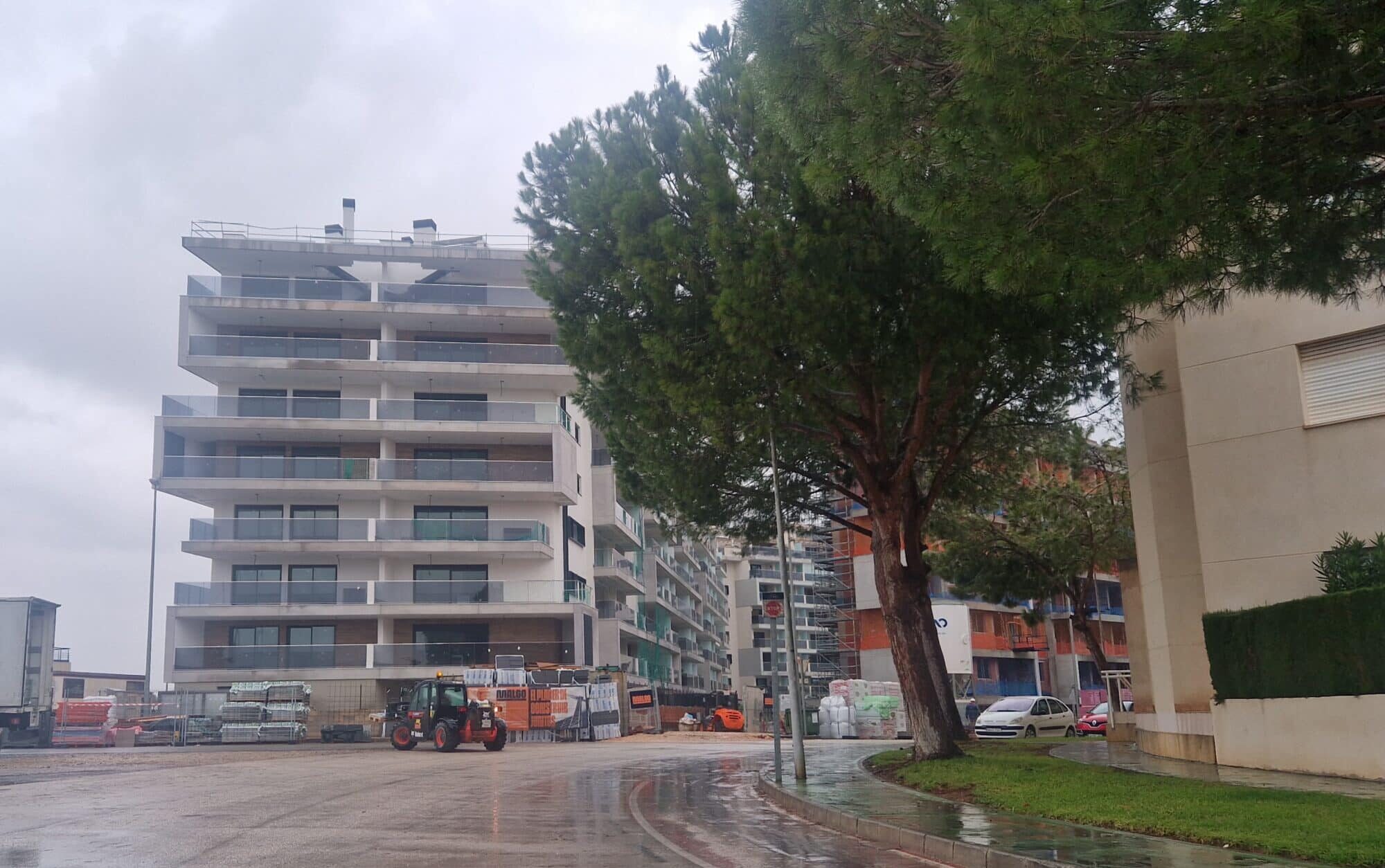
In one of the first acts of legislation introduced by the recently appointed President, Juan Francisco Pérez Llorca, the Valencian Community has introduced a new “Simplified” decree that significantly alters how housing and land are managed in the region.
This move is presented as a solution to the housing crisis by making construction faster and easier, but it has sparked intense criticism regarding urban quality and the privatisation of public oversight.
Changes to Public Land Use
The decree allows for the construction of protected housing on land that was originally set aside for public services like schools, medical clinics, and sports centres. While the law suggests that municipalities must eventually replace this lost “service land” within three years, the immediate effect allows developers to build on plots that have often been sitting empty for years.
There is an ongoing debate about whether this land will be leased to developers or if it will be traded in “land swaps,” where the developer becomes the owner of the land in exchange for giving a few finished apartments back to the government.
Privatization of Quality Control
In a major shift, the government is moving the responsibility for classifying and checking public housing into the hands of private collaborating entities known as ECUVs. Previously, the administration was solely responsible for ensuring that affordable housing met specific habitability and quality standards.
By allowing private firms to issue these certificates, the government argues it will reduce bureaucracy and speed up the market, whereas critics argue it removes essential public control and oversight of building legality.
Smaller Homes and Higher Density
The new rules remove the previous limits on the maximum number of homes allowed in a specific urban area. By focusing on the total square meters of a building rather than the number of units, developers can now fit more apartments into the same space, which naturally leads to the creation of smaller flats.
Additionally, the decree eliminates the requirement for developers to provide more green spaces or public parks when they increase the population density of a neighbourhood, meaning more people will be living in smaller spaces with fewer nearby public amenities.
Legal and Political Backlash
The Generalitat’s own legal team has raised objections to the use of a “Decree Law” to make these changes, as this fast-track method bypasses the detailed review usually required by the Legal Advisory Council.
Political opponents, specifically the PSPV, claim this model is purely speculative and prioritizes the interests of the “brick” industry over the needs of the public.
They argue that instead of fixing the housing market, the government is creating a city model that is more crowded and lacks the basic public infrastructure needed for a healthy community.