Alicante’s Provincial Archaeological Museum (MARQ) has announced a groundbreaking find at the Cabezo del Molino site in Rojales: what could be one of the earliest rural Christian basilicas ever documented in the province.
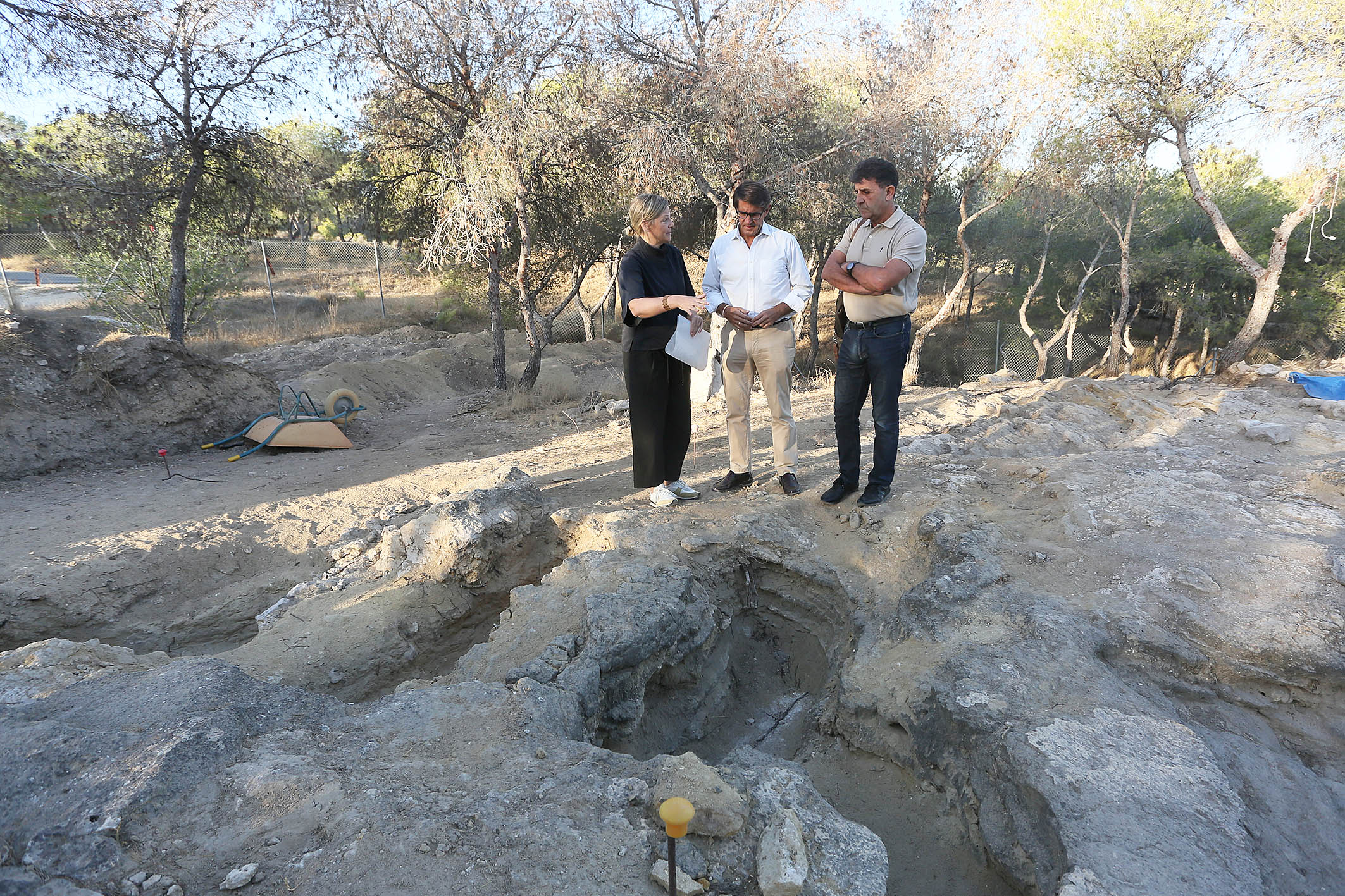
The discovery, made during the eighth excavation campaign this September, is part of what is already recognized as the largest Byzantine necropolis on the Iberian Peninsula. Archaeologists believe they have uncovered a complete funerary complex, including two burial areas and a religious building whose layout resembles early Christian basilicas, similar in scale to small hermitages.
Deputy for Culture Juan de Dios Navarro, who visited the site alongside MARQ director Manuel Olcina and excavation co-director Teresa Ximénez de Embún, hailed the find as a milestone for international research into the Byzantine period. Since 2018, the project led by Ximénez de Embún and Juan Antonio López Padilla has already produced major surprises, including the necropolis itself and advanced anthropological studies carried out with Germany’s prestigious Max Planck Institute.
Navarro stressed that the excavation not only enriches Alicante’s cultural heritage but also cements the region’s status as a key reference point for the study of early Christianity: “This program allows us to document and deepen scientific knowledge of these findings, helping us better understand the civilizations that once thrived here.”
With its age and significance, the Rojales basilica stands as a rare and thrilling window into the province’s earliest Christian communities.