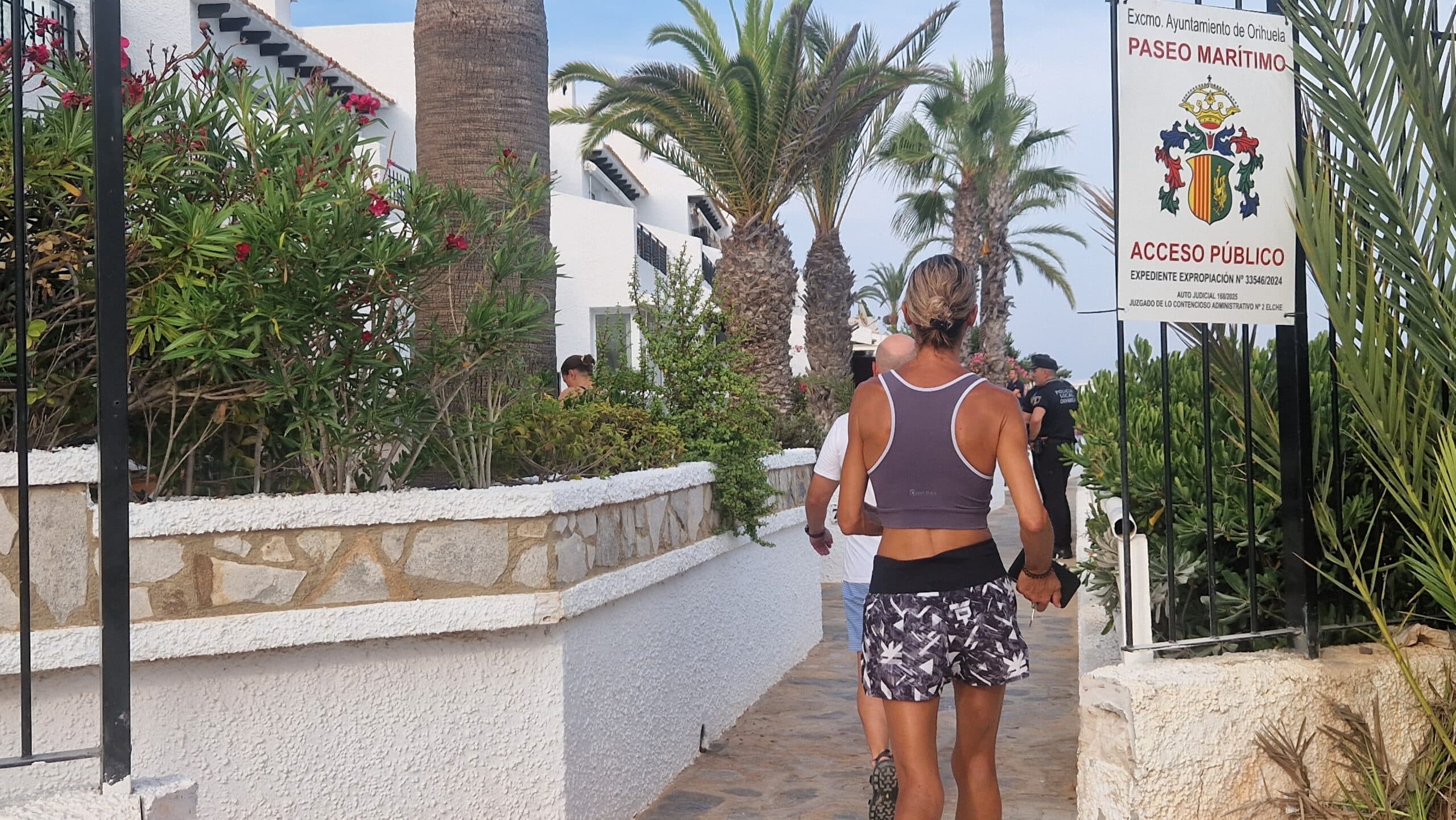
After more than twenty years of legal disputes, bureaucratic hurdles, and persistent community pressure, the Aguamarina–Cabo Roig coastal walkway was officially reopened on Tuesday, 19 August 2025. The long-awaited reopening of this short but strategically vital section of promenade restores public access to one of Orihuela Costa’s most scenic and popular walking routes.
The event was marked by a festive atmosphere as residents, visitors, and local officials gathered to celebrate the moment. Families, walkers, and tourists streamed along the newly reopened path within hours of the barriers being removed, reclaiming a space that for years had symbolized both frustration and resilience in the face of administrative inaction.
A Small Stretch, A Big Impact
At first glance, the disputed section might seem insignificant. The walkway in question measures just 30 meters in length, yet it serves as a crucial connector between residential neighbourhoods, local beaches, and recreational areas. During the height of summer, more than 2,000 people use the path daily.
The dispute affected a limited number of properties—seven ground-floor and seven first-floor apartments in the Bellavista I Urbanisation. These were mainly used as holiday homes, yet the owners’ decision to block access had wide-reaching consequences for the community. By closing the walkway, they forced pedestrians into a 2-kilometre detour and deprived locals and tourists alike of one of the area’s most beautiful seafront routes.

Origins of the Dispute
The conflict dates back to the early 2000s, when Bellavista residents erected gates at either end of the path. A decade later, in 2013, a wall was added along its southern edge, definitively sealing off public access.
Community outrage followed swiftly. Local pressure groups, particularly CLARO under the leadership of Bob Houliston, campaigned vigorously for the walkway’s reopening. Their advocacy included public demonstrations, engagement with the regional Conselleria in Valencia, and direct appeals to the Director of Costas in Alicante. Despite their efforts, the Orihuela Town Hall was repeatedly criticized for its failure to resolve the matter.
Political and Legal Deadlocks
Attempts at resolution proved slow and contentious. In 2015, then-PSOE councillor Antonio Zapata authorized the reopening of the walkway in response to public pressure. However, the move sidestepped the legally required expropriation process. The Bellavista community swiftly challenged the decision in court, and in 2016 the judges ruled in their favour. The promenade was once again closed, restoring the 2-kilometre pedestrian detour.
The legal back-and-forth deepened divisions. While the Orihuela City Council faced criticism for its mismanagement, the Coastal Authority confirmed in 2017 that Zapata’s decision had in fact been legally correct: the path lay within a “zone of easement of transit,” guaranteeing public access. But this ruling was never publicized effectively, and the walkway remained locked behind walls and gates.
Expropriation: A Long Road
It was not until 2019 that Orihuela City Council formally began expropriation proceedings under Acting Deputy Mayor Rafael Almagro. The goal was to secure ownership of the land and thus permanently reopen the walkway. Negotiations were complicated, however, by external factors. The “gota fría” storm of September 2019 inflicted severe damage to the coastline, including landslides and cracks in retaining walls, which raised safety concerns and delayed progress further.
The Bellavista residents opposed expropriation outright, proposing instead an alternative cliff-side path. The Provincial Coastal Service rejected this plan on grounds of feasibility and safety. Meanwhile, pressure groups including FAOC (Federación de Asociaciones de Vecinos de Orihuela Costa) stepped in to continue the advocacy work initiated by CLARO, later joined by Unidos por la Costa. Their lobbying ensured that the issue remained in the public eye.
Legal proceedings dragged on. In December 2021, the walkway was briefly reopened but then re-closed after another court ruling confirmed the land as private property. The stalemate persisted, with both sides entrenched.
Valuation Battles
At the heart of the dispute lay the question of compensation. The Bellavista homeowners demanded €3 million in damages, citing loss of privacy and property value. The City Council, by contrast, assessed the land at just €69,113. The gulf between these figures stalled negotiations for years.
Finally, in April 2025, the Provincial Expropriation Jury intervened, setting the compensation at €26,180. This ruling enabled the City Council to deposit the money into a state account and legally acquire the land. Though the amount was far below what the owners had sought, it provided the legal clarity needed to move forward.
The 2024 municipal budget had already earmarked €600,000 for expropriation and related works, covering not only compensation but also restoration of the path and its infrastructure. With financial, legal, and administrative hurdles finally resolved, only the physical barriers remained.
Celebrations and Symbolism
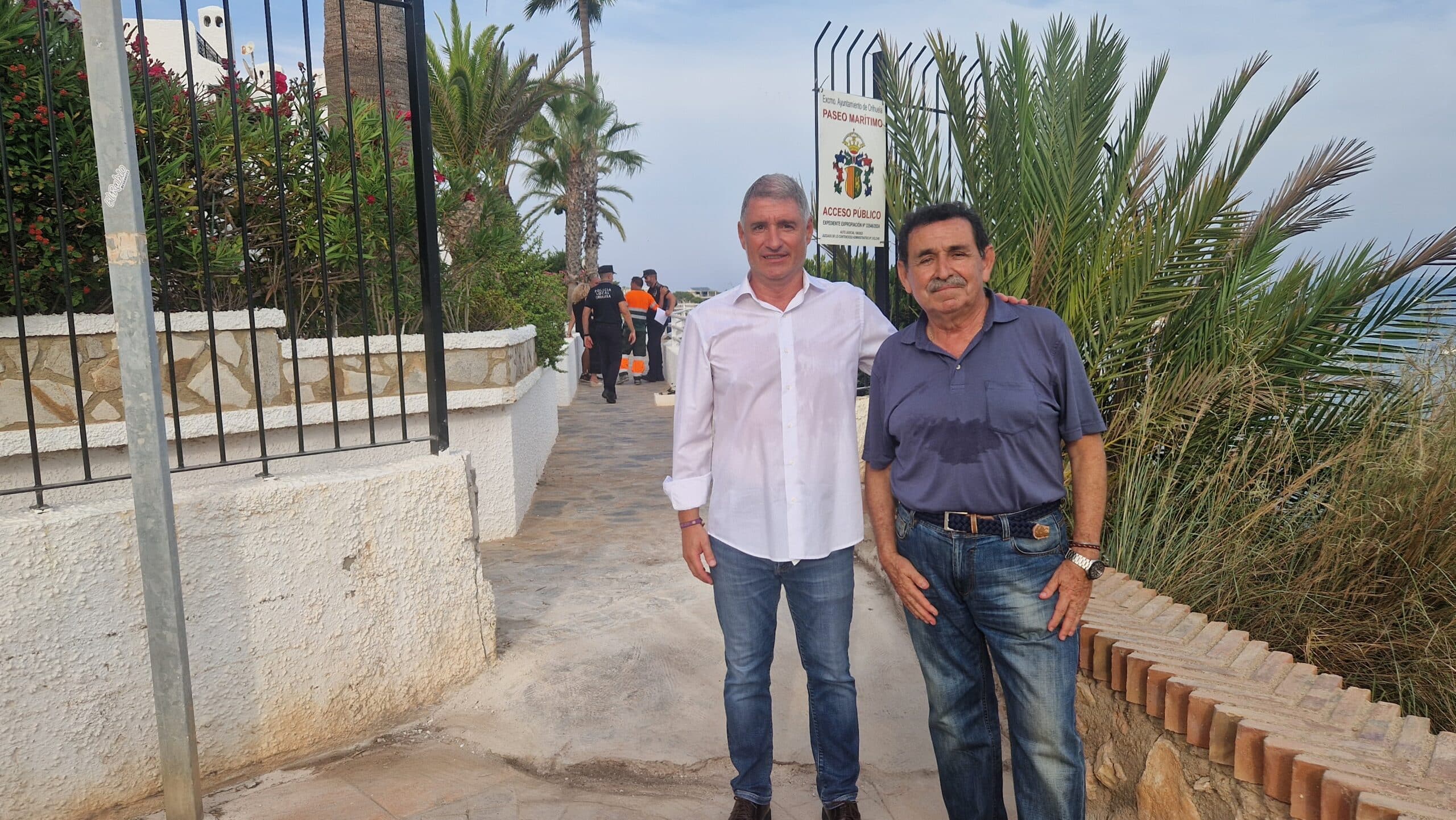
The decisive breakthrough came in August 2025, when the Administrative Court in Elche granted judicial authorization for Orihuela City Council to take possession of the land. Days later, municipal workers arrived on site to demolish the wall and gates that had long blocked the promenade.
The reopening ceremony on 19 August drew the mayor, councillors, and public officials, alongside campaigners and residents who had fought for years to reclaim the walkway. Applause broke out as the final remnants of the barrier fell. Smiling families, cyclists, and joggers wasted no time in filling the path, a visible reminder of why the fight had mattered.
For community groups, the event was more than symbolic. Unidos por la Costa described it as a “victory of the people,” while emphasising the broader principle at stake: that coastal access must remain a public right, not a private privilege. The Leader newspaper, which had provided consistent coverage of the dispute for over a decade, hailed the resolution as proof of what sustained local journalism and civic activism can achieve.
Lessons Learned
The reopening of the Aguamarina–Cabo Roig walkway concludes a struggle that illustrates the challenges of balancing private interests with public rights. The case highlighted weaknesses in municipal governance, with repeated delays, missteps, and lapses in communication eroding public confidence. It also underscored the resilience of civic groups and the importance of grassroots advocacy in defending community interests.
Above all, the dispute reaffirmed that coastal areas are not merely infrastructure. They are cultural spaces that form part of the local identity, places where residents and visitors connect with the landscape and with one another. The reopening of the walkway restores more than convenience: it restores community pride and strengthens the collective belief that public spaces belong to all.
A New Chapter
As of August 2025, the Aguamarina–Cabo Roig promenade is once again part of daily life in Orihuela Costa. Its reopening is not only the end of a 20-year battle but the beginning of a renewed commitment to protecting and enhancing public access to the Mediterranean coastline.
The hope now is that the lessons learned from this protracted dispute will guide future decisions, ensuring that no community must again wait two decades to reclaim what was always theirs: the right to walk freely by the sea.