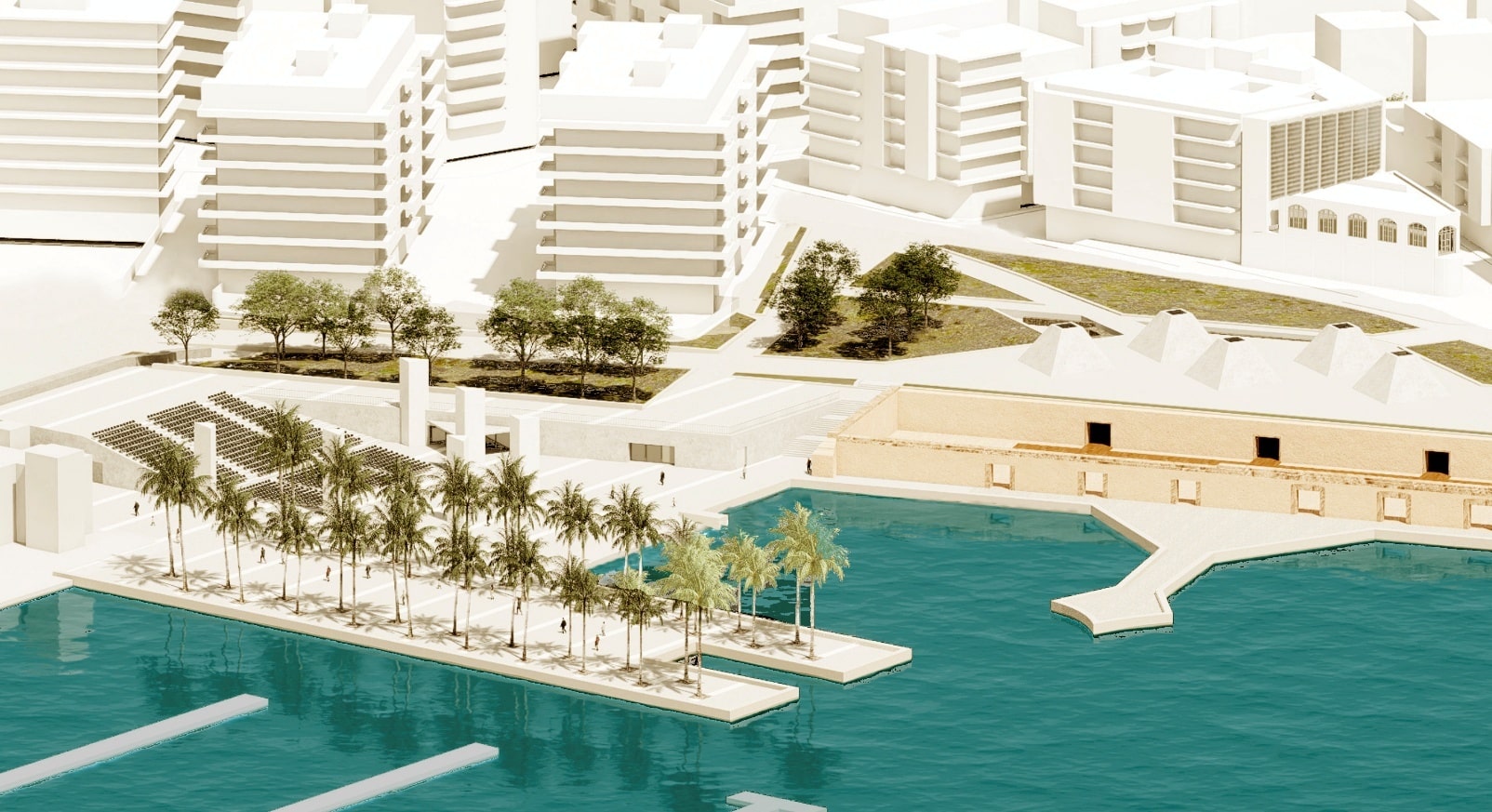
Torrevieja City Council has approved the tendering of two major projects that will transform the historic Eras de la Sal complex: a new Museum of the Sea and Salt and a purpose-built auditorium for the International Habaneras and Polyphony Contest.
The contracts have a combined value of €29.19 million and form part of the comprehensive restoration of the landmark site and its surrounding urban and waterfront areas.
Companies will have 35 calendar days to submit bids under the EU-regulated tendering procedure. The contracts are expected to be awarded in October, with construction potentially beginning in November if no appeals delay the process.
Designed by the acclaimed Paredes Pedrosa architectural studio, the projects aim to preserve the historical identity of the site and Torrevieja’s close connections with the sea, salt production and habanera music.
Mayor Eduardo Dolón said the Habaneras Contest would remain in its traditional setting while benefiting from more modern technical and theatrical facilities and improved comfort and accessibility for audiences and participating choirs.
Open-Air Auditorium for 1,502 Spectators
The new auditorium will feature open-air tiered seating for 1,502 spectators, approximately 300 more than the former venue within the Eras de la Sal.
It will be designed for year-round use, allowing the city to stage other cultural events outside the annual Habaneras Contest. The seating area will also serve as a viewpoint overlooking Torrevieja Bay.
Facilities beneath the stands will include three 44-square-metre rehearsal rooms, a 42-square-metre classroom, a 119-square-metre storage room and five dressing rooms covering a combined 195 square metres.
A 319-square-metre circulation and waiting area will be provided for choirs and performers, together with a 45-square-metre medical room.
The rooms beneath the seating will occupy a total of 1,743 square metres. The stage and stands will cover 2,284.6 square metres within an overall 8,532-square-metre redevelopment of the esplanade.
The auditorium has a base tender budget of €11.08 million and an expected construction period of 24 months.
The project will also restore the currently interrupted pedestrian connection with the Salt Pier, creating a waterfront route from the entrance gate, beneath the historic loading structure and towards the auditorium.
Avenida Faleria and Paseo del Maestro Velero Buades will also be redeveloped. Work involving the historic loading structure and former Saltworks Administration Building is expected to take 12 months.
Museum to Celebrate Torrevieja’s Maritime and Salt-Making Heritage
The new Museum of the Sea and Salt has a tender budget of €18.11 million and an anticipated construction period of 20 months.
The project includes the restoration of the former Saltworks Administration Building, which will become the museum entrance, and the extension of the historic loading structure towards Avenida Faleria.
A purpose-built museum will be constructed with access from inside the Eras de la Sal complex, while the esplanade above it will be redeveloped as a new public space.
The original paving of the Eras de la Sal will be preserved. Inside, the museum will feature a spacious open-plan design illuminated by skylights whose shapes evoke Torrevieja’s distinctive salt mountains.
Nine exhibition areas, covering a combined 1,305 square metres, will explain the city’s historical relationship with the Mediterranean and the extraction of salt from its lagoons.
The wider scheme includes 2,287 square metres for the museum, 236 square metres for the Administration Building, 686 square metres for the loading structure and 2,000 square metres along the Salt Pier promenade.
It also covers the redevelopment of 7,465 square metres of Avenida Faleria and a 3,438-square-metre museum access area. The total intervention will extend across 16,112 square metres.
The two projects will complete the regeneration of one of Torrevieja’s most historically and emotionally significant locations, creating a permanent museum devoted to the city’s maritime and salt-making identity, a modern home for its internationally renowned choral contest and new pedestrian routes and public spaces overlooking the bay.