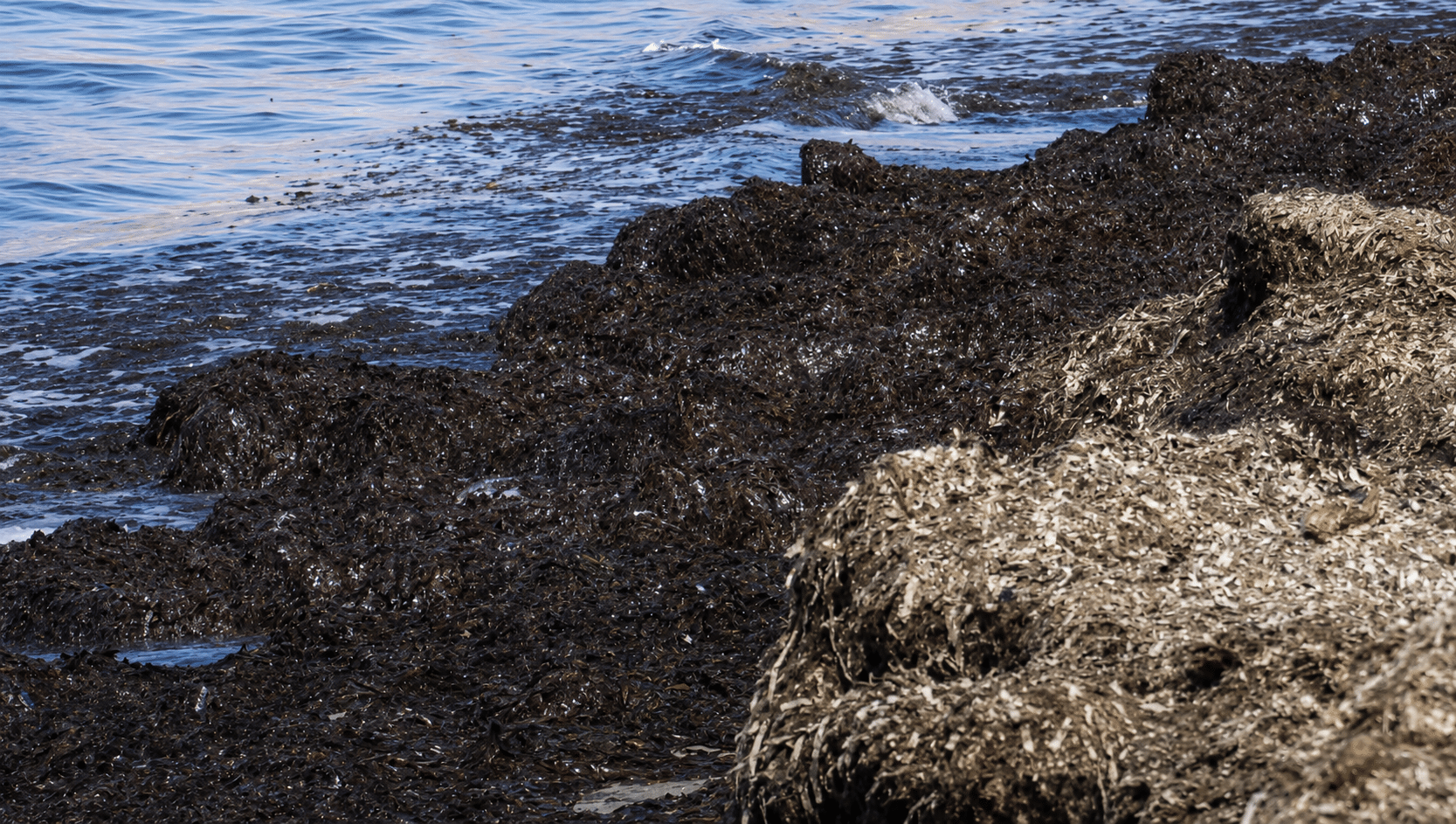
Residents and holidaymakers are increasingly frustrated by large accumulations of Posidonia seagrass debris on beaches across Orihuela Costa at the height of the summer season.
Complaints have multiplied on social media and through reports submitted to Orihuela City Council, with particularly conspicuous piles reported at La Caleta in Cabo Roig and between Aguamarina and La Glea in Campoamor.
At La Caleta, the accumulated material is reportedly obstructing board-hire businesses and other beach services, as well as affecting access to the shoreline.
The controversy comes during the busiest period of the year, when Orihuela Costa’s population rises from approximately 30,000 registered residents to around 100,000 people, including tourists and second-home owners.
Concerns extend beyond the seagrass. Residents have also criticised the condition of walkways, low walls, promenades and footbaths, some of which remain out of service. Meanwhile, a €1 million allocation approved in the 2024 municipal budget for coastal improvements has yet to be spent.
Contract unlikely to begin before September
The removal problem could continue throughout July and August because the new Posidonia collection contract, put out to tender in early June, remains under evaluation.
The contract has a starting budget of €80,520 and covers the collection, removal and transportation of seagrass debris from Orihuela’s beaches to an authorised treatment facility.
Several administrative stages must still be completed. The highest-ranked bidder must provide the required documentation before the Contracting Committee can propose an award. The file must then be audited by the municipal Comptroller’s Office and approved by resolution.
A 15-working-day appeal period must follow before the contract can finally be signed. As a result, the service may not become operational until September, even if the remaining process runs smoothly.
The contract is intended to cover all 11 beaches and coves along the Orihuela coastline: Punta Prima, Cala Mosca, Cala Estaca, Cala Cerrada, Cala Bosque, Cala Capitán, La Caleta, Aguamarina, La Glea, Barranco Rubio and Mil Palmeras.
Protected habitat—not ordinary waste
Although commonly described as seaweed or rubbish, Posidonia oceanica is a protected Mediterranean seagrass and a fundamental part of the marine ecosystem.
Material washed onto beaches by currents and storms helps stabilise the shoreline, protect coastal dunes and reduce erosion. For that reason, it is normally left in place during the quieter months and removed only when necessary during the main tourist season.
The service would ordinarily operate from Easter until October 15, balancing environmental protection with the need to keep heavily used beaches accessible and comfortable for bathers.
Removing Posidonia requires environmental authorisation, including after severe storms. The council must therefore reconcile the protection of the coastline with the complaints of beach users, who often object to the smell and the difficulty of reaching the water.
In March, Orihuela’s Street Cleaning and Waste Department requested permission to transfer accumulated material to authorised drying areas. This coincided with the introduction of Royal Decree 191/2026, which strengthens protection for seagrass meadows in Spain’s Mediterranean waters.
The council has previously argued that temporarily storing Posidonia in designated drying areas is an authorised and recommended practice. Allowing it to dry reduces the amount of beach sand removed with the plant material and helps ensure that the coastline is managed responsibly.
However, critics argue that the process should have been organised earlier so the beaches would be ready before the peak summer influx.
Political and operational dispute
The issue also appears to have exposed tensions within Orihuela’s PP-Vox coalition. The Coastal Department is controlled by Vox, while the PP manages Street Cleaning, Waste and Infrastructure. The municipal company Ecoplan also carries out maintenance work across Orihuela Costa.
Ecoplan recently added five vehicles to its coastal fleet at a cost of €157,200, supplementing a backhoe loader and a 10-tonne truck fitted with a crane and tipping body.
While the presence of Posidonia is not necessarily evidence of dirty or neglected beaches, residents are questioning why the removal service was not secured before July and August, when demand on Orihuela Costa is at its highest.