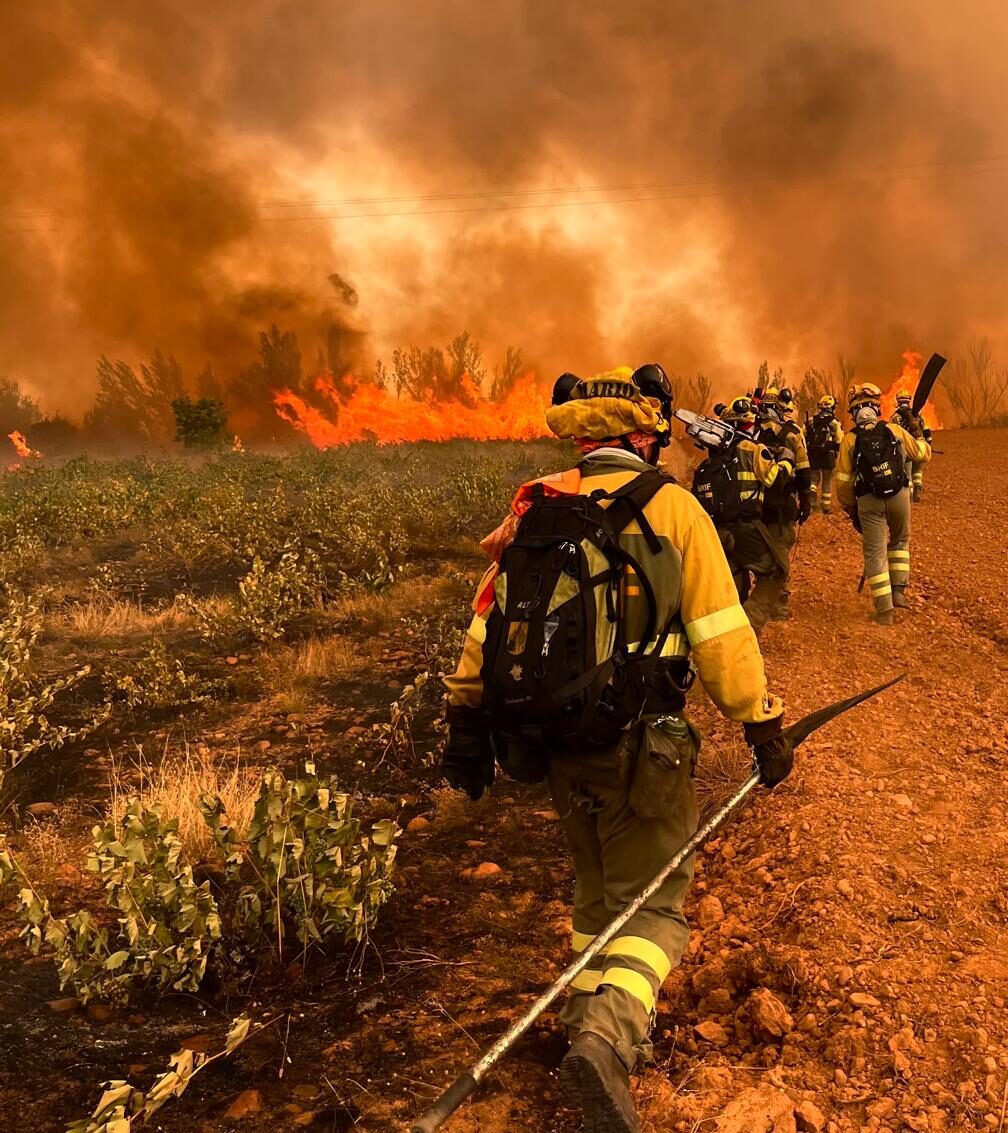
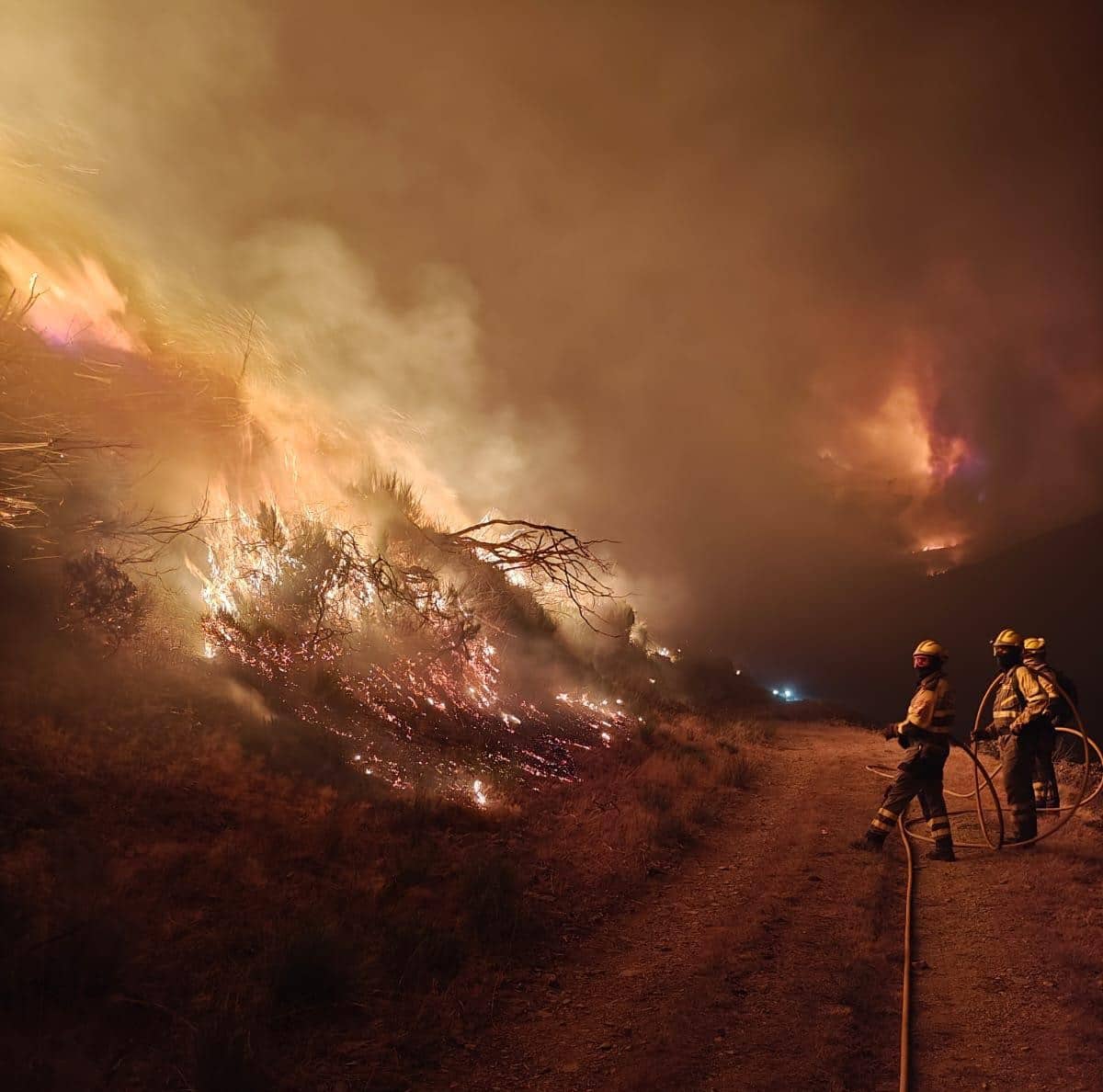
Europe is reeling as wildfires scorch the Iberian Peninsula, claiming lives and destroying tens of thousands of hectares of land amid a punishing heatwave. Two firefighters have died in separate accidents while battling the blazes, taking the death toll to four in Spain and two in Portugal in recent weeks.
In Spain, the crisis enters its third week, with emergency services and army units scrambling to contain fires in the northwest and west. Castile and Leon authorities revealed that one firefighter tragically died when his truck flipped on a steep forest road. “For an unknown reason, the vehicle approached the embankment and overturned, falling down a steep slope,” the regional government said.
Across the country, more than 70,000 hectares have already been consumed by fire in recent days — nearly half of the total for the year, according to the European Forest Fire Information System. Defence Minister Margarita Robles described the situation as unprecedented: “This is a fire situation we haven’t experienced in 20 years. The fires have special characteristics as a result of climate change and this huge heatwave.” Temperatures have soared to 45°C, with little relief expected until Monday evening or Tuesday.
Spanish Prime Minister Pedro Sanchez visited affected areas on Sunday, promising “a national pact” to tackle the climate emergency.
Portugal is also battling relentless fires, with around 2,000 firefighters deployed in northern and central regions. A firefighter died on Sunday while fighting a blaze, leaving two colleagues seriously injured. Another fatality occurred last Friday when a former mayor in Guarda lost his life on the frontlines. The Portuguese forestry institute reports that nearly 185,000 hectares have burned so far this year, already surpassing last year’s total of 136,000 hectares. Water-bombing aircraft are expected to arrive to aid firefighters.
Experts warn that the fires are being fueled by successive heatwaves and severe droughts, a stark reminder of the growing impact of climate change across southern Europe.