Zulima Pérez takes over government representation amid political tension, fractured relations between the Generalitat and central administration, and a reconstruction process still lagging far behind.
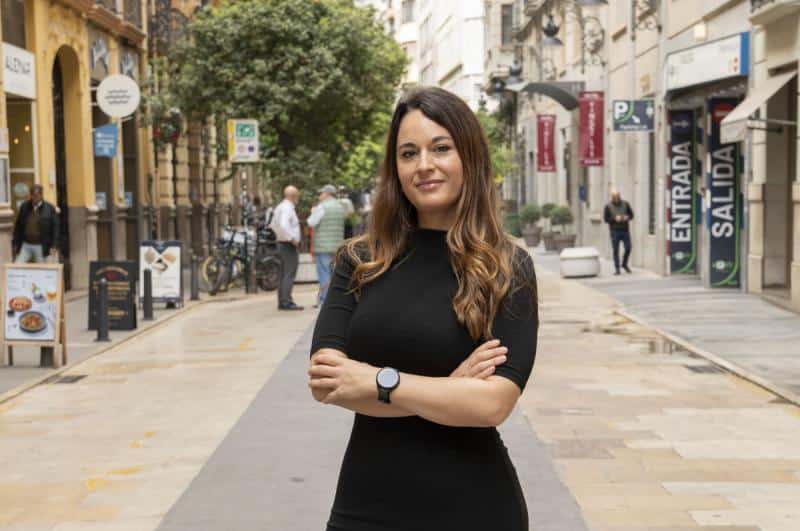
Former regional secretary under the Botànic government, Zulima Pérez, will officially take on the role of Government Commissioner for DANA Reconstruction at the end of this month.
She steps in during a period of intense political friction and unresolved issues following the resignation of her predecessor, José María Ángel, amid scandal over a fraudulent academic diploma’s and concerns raised by the Anti-Fraud Agency regarding his civil service appointment.
As she assumes her interministerial coordination role and liaises with regional authorities, Pérez faces three immediate priorities:
1. The National Remembrance Service
This is one of the most urgent tasks. Victims’ associations are calling for a state funeral to be held on October 29, marking the one-year anniversary of the deadly storm. These organizations—Association of DANA Victims 29-O, Victims of the DANA October 29, 2024, and DANA-Affected Residents of Horta Sud Valencia—had already communicated this request to Pérez’s predecessor and the central government’s subdelegate in Valencia.
The next step is to coordinate official calendars and submit the proposal to the Royal Household and Moncloa (the Prime Minister’s office), which will make the final call based on availability.
As for the venue, one suggestion from victims’ groups is the Prince Felipe Science Museum, although it’s just an initial proposal, with nothing finalized. “Sadly, there are many families who lost loved ones,” says Rosa Álvarez, president of one of the main associations, underscoring the need for a space large enough to accommodate everyone.
But logistics are not the only challenge. The associations have made it clear they do not want the regional president, Carlos Mazón, to attend, though they recognize that protocol likely requires his presence. “We’d rather he not be there, but we understand he probably has to come,” says Álvarez.
Their main concern is ensuring all families of victims are prioritized over institutional presence and that no one is excluded—something that happened last December when relatives were not invited to the funeral mass organized by the Archbishop of Valencia. Avoiding such missteps is now one of Pérez’s most delicate assignments.
2. The Joint Commission
This has become a recurring demand from President Mazón, who insists on forming a joint commission between the Spanish government and the Generalitat. “In La Palma, the government created a joint commission within 11 days. Here, it’s been nine months, and we’re still waiting,” Mazón said again this Friday.
As of September 1, it will be Zulima Pérez’s job to respond to that demand. The issue was first raised back in January by Vice President Gan Pampols during a meeting with the Government Delegation. Since then, the central government has advanced on several reconstruction fronts:
- Funding: Municipalities have already received a historic €1.7 billion package to rebuild local infrastructure.
- Victim support: Psychological services and other aid programs have been initiated.
- Hydraulic projects: The Hydrographic Confederation of Júcar (CHJ) continues to coordinate with the Generalitat on technical matters.
Still, Prime Minister Sánchez has refused any public appearance with Mazón, seen as a signal that he doesn’t recognize him as the legitimate political face of reconstruction. Zulima Pérez must now navigate this icy relationship—something her predecessor, despite his good rapport with Pampols, never managed (or perhaps was prevented from doing). In short: one storm, two separate reconstructions.
3. The Municipal Rebuild
For local mayors, the pressing challenge is restoring basic infrastructure—sewer systems, cultural centres, sports complexes, and municipal services all devastated by the floods. Although €1.7 billion in government aid has been available since March, many municipalities are struggling with the technical aspects of project tendering and execution.
To bridge this gap, support from Tragsa, the state-owned engineering and infrastructure company, is proving critical. Ensuring effective deployment of these resources and helping municipalities overcome bottlenecks will be another major challenge for Pérez.
Zulima Pérez enters a highly complex role with many political landmines, high public expectations, and urgent practical tasks—from honouring the dead to rebuilding communities. Whether she can unite fragmented administrations and accelerate recovery remains to be seen.