- The estimated damage to wildlife is 14 million euros, with a commercial value of 226,630 euros.
- One woman has been arrested, and four others are under investigation.
- Collectors travelled to a company in Valencia to trade these ivory pieces illegally.
August 4, 2025 – Valencia, Spain.
The Civil Guard, as part of Operation “Eburno,” has arrested a woman and is investigating four more individuals for illegally trading ivory items without the necessary legal documentation.
The investigation began in October 2024 after authorities detected an unusually high volume of ivory sales offers in the province of Valencia.
Initial inquiries focused on various companies in the Valencian Community involved in antique restoration and sales, as well as shops selling decorative items that might contain ivory.
Civil Guard officers conducted discreet surveillance and monitoring of personnel connected to these businesses. They observed several individuals traveling from different parts of Spain to Valencia to trade with antique dealers.
Once catalogued, the ivory pieces were sold through unofficial channels in direct sales designed to evade legal controls.
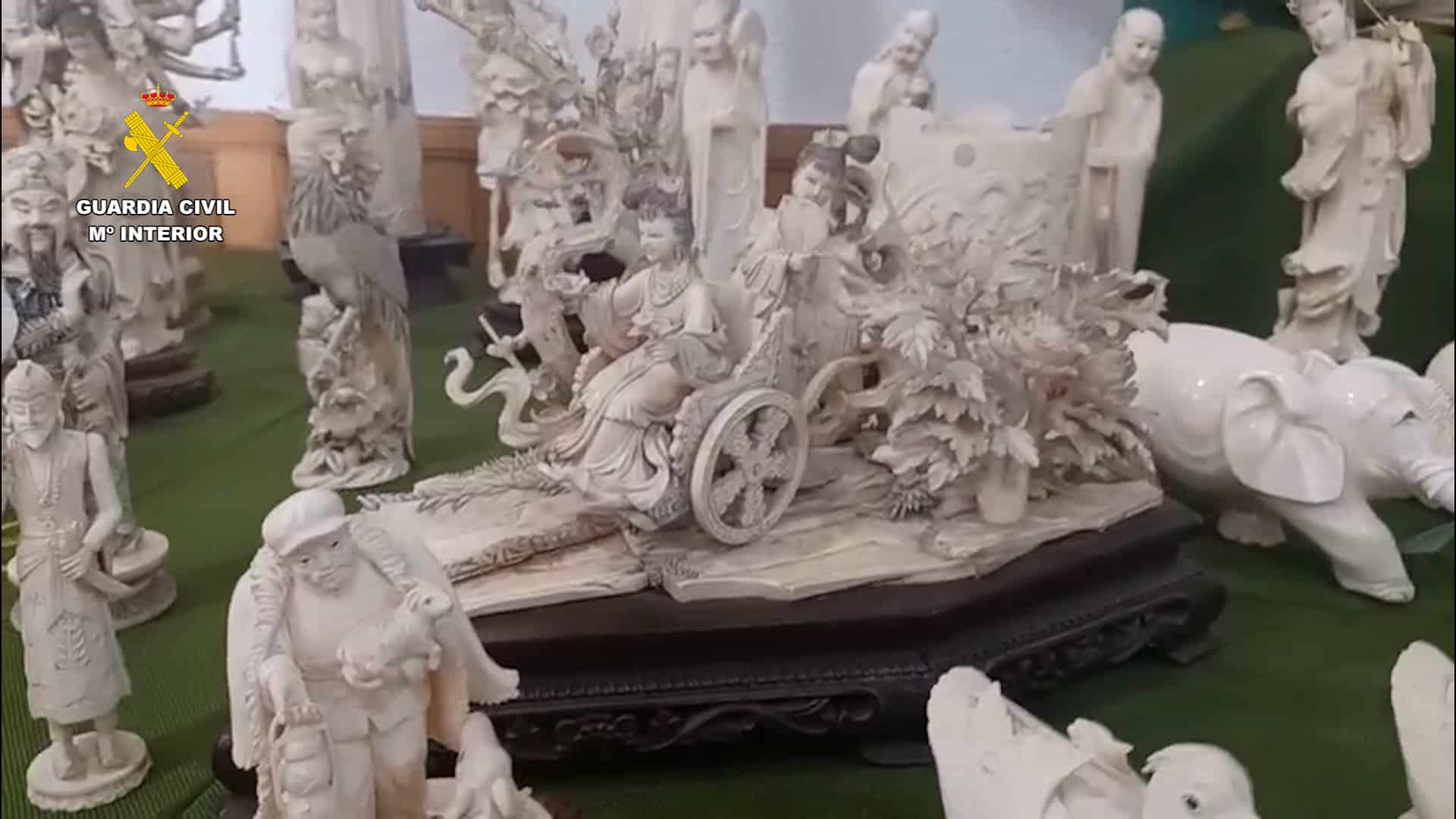
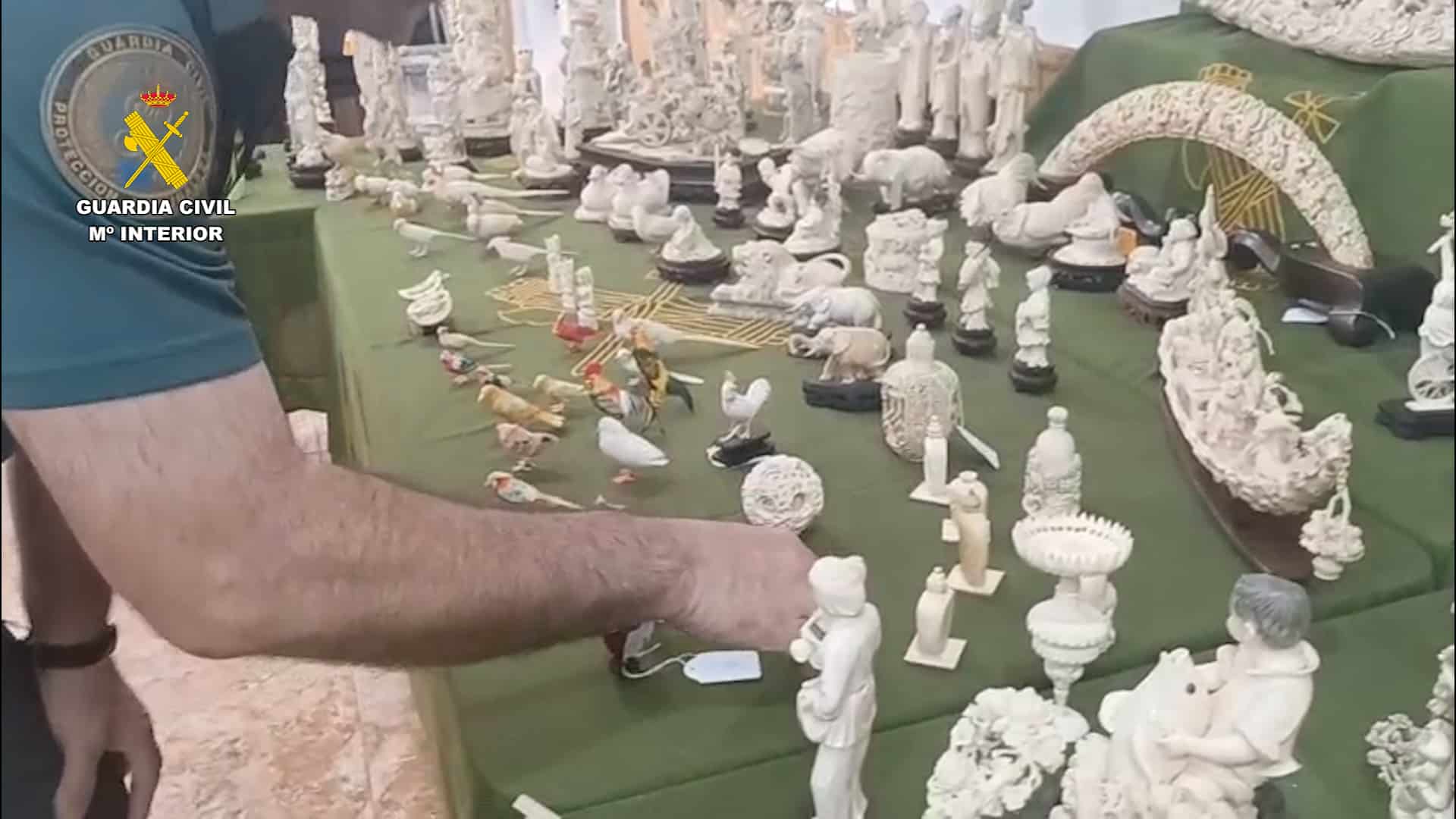
Authorities identified a commercial company in Valencia displaying 127 ivory pieces of varying sizes, carved mainly in a minimalist style with an Asian aesthetic. Further analysis confirmed the ivory originated from both African and Asian elephants; species protected under the CITES convention.
The Civil Guard confiscated all the pieces after the company failed to provide the legally required documentation. Additionally, SEPRONA (the Nature Protection Service) conducted a detailed appraisal, confirming the ivory’s origin and estimating the wildlife damage at 14 million euros, while the commercial value of the seized items totalled 226,630 euros.
Among the pieces was a notably detailed carved ivory horn measuring 1.77 meters long and weighing 22 kilograms, dating back to the 19th century, alongside 126 other carvings ranging from 40 to 90 centimetres.
The investigation led to the arrest of one woman, with four others under investigation for smuggling and crimes against flora and fauna.
The operation was conducted by SEPRONA officers in Valencia, supported by personnel from the Central Environmental Operations Unit, the Nature Protection Unit in Madrid, SEPRONA agents from Majadahonda, and officials from the Ministry for Ecological Transition and Demographic Challenge.
The case files have been submitted to the Dean’s Court of Instruction in Valencia.