Orihuela Mayor Pepe Vegara is banking on a newly approved decree by the Valencian regional government to finally deliver the long-promised second health centre in Orihuela Costa. The decree—published in the Official Gazette of the Generalitat Valenciana—establishes a new framework allowing municipalities to lead construction of healthcare infrastructure, provided they meet a strict set of criteria. The initiative is being described as a healthcare-sector adaptation of the educational Plan Edificant, with the Generalitat covering construction costs, while local councils manage execution and ongoing maintenance.
The move is aimed at speeding up the delivery of primary care facilities in rapidly growing areas such as Orihuela Costa, Burriana, Santa Pola, Torrent-El Vedat, and Mislata, where demand far exceeds current healthcare capacity.
Under the decree, only five projects can be active at a time, and each municipality may apply for just one. To qualify, the proposed project must be already included in the regional healthcare infrastructure plan, and its funding must be reflected in the Generalitat’s budget—conditions that currently create a challenge for Orihuela.
Although the expansion of the existing Aguamarina clinic has been allocated €4 million in the current and previous regional budgets, the construction of a new centre—despite being a campaign promise by regional president Carlos Mazón—is not funded in the latest budget cycle. According to municipal sources, Orihuela’s government is leaning toward pursuing the new build, which they see as a longer-term solution. Meanwhile, local residents continue to call for both projects, given the clinic’s overburdened state and visibly deteriorated infrastructure.
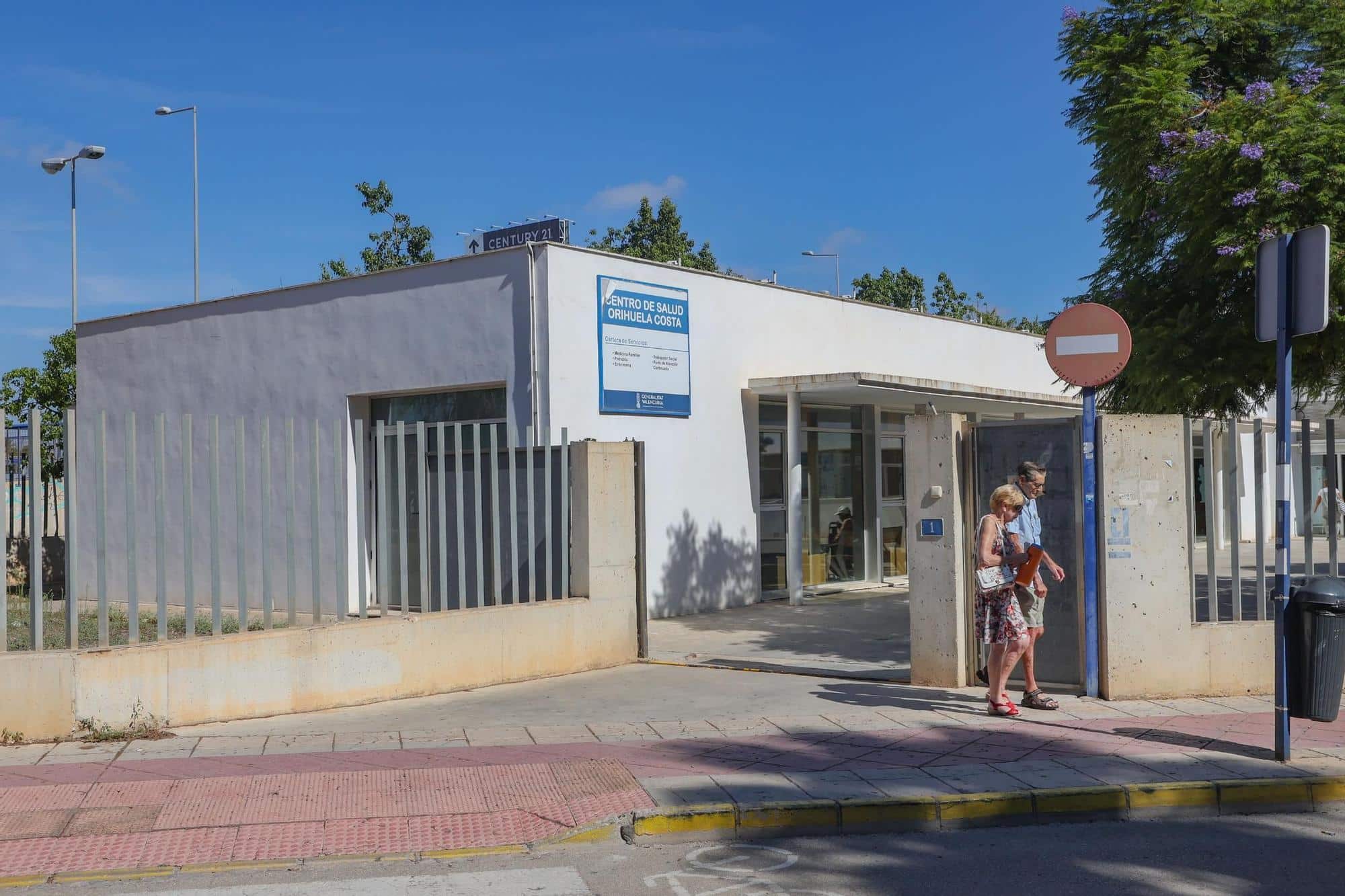
The existing Aguamarina health centre currently serves around 30,000 year-round residents, with the population swelling significantly during holiday and tourist seasons. Yet the facility, still bearing signage from a decades-old concessionaire, is visibly worn and lacking capacity.
To support the construction of a new centre, the City Council has already offered a 12,000-square-metre plot in Los Altos, between Calle Beduinos and J’Alhamed in sector H-1 Villa Rosa. However, without inclusion in the regional budget or formal backing from the Generalitat, progress is unlikely.
The decree sets out clear administrative and legal responsibilities for participating municipalities. They must:
- Own the land and handle the full project administration, including contracting and oversight.
- Assume all maintenance costs after construction, covering utilities, cleaning, and other building-related services.
- Secure formal delegation through a Health Department resolution lasting up to five years.
- Provide a plenary council agreement, a technical report justifying the project based on demand, and a positive financial audit from municipal oversight bodies.
Importantly, the Generalitat will not be liable for any delays, penalties, or legal claims arising from the projects—those risks fall entirely on the municipalities.
In summary, while Mayor Vegara has seized the decree as a potential lifeline to resolve Orihuela Costa’s healthcare shortfall, actual progress hinges on budgetary inclusion, administrative alignment, and regional political will—none of which are currently guaranteed.