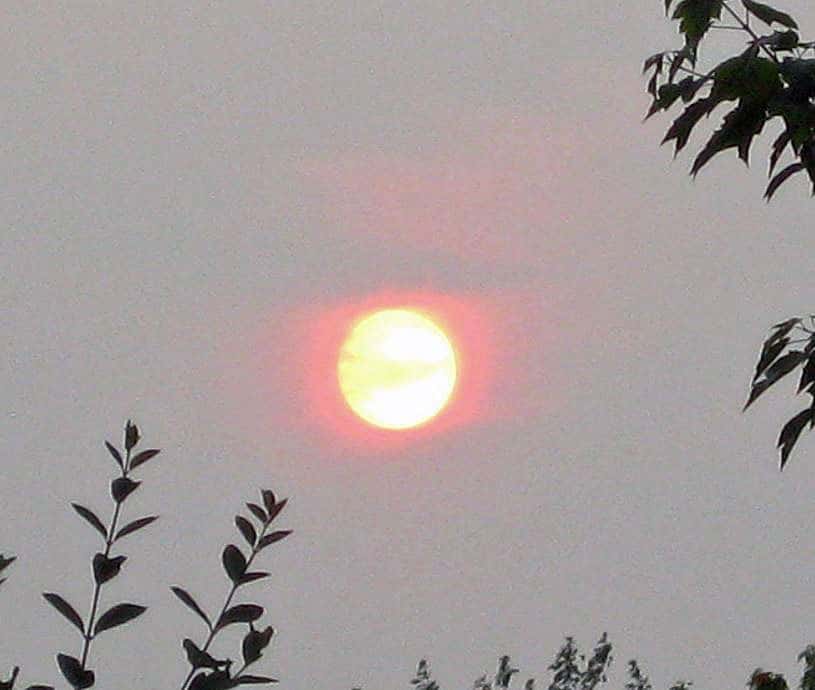
Residents across parts of the Vega Baja and the Region of Murcia woke up this Tuesday morning to a strong smell of smoke and a heavy atmosphere, prompting widespread concern and a surge of emergency calls.
The intense burning odour and deteriorating air quality, noticeable from early morning in multiple municipalities, led many to fear a nearby fire. Calls flooded the 112 Emergency Coordination Centre from residents alarmed by the smell of smoke with no visible flames or source.
However, the smoke did not originate locally. It came from a large forest fire in Paüls (Tarragona), more than 400 kilometres away. That blaze has already consumed at least 150 hectares and remains out of control, forcing nine nearby towns into lockdown. Winds carried smoke from the fire across the country, reaching areas in southeastern Spain, including Alicante province and the Region of Murcia.
By 9:30 a.m., nearly a hundred emergency calls had been logged from towns such as Orihuela Costa and other parts of Vega Baja. Similar reports soon followed from Murcia, where authorities confirmed a decline in air quality from 9:00 a.m. onward.
See also: IMPORTANT PUBLIC NOTICE
In response, the Valencian Government’s Emergency Coordination Centre and local 112 services reassured residents that there were no active fires in the region. The smoke, they explained, had drifted from Tarragona and was being transported by prevailing winds.
Spain’s Ministry of the Environment stated that the national air quality monitoring system had not recorded dangerous levels of pollution and that, at present, the smoke does not pose a health threat. However, they cautioned that a Saharan air mass is expected to arrive in the coming hours, which could further degrade air quality in southeastern Spain.
Meanwhile, political tensions flared over the local response. Víctor Egío, communications secretary for Podemos in the Murcia region, criticised the City Council for its “inaction,” saying that by 10:00 a.m., no official measures had been taken. He noted that some municipalities in Alicante had already advised residents to stay indoors and close their windows. “The City Council has failed to activate any protocol, putting children in summer programs and thousands of outdoor workers at risk,” he said.
Egío added that the regional air monitoring system was not functioning properly. “The government insists air quality is acceptable, but it clearly isn’t. The air is toxic, and immediate action is needed.”
In response to the criticism, the Murcia City Council later acknowledged a drop in air quality linked to both the incoming smoke and Saharan dust. While not declaring a formal emergency, the city reported high levels of particulate matter (PM10 and PM2.5) and announced increased monitoring and public advisories.
Authorities are now urging the public to limit strenuous outdoor activity and to ventilate indoor spaces only when conditions allow.