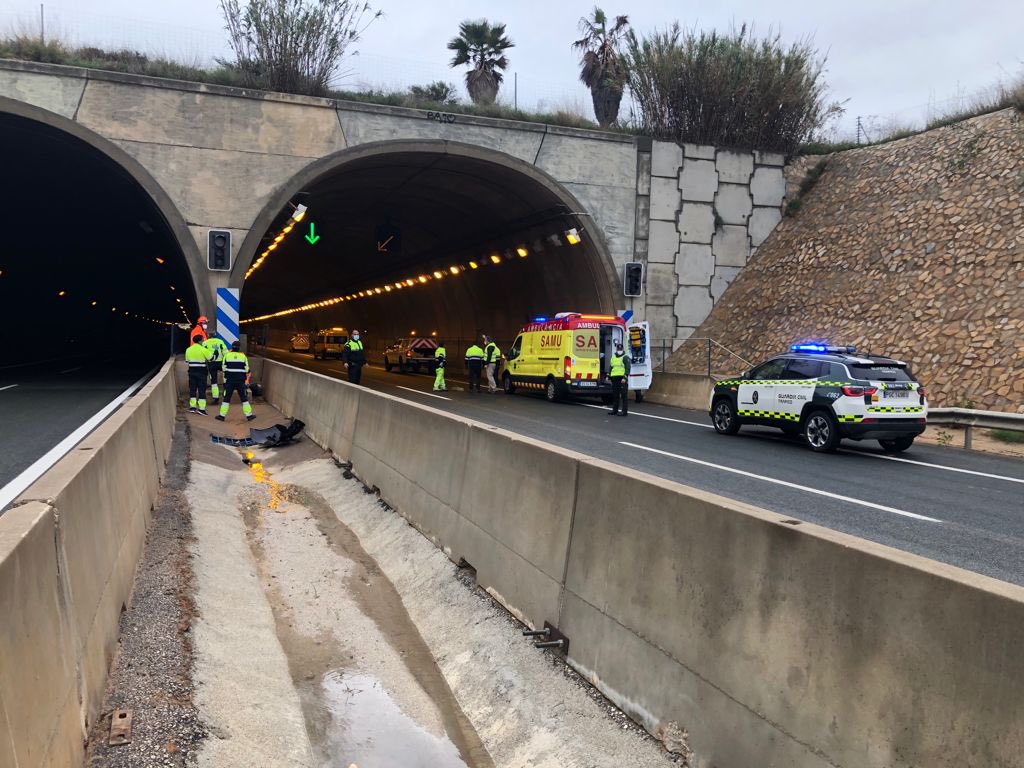
The Ministry of Transport and Sustainable Mobility has announced that the Cartagena-bound lane of the AP-7 tunnel in Pilar de la Horadada will reopen to traffic this Thursday, July 3. This follows nearly two months of intensive repair work prompted by a tragic accident that occurred on May 9.
The accident involved a heavy goods vehicle that overturned and caught fire inside the 800-meter-long tunnel at kilometer 772 of the AP-7, resulting in the death of the truck driver and extensive damage to the tunnel’s infrastructure. The incident forced authorities to close the lane heading toward Cartagena and divert traffic to alternative routes, severely impacting regional mobility.
A Vital Corridor for Summer Travel
The reopening is particularly significant given the expected surge in summer traffic. According to Ministry sources, traffic volumes through the tunnel are projected to exceed 20,000 vehicles per day in each direction during July. The AP-7, a key highway that runs along Spain’s Mediterranean coast, is a critical route for both tourism and freight transport—especially during the busy summer months.
Full-Scale Repairs and Safety Checks
Following the accident, the Ministry mobilized all available resources to expedite the repair process and ensure the tunnel’s safe reopening. Damage from the fire had affected essential infrastructure, including electrical and communications systems, surveillance equipment, lighting, SOS emergency call posts, and two of the three ventilation fans. All damaged systems have now been restored.
In addition to replacing damaged components, the Ministry also used the opportunity to conduct a thorough inspection of the tunnel’s structural integrity. While no major structural compromise was detected, special attention was given to assessing the concrete vault for any heat-induced weakening due to the intense fire.
The road surface and the fire safety systems were also rehabilitated, ensuring that the tunnel meets all current safety standards upon reopening.
Modernization Efforts Temporarily Paused
The emergency repairs coincided with ongoing modernization works being carried out as part of a larger €3.5 million investment project aimed at improving energy efficiency and safety within the tunnel. These upgrades, funded through the EU’s NextGeneration Recovery Plan, include the installation of intelligent lighting systems and enhanced safety features.
Due to the urgent nature of the repair work, the timeline for the modernization project has been adjusted. Tasks originally scheduled for May and June have been deferred to the fall, when traffic levels are lower. These works will require full closures of the tunnel, which will be planned during off-peak hours to reduce disruption. Specific dates will be communicated to the public in advance.
Impact on Local Traffic
During the closure, traffic congestion has been a persistent issue along the nearby N-332, which runs parallel to the AP-7, as well as on several roads within the municipality of Pilar de la Horadada and its coastal areas. Local officials have repeatedly voiced concern over the impact on daily commuters and the tourism sector.
Mayor José María Pérez (PP) initially announced the reopening would take place the final weekend of June, based on updates from the regional Highway Service. However, the timeline was extended slightly to allow final preparations and ensure full safety compliance.
The reopening of the tunnel is expected to significantly ease traffic pressures in the area and restore a vital transport link just in time for the peak summer travel season.