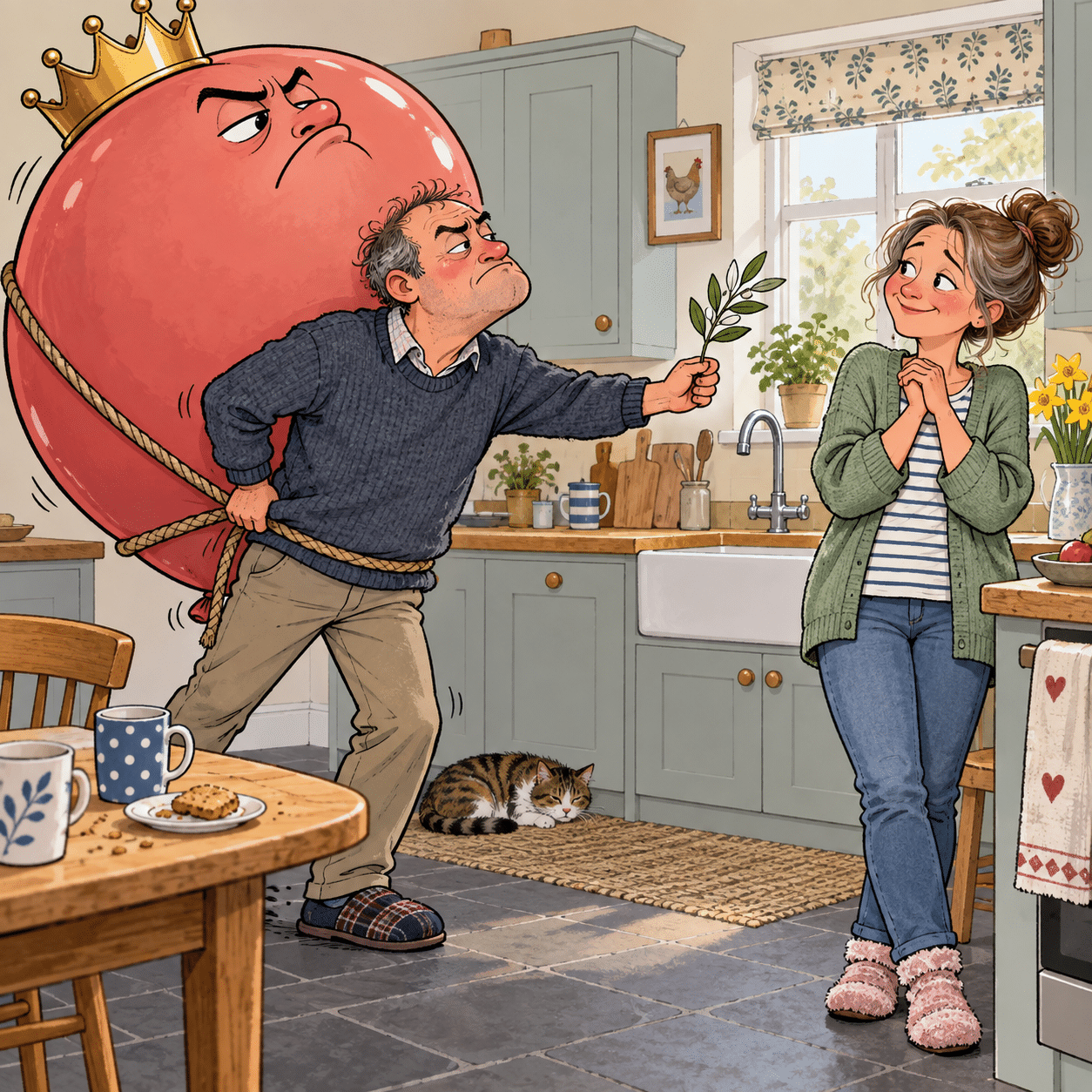

Almost everybody will agree that we all make mistakes. The only exception I ever knew to this rule was my father. “I don’t make mistakes,” he declared when my brother Willie ventured, “I think you are making a mistake, Daddy!”
Anyway, if the rest of us mere mortals admit that we all make mistakes, why are so many mistake-makers averse to admitting it and uttering the simplest of words: “sorry”?
Ali MacGraw delivered a famous line in the film Love Story, and it became the closing argument of many a tiff in many a house: “Love means never having to say you’re sorry.”
Has nobody ever questioned the accuracy of that claim? Ali got paid an awful lot more for saying it than this humble scribe will get for contradicting her, but, ladies and gentlemen, she was way off the mark. On the contrary, I put it to you that love means often having to say you’re sorry.
Remember, to err is human. Humans often get it wrong, or perhaps hit a miserable patch on a bad day. We can snap or snarl at a loved one. Do you mean to tell me that the correct approach is not to say “sorry” once things have cooled down? Surely apologising says more about a person’s character than believing they never have to apologise for anything.
Now that we have started on this topic, would any of you agree that people seem far more disinclined to offer an apology nowadays than a generation ago? There are bigger egos out there, attached to people who have an inflated opinion of their own importance. As well as ego, the reluctance to admit an error and apologise has much to do with wanting to control the narrative and protecting one’s self-esteem. People with a strong sense of entitlement, or a touch of narcissism, cannot even consider that they might be wrong and the other fellow might be right.
There are bad examples from the top when it comes to never apologising. Can you remember hearing a politician say, “I got it wrong, and I’m sorry”? Politicians equip themselves with all the tools and fancy footwork needed to avoid ever coming close to admitting, “You are right, I was wrong, and I apologise.” Even when a politician is held to account for some transgression and has to say something, at best it will be a qualified apology and a watered-down “sorry”.
But we are not picking on our excellent, hard-working politicians—particularly in comparison with those in many other countries—because our elected representatives reflect the sort of society we are.
A half-apology can sometimes make the injured party feel worse. If you are going to apologise, go the whole hog. Not: “If I inadvertently hurt you with what I said, it’s not what I meant,” or, “If you took the wrong meaning from my words, I didn’t mean to be offensive.” Or, if you really want to keep digging: “Perhaps you are a little too sensitive about that subject!”
“When I referred to you as a cow, I was thinking of the most beautiful, much-loved cow we had at home years ago… and besides, Mick shouldn’t have told you what I said!”
Seriously, though, a sincere apology can make two people feel good. Given that we all agree we make mistakes, saying sorry should come naturally to us. The word “pride” springs to mind here. There is a fear that your apology might not be accepted and that you will be humiliated in the process. But you won’t be, because there is great relief in doing the right thing, no matter how the other person reacts.
Most often, an apology is valued and cherished, and the person who says “sorry” rises in the estimation of others. Far from being a sign of weakness, saying “I’m sorry” shows self-assurance and character.
Michael O’Leary’s recent apology for the inappropriate use of a word is a perfect example of how to deliver a genuine, unqualified apology.
I like to think I am good at apologising when I get it wrong. The Lads might say I get it wrong often enough to have loads of practice! When we apologise, it should be sincere and focused on the other person. “I’m sorry you feel hurt,” “I’m sorry you misunderstood me,” and “I’m sorry I’m not perfect” are not apologies. “Sorry” on its own will often do.
One thing I shall never do again is apologise when I know I’m right. There are a couple of such incidents stuck in my craw: occasions when I said “sorry” for peace’s sake or to close an argument. That leaves a sour taste.
Don’t Forget
“Never ruin an apology with an excuse.” — Benjamin Franklin