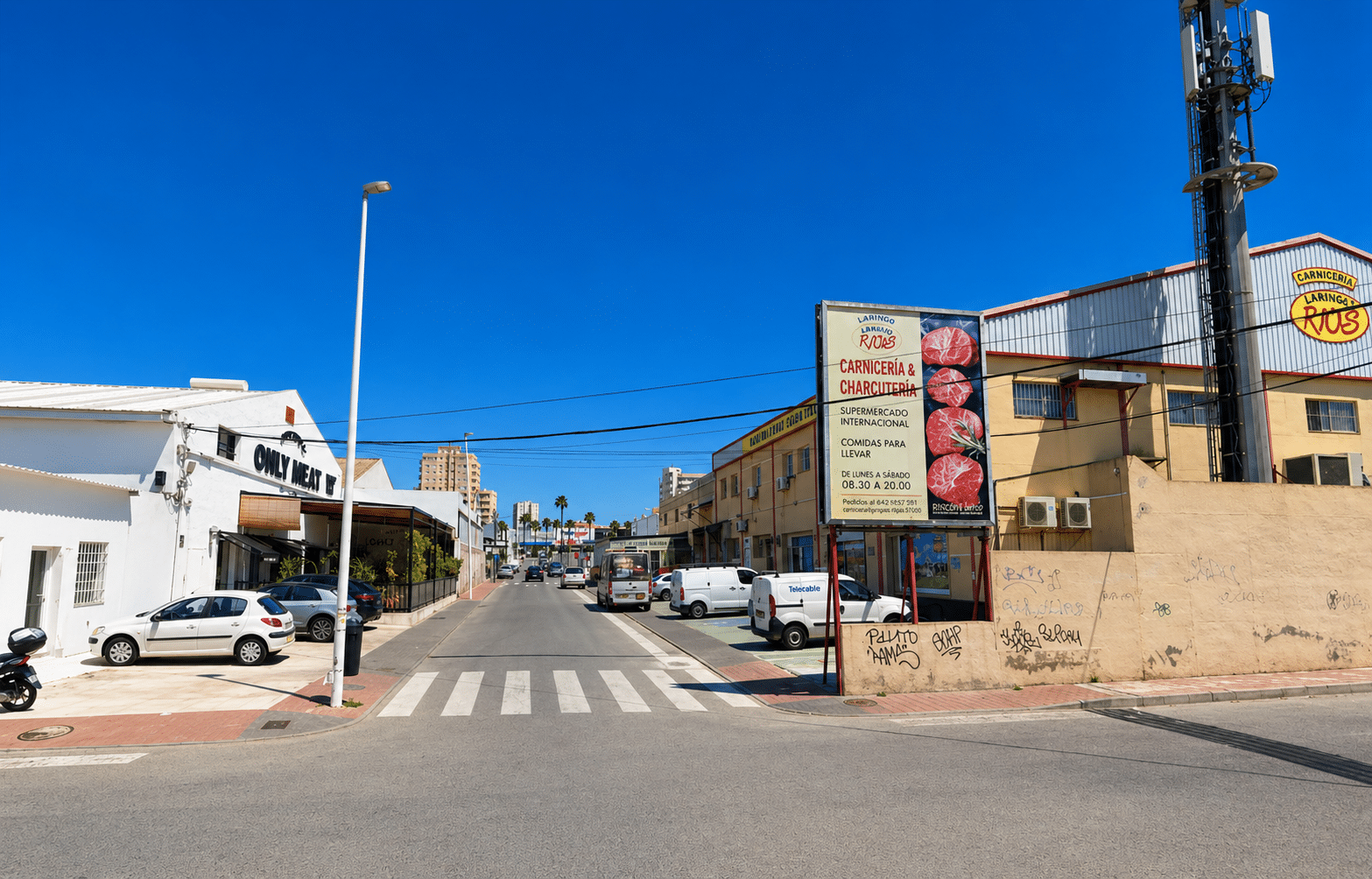
Torrevieja City Council has approved the public tender for the first phase of the redevelopment of the Casa Grande Industrial Estate, a project that will cover approximately 30% of the site and involve an investment of nearly €2 million.
The contract has a total value of €1,981,001, including VAT, and the works are expected to take seven months to complete once construction officially begins following the signing of the commencement order. The project will be financed over two years, with €450,000 allocated in 2026 and €1,531,001 in 2027.
The first phase will focus on the northern section of the industrial estate, an area covering around 109,000 square metres out of the total 359,000. The intervention will take place between Avenida Rosa Mazón, Avenida Delfina Viudes, Calle Pañol, Calle Gavia and Avenida Cortes Valencianas, near key local facilities such as the water park, sports complex and IES Las Lagunas secondary school.
The works are designed to modernise the estate’s infrastructure by renewing road surfaces and pavements, upgrading sidewalks and improving basic urban service networks.
According to the City Council, the current condition of the area presents significant deficiencies, including deteriorated roads with visible potholes, damaged or unusable sidewalks and shortcomings in service infrastructure that affect accessibility and safety for both vehicles and pedestrians.
The approval of the project follows criticism from the Casa Grande Business Association, which had publicly questioned Mayor Eduardo Dolón and his government over what it described as unfulfilled electoral commitments related to improving the industrial area. In response, Dolón stated during a recent council session that most of those commitments would be underway before the end of the current term.
He also pointed to measures already implemented, including improvements in signage, the introduction of video surveillance and upgrades to stormwater drainage systems carried out in recent years.
The first phase will include Avenida Rosa Mazón and Calle Pañol, as well as several internal streets such as Obenque, Estay, Ballestringe, Ciaboga, Gavia and Calabrote. The project has been designed to ensure technical consistency with future phases, as the full redevelopment of the industrial estate is expected to continue in subsequent stages.
Business owners in the area have continued to highlight a number of ongoing issues. These include insufficient road signage and traffic control, poor street cleaning services particularly in secondary roads, and the lack of adequate recycling facilities. There are also long-standing calls for the introduction of public transport links, with requests for bus stops dating back more than a decade. In addition, concerns have been raised about illegal business activity operating in some units, which, according to the association, creates unfair competition and breaches regulations.
The City Council considers the Casa Grande Industrial Estate to be a strategic asset for Torrevieja’s economic development, as it remains the municipality’s main hub for industrial and commercial activity. Officials argue that the redevelopment is essential to improve infrastructure, enhance safety and support business growth in the area.
Separately, José Vicente Ríos has returned as president of the Casa Grande Business Association after stepping down weeks ago. His reinstatement follows internal disagreements over leadership, with some members challenging the appointment of another candidate on the grounds that association rules require leaders to have active business operations within the estate.
The new board will include José Antonio Manresa as vice president, Felipe González as treasurer, Manuel Vera as secretary and Alicia Jiménez as a board member.