
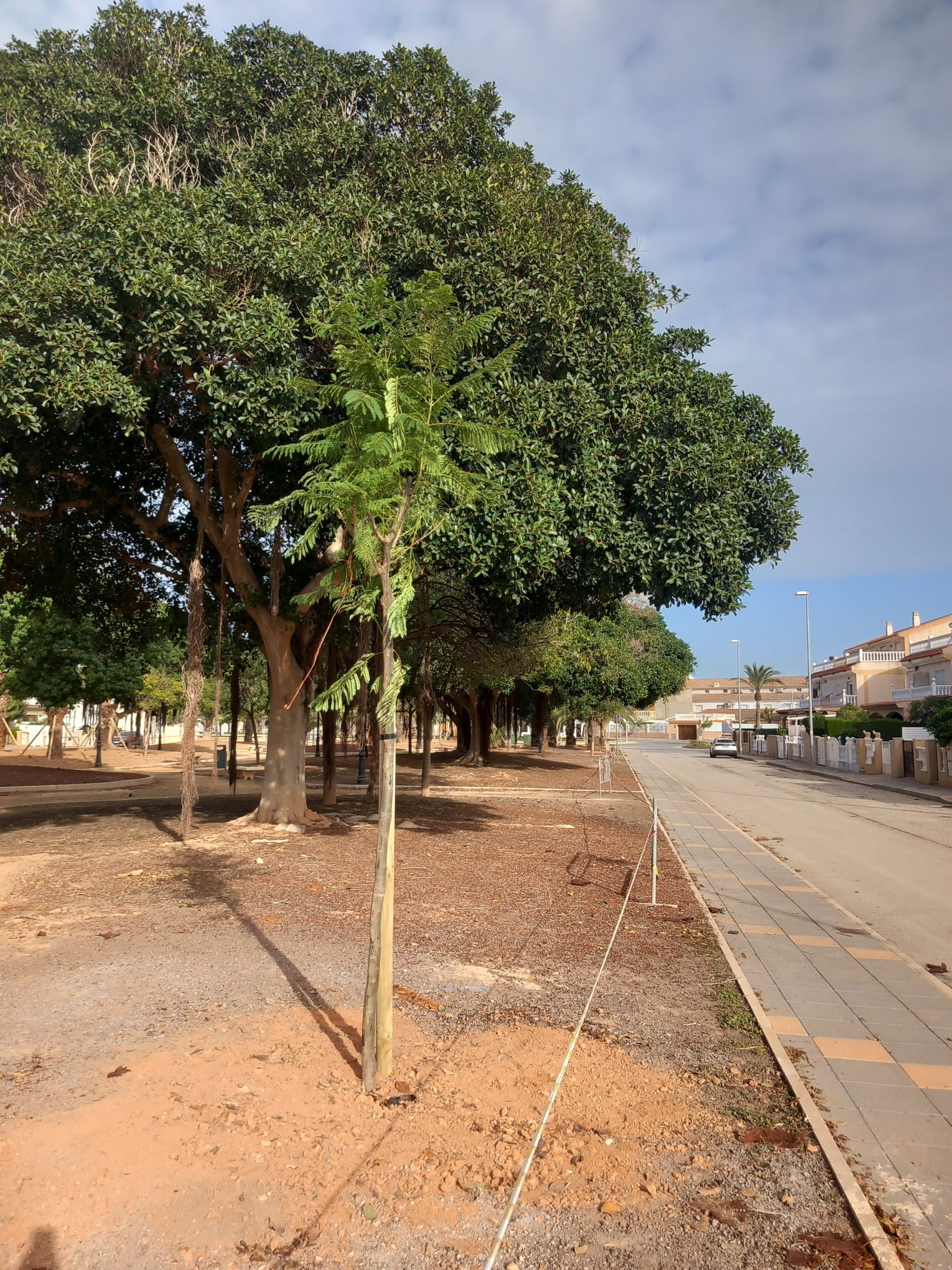
Pilar de la Horadada: A Green Municipality with Over 21,000 Trees and a Growing Urban Forest
Pilar de la Horadada, covering 78 square kilometers, boasts more than 21,000 trees representing 70 different species, alongside 145,000 m² of grass lawns and 30,000 linear meters of hedges, making it one of the greenest municipalities in the region.
The town has been praised for its “excellent urban vegetation,” according to Rufino Lancharro, Councillor for Public Services. Over the past five years, the local government has undertaken a significant replanting initiative to restore and expand the town’s green infrastructure. “Trees are essential to both sustainability and public well-being, and Pilar de la Horadada is fully committed to both,” said Lancharro.
The municipality’s Public Services team, in collaboration with the service providers EULEN S.A. and AIDEMAR, has been working to enhance tree replanting, hedge maintenance, palm care, water conservation, and more. A major replanting push began in 2023, marking a shift from previous administrations that had largely neglected vegetation maintenance. Lancharro pointed out that in the past, trees and hedges would die off and were not replaced, as greenery was not viewed as a funding priority.
Progress has been substantial:
- 2023: 43 new trees planted
- 2024: Over 200 trees replanted
- 2025: Expected to exceed 300 new plantings
Beyond their aesthetic value, these trees play a crucial role in improving air quality, lowering urban temperatures, supporting mental well-being, and boosting biodiversity, Lancharro emphasized.
The most commonly planted species include various palm varieties, mulberries, cypresses, plane trees, and jacarandas. Recent green space upgrades, including in sports infrastructure, saw the planting of nearly 60 mulberries and melias. In traffic medians with limited visibility, hedges have been replaced with artificial turf, improving both road safety and water efficiency.
Looking ahead, the town plans to continue tree replacement and expansion, especially in parks and public areas, creating more shaded spaces and reinforcing the ecological and social identity of Pilar de la Horadada.


