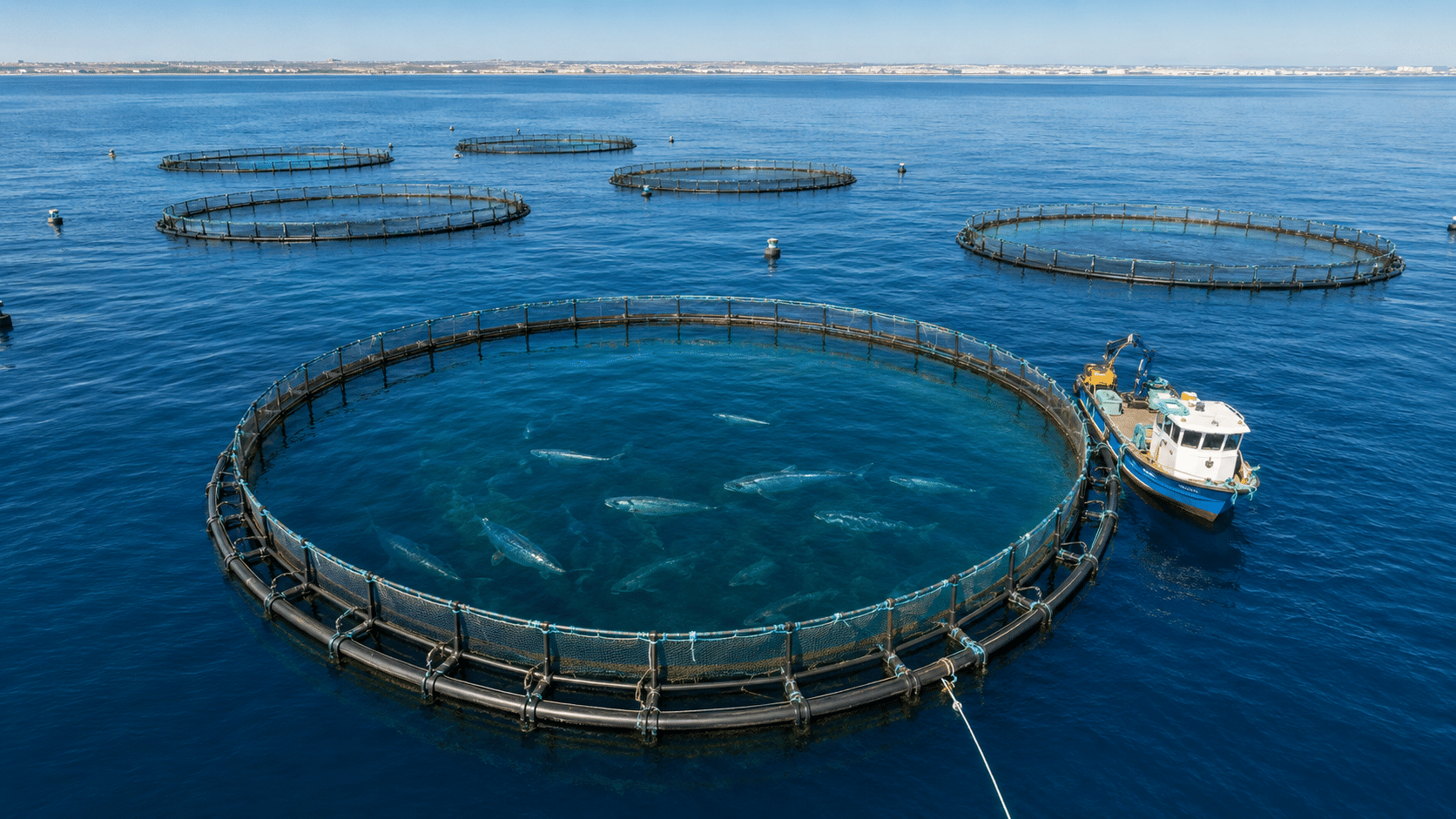
The Valencian Government has approved the first large-scale bluefin tuna fattening farm in the region’s waters, off the coast of Pilar de la Horadada.
The project was originally approved in 2021 as a fish farm for sea bream and sea bass. However, the regional Fisheries Department has now authorised the operator to change the facility to Atlantic bluefin tuna.
The concession is held by Piscifactorías del Mediterráneo, a company linked to the Murcia-based Ricardo Fuentes Group, one of Spain’s largest bluefin tuna businesses.
The farm will cover approximately 45 hectares of public maritime waters. It will be located about six kilometres from the coast and 4.4 nautical miles from the fishing port of San Pedro del Pinatar.
The original plans included 25 cages measuring 30 metres in diameter. The revised project will have ten much larger cages, each measuring 50 metres across.
The facility will have a maximum production capacity of 2,550 tonnes of bluefin tuna per year.
Unlike normal fish farming, tuna fattening does not usually begin with young fish raised in captivity. Adult tuna are caught alive during their migration through the Mediterranean, often near the Balearic Islands.
The fish are transferred into transport cages and slowly towed to the farm. They are then kept in floating cages for several months, where they are fed until they gain weight and increase their fat content.
Most Mediterranean bluefin tuna is exported to Japan, where it is highly valued. The fish is transported fresh by air or deep-frozen by sea. Its average price at the farm is around €15 per kilogram.
The industry requires specialist fishing vessels, transport cages, divers, health inspections, cold-storage facilities and international distribution networks. Tuna are powerful fish but are also sensitive to stress during capture and transport.
The Ricardo Fuentes Group has extensive experience in the industry. The company has an annual turnover of approximately €260 million and employs around 900 people.
It produces about 15,000 tonnes of tuna annually, with around 80% exported to Japan. The group operates farms in Cartagena and San Pedro del Pinatar, as well as in Malta and Tunisia. It is also involved in traditional tuna-trap fishing in Spain, Morocco and Portugal.
Environmental restrictions will apply to the Pilar project. Cages cannot be placed above sensitive areas such as seagrass meadows or coral habitats.
The company must also monitor the amount of fish in the cages, uneaten food, waste, the impact on the seabed and the fish used to feed the tuna. The facility must comply with environmental impact rules, coastal regulations, marine protection policies and Natura 2000 requirements.
However, the approval does not mean construction will begin immediately. The company must report when work starts and finishes, and the farm must pass an official inspection before it can begin operating.
There is also no public confirmation that the earlier sea bream and sea bass project, authorised in 2021, ever became operational.
The approval appears to have taken Pilar de la Horadada Town Council by surprise, with municipal officials reportedly unaware that permission had been granted.
A smaller experimental tuna project was approved in Castellón in 2025, but its future is uncertain. That facility was designed to raise tuna in land-based tanks and had a maximum capacity of only 60 tonnes per year.
The Pilar project is therefore expected to become the Valencian Community’s first major open-sea bluefin tuna fattening farm, bringing an industry already established in neighbouring Murcia into southern Alicante waters.