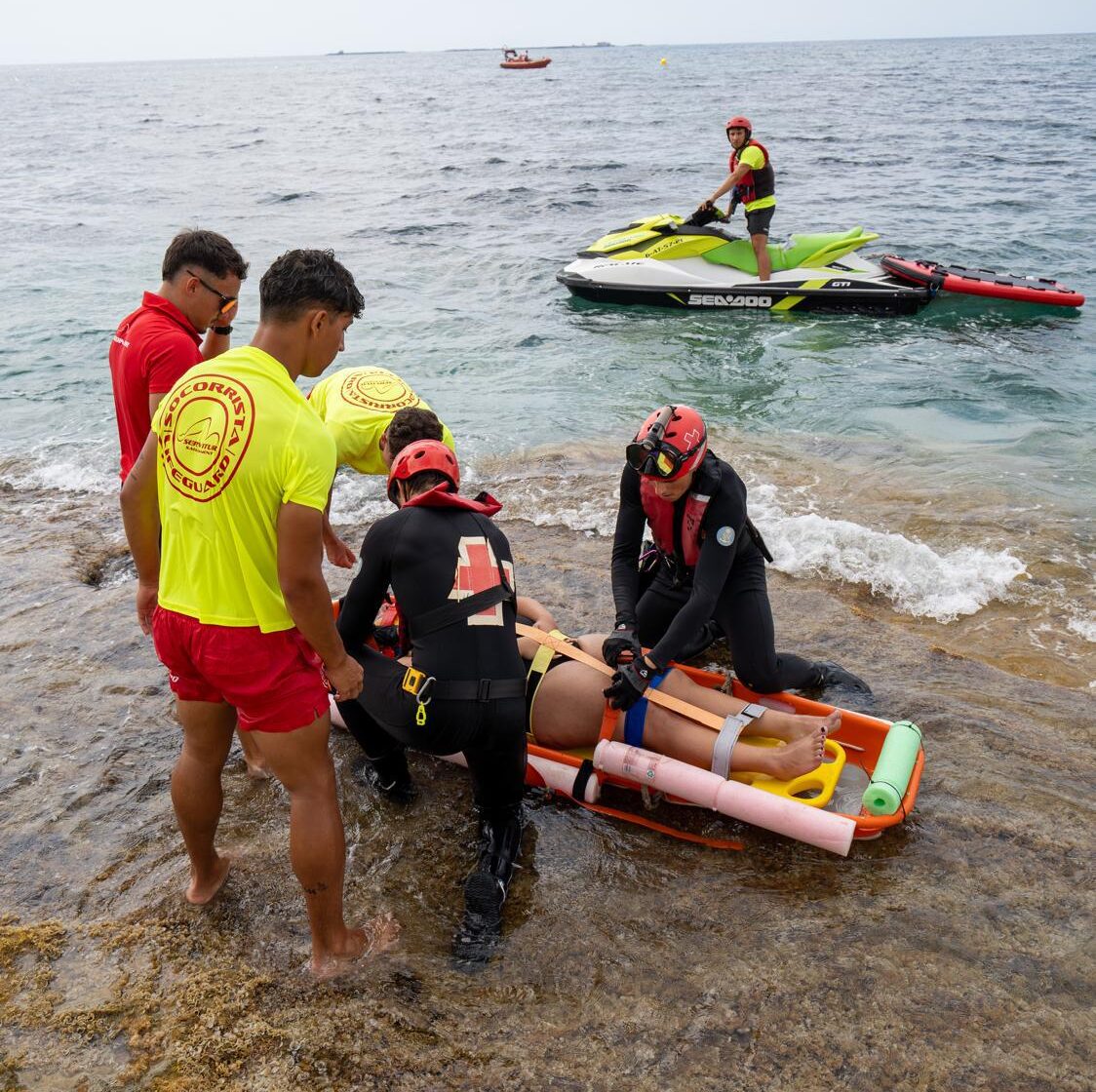
Eight people died in the Valencian Community and seven in Murcia as the national monthly toll rose to 92
The Valencian Community and the Region of Murcia recorded a combined 15 fatal drownings during June, as Spain suffered its deadliest month in the water since national records began in 2015.
Eight deaths were reported in the Valencian Community and seven in Murcia, placing both regions among the areas most seriously affected at the start of the main summer bathing season.
Across Spain, 92 people lost their lives in drowning incidents during the month. That was 19 more than in June last year, when the previous monthly record of 73 deaths was set.
The Royal Spanish Lifesaving and Rescue Federation, known as the RFESS, described the figures as evidence of a particularly worrying start to the summer.
The national total for the first six months of the year reached 217 deaths, six more than during the equivalent period in 2015.
For Valencia and Murcia, the figures are especially concerning because both regions have extensive coastlines, busy tourist resorts, residential swimming pools and inland bathing areas that attract large numbers of visitors throughout July and August.
Together, the two neighbouring regions accounted for more than 16 per cent of all drowning deaths recorded across Spain in June.
Fifteen deaths across Valencia and Murcia
The Valencian Community registered eight fatal drownings during June, matching the total recorded in the Balearic Islands.
Murcia reported seven deaths, the same number as Galicia.
Only Andalusia, with 21 fatalities, and Catalonia, with 13, recorded higher monthly totals than the Valencian Community. Murcia was also among the six regions with the highest number of deaths.
During the first half of the year, the Valencian Community recorded 15 fatalities, placing it among the most affected regions nationally.
The figures supplied did not include a corresponding six-month total for Murcia, but its seven deaths in June alone underlined the severity of the situation as the summer holiday period began.
Sixteen children died in one month
Particular concern was raised over the deaths of 16 minors during June.
Nine children drowned in swimming pools, five at beaches and two in other aquatic environments.
A total of 18 minors died from drowning during the first six months of the year.
The RFESS stressed that children and teenagers must be supervised continuously whenever they are close to water. It warned that a distraction lasting only a few seconds could have irreversible consequences.
The federation also cautioned that inflatable aids, armbands and other flotation devices should never be treated as substitutes for direct adult supervision.
Beaches accounted for more than half of fatalities
Beaches were the location of 47 deaths in June, representing more than half of the monthly total.
Swimming pools accounted for 19 fatalities, while another 19 people died in aquatic environments including the open sea, reservoirs, lakes, streams, ports, marshes and dams. Seven deaths occurred in rivers.
The figures demonstrate that drowning risks are not limited to coastal beaches.
This message is particularly relevant in the Valencian Community and Murcia, where people regularly swim not only in the Mediterranean but also in private pools, tourist complexes, rivers, reservoirs and natural bathing areas.
The RFESS urged bathers to take precautions regardless of the location and to obey warning flags, lifeguard instructions and local restrictions.
Older people were the most affected age group
Men continued to represent the majority of drowning victims. Of the 92 people who died during June, 68 were male and 24 were female.
People aged over 75 were the most seriously affected group, with 19 fatalities. A further 16 victims were aged between 65 and 74.
The federation also highlighted the number of deaths among younger adults. Nine victims were aged between 18 and 25, while eight were between 26 and 34.
The figures reinforce concerns about the vulnerability of older swimmers, particularly those with limited mobility, underlying health problems or reduced physical strength.
Almost half of victims were Spanish
Of those who died in June, 46 were Spanish nationals.
Seventeen victims came from other European countries, five were from the Americas and two were African. The nationality of 22 victims could not be established.
The high number of foreign victims is also significant for Valencia and Murcia, where large expatriate populations and millions of international tourists make water safety information in several languages especially important.
Lifeguards were present in 42 incidents
A lifeguard service was operating at the location in 42 of the fatal incidents recorded during June.
In 20 cases, no lifeguard was on duty at the time. In another 30 incidents, lifeguard cover was not considered applicable because of the type of aquatic environment involved.
The RFESS stressed that the presence of lifeguards did not remove the need for personal responsibility. Swimmers were urged to remain within designated areas, avoid entering the water in dangerous conditions and never overestimate their physical ability.
With beaches and swimming pools across the Valencian Community and Murcia expected to become increasingly busy during July and August, the federation called for heightened vigilance by families, local authorities, tourism operators and bathers.
The combined toll of 15 deaths in the two regions during June serves as a stark warning that the Mediterranean summer can carry serious risks in both supervised and unsupervised waters.