Orihuela’s museums are enjoying one of their strongest visitor periods in recent years, yet at the height of the summer season many of them are closing every afternoon and all day on Sundays.
The reduced summer timetable, introduced by Orihuela Cultural, the municipal company responsible for the Teatro Circo and the city’s museums, will remain in place until September 13. Under the arrangement, museums open from 9am to 3pm, Monday to Friday, and from 9am to 2.30pm on Saturdays.
That means anyone hoping to explore Orihuela’s rich cultural heritage in the afternoon or on a Sunday will find the doors closed — even during a period when the city is preparing to welcome thousands of visitors for its Reconquista and Moors and Christians fiestas, declared of National Tourist Interest.
The decision has prompted criticism from some cultural and tourism sectors, who question why the city is not making the most of the busiest months of the year. Last year, museum visits rose by around 40% during the Moors and Christians celebrations.
Orihuela’s museums offer access to some of the city’s most important heritage sites, from the house where poet Miguel Hernández lived with his family, to religious artworks, Holy Week traditions, local fiestas, the ancient city wall and remains of Islamic dwellings.
Nuria Masip, manager of Orihuela Cultural, says the timetable was based on visitor trends from previous years. According to Masip, statistics showed that museums attracted fewer visitors on Sundays and during the hottest afternoon hours.
She said the decision was taken to extend morning opening slightly, while also offering special evening activities during the summer. These night-time events, running from 8pm to midnight, are designed to allow visitors to experience the museums in a different way.
The programme includes activities at Santo Domingo school and the Miguel Hernández House Museum on July 31, a repeat event at the poet’s house on August 28, and a children’s treasure hunt at the Museum of the Wall on September 11.
Masip also said the timetable takes into account organised day trips, Imserso visits and cruise passengers, many of whom complete their cultural visits by midday. She added that similar summer schedules are already used in cities such as Murcia, where museums also close in the afternoons.
However, the reduced opening hours come at a time when several of Orihuela’s heritage attractions are recording impressive visitor numbers.
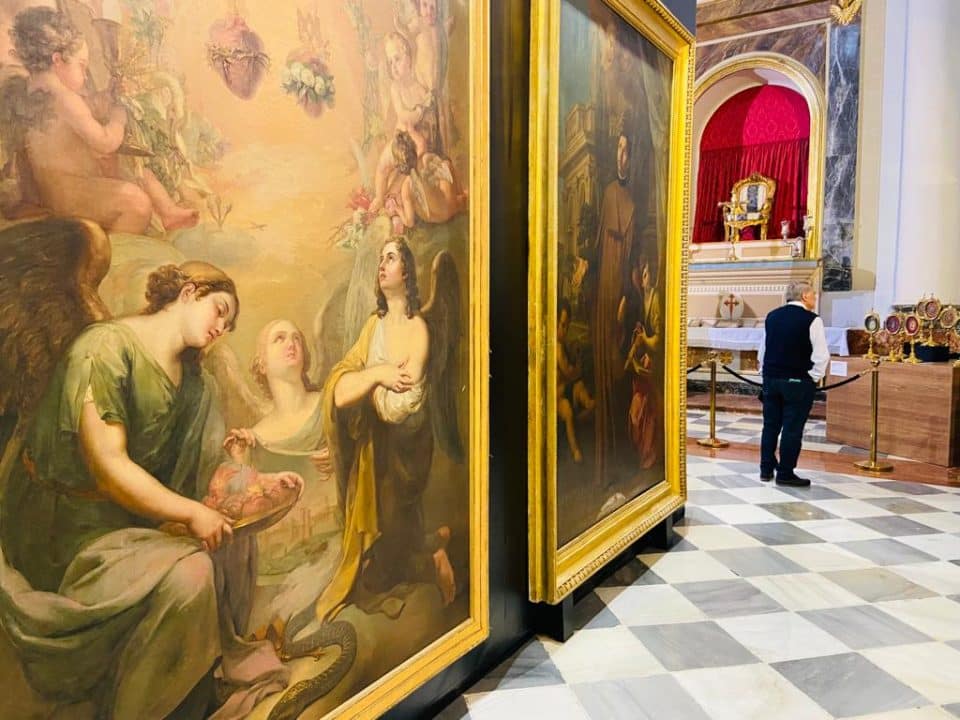
The Diocesan Museum of Sacred Art, housed in the Episcopal Palace, has welcomed 6,740 visitors in the first half of the year. Orihuela Cathedral received 10,479 visitors, while the Chapel of Loreto recorded 5,233. Together, the three sites attracted 22,452 visitors, compared with 13,291 during the same period last year.
Temporary exhibitions have also proved a major draw. The exhibition of the cathedral bells before their return to the bell tower attracted 31,409 visitors, while the José Soler Cardona exhibition brought in 5,972. The display of Salzillo’s Christ of the Agony, shown before this year’s procession and featuring Mary Magdalene, received 1,916 visitors.
The Miguel Hernández House Museum has also continued to attract strong interest. In the first half of the year, it recorded 23,953 visits, with February being the busiest month. Visitors included people from across Spain, the Valencian Community, the European Union and beyond.
The museum allows the public to visit the modest home where the poet lived with his family, including the bedroom, kitchen, patio, goat shed and orchard, where the famous fig tree that inspired some of his poetry still stands.
Its programme has included exhibitions such as Indómito, by Fernando Somé, and Vida, Amor y Muerte: una elegía a Miguel Hernández, by Spanish-Chilean author Maite Barros, which remains open until September.
The museum has also hosted cultural activities including At Miguel’s House With…, bringing authors from Madrid, Valencia, Murcia and Granada to present their work in the courtyard. Its summer night programme began on June 26 with an event dedicated to Hernández’s first poetry collection, Perito en Lunas, featuring astronomical observation, children’s workshops, film screenings and, for the first time, an overnight camping experience for a small group of children.
Museum director Tomás Serna says the site benefits from events such as the Medieval Market, the start of the Poet’s Trail and Museum Night, as well as educational interest in Miguel Hernández, especially when the poet appears in university entrance exam material in nearby regions such as Murcia.
He also points to the museum’s international appeal, noting that some visitors from countries such as Mexico, Argentina and Chile include the Miguel Hernández House Museum in Orihuela as part of wider European cultural trips, alongside landmarks such as the Prado Museum or the Eiffel Tower.
For critics, that level of interest raises an obvious question: at a time when Orihuela is trying to strengthen its cultural tourism offer, should its museums really be closing their doors during summer afternoons and Sundays?