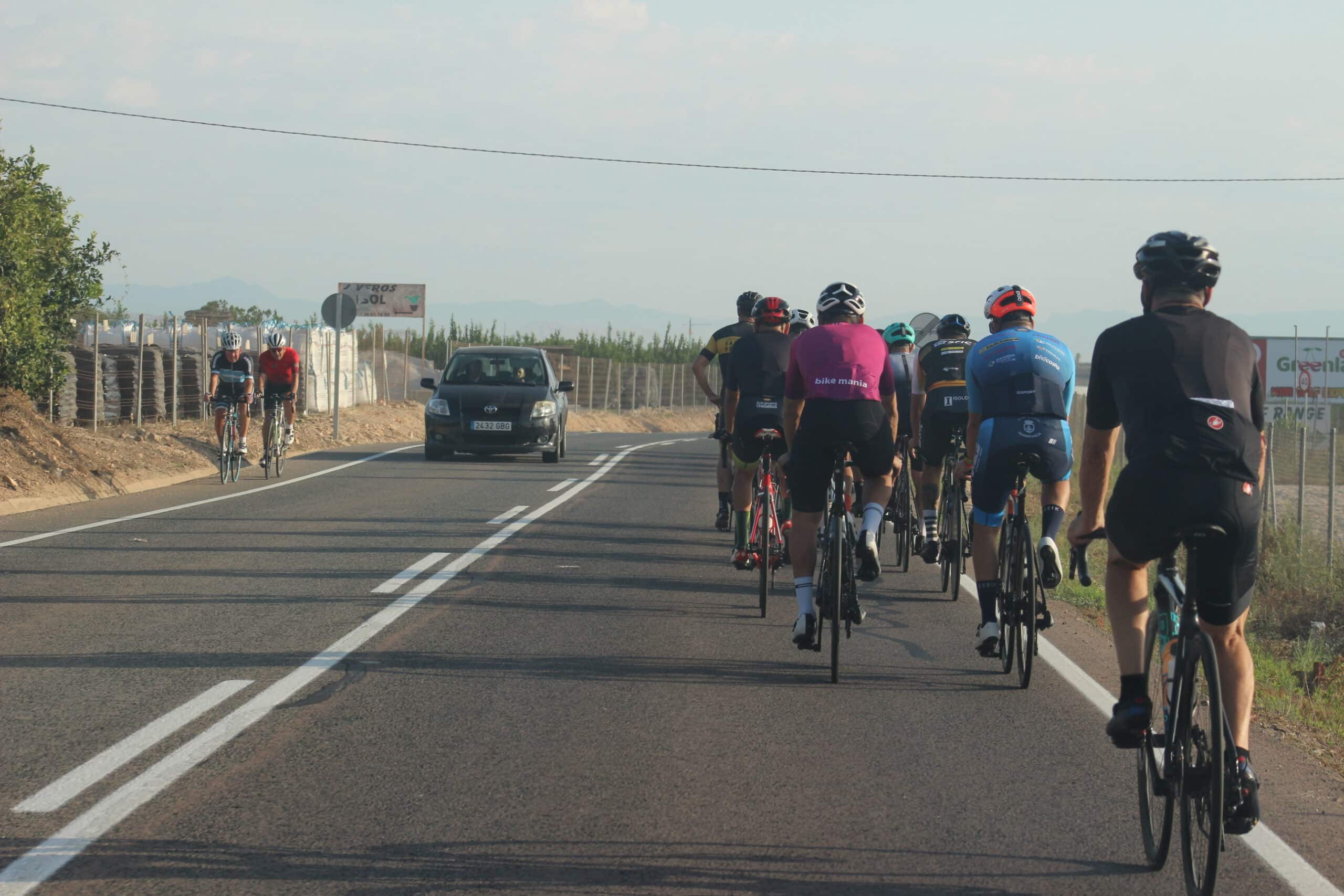
Using a mobile phone, ignoring traffic lights, riding without mandatory lights and failing to signal manoeuvres are among the offences that can result in substantial penalties.
Cyclists in Spain are being reminded that they are subject to many of the same basic traffic laws as motorists, with fines ranging from €80 to as much as €1,000 for the most serious offences.
Although no licence is required to ride a bicycle, cyclists must comply with regulations enforced by Spain’s Directorate-General for Traffic, the DGT. The rules cover everything from mobile phone use and alcohol consumption to lighting, helmets, passenger transport and road positioning.
The regulations vary depending on whether cyclists are travelling in urban areas or on open roads, but their central purpose is to protect riders, pedestrians and other road users.
Mobile Phones and Headphones
Using a handheld mobile phone while cycling is prohibited and can result in a €200 fine.
Cyclists are also banned from wearing headphones or earphones connected to music players, radios or other audio devices. According to the DGT, these can reduce awareness of surrounding traffic and create a serious distraction.
Alcohol Limits Apply to Cyclists
The legal alcohol limits that apply to motorists also apply to cyclists.
The maximum permitted level is generally 0.5 grams of alcohol per litre of blood, or 0.25 milligrams per litre of exhaled air. Cyclists must take a breathalyser test when instructed to do so by police.
A positive test can lead to a fine of between €500 and €1,000, depending on the level recorded and whether the cyclist has committed previous alcohol-related offences.
Carrying Children on a Bicycle
Cyclists may carry a child aged seven or younger, but only when the rider is an adult and the bicycle is fitted with an approved additional seat.
Transporting a child incorrectly can result in a €100 fine.
Lights, Reflective Clothing and Helmets
Bicycles must be fitted with front and rear lights when being ridden at night, through tunnels or in underpasses. Cyclists who fail to use the required lighting can be fined €200.
When lights are compulsory, riders must also wear reflective clothing that allows them to be seen by motorists from at least 150 metres away. Failure to wear reflective equipment can result in an €80 fine.
Helmet requirements depend on the location and the cyclist’s age.
In urban areas, helmets are compulsory for riders under the age of 16 and strongly recommended for everyone else. On open roads, helmets are mandatory for all cyclists, apart from limited exceptions such as prolonged climbs, accredited medical reasons or extreme heat.
Failure to wear a helmet when legally required can lead to a €200 penalty.
Pavements and Pedestrian Crossings
Cycling on pavements is generally prohibited unless the area has been specifically designated as a shared pedestrian and cycle route. Riders who use an ordinary pavement can face a fine of up to €100.
Cyclists must also dismount before using a pedestrian crossing. Riding across instead of walking the bicycle can result in a €200 fine.
Cyclists are required to give way to pedestrians at marked crossings and when turning into a road that pedestrians are already crossing, even where no formal crossing is present. Failure to respect pedestrian priority can also be punished with a €200 fine.
Rules for Cycling in Towns and Cities
In urban areas, cyclists should ride as close as reasonably possible to the right-hand side of the road while maintaining a safe distance from the kerb and parked vehicles.
Groups may ride two abreast where conditions allow, but cyclists must avoid forming disorganised groups that obstruct traffic. Riding in an unsafe or disorderly group can lead to a €100 fine.
Local councils may impose additional rules governing cycle lanes, pedestrianised areas and shared spaces, meaning cyclists should also check the regulations in the municipality where they are riding.
Rules on Open Roads
On interurban roads, cyclists must use the hard shoulder on the right-hand side where one is available and suitable.
They may leave the hard shoulder during prolonged descents or where safety conditions justify doing so. Riding unnecessarily on the main carriageway when a usable hard shoulder is available can result in a €200 fine.
Cyclists may ride two abreast but must remain as far to the right as possible. They must form a single file on sections with poor visibility, including sharp bends, and whenever riding side by side could create a hazard.
Unsafe or disorganised group riding can carry a €100 penalty.
Joining Traffic and Signalling Manoeuvres
Before joining a road, cyclists must check that it is safe, ensure approaching vehicles are sufficiently far away and clearly signal their intention to move.
Entering traffic dangerously can result in a €200 fine.
Cyclists must also signal turns, lane changes and changes of direction. This is normally done by extending an arm horizontally or bending the opposite arm upwards at a right angle.
Failing to signal a manoeuvre correctly can lead to a €200 penalty.
Cyclists may also warn following traffic of sudden braking by moving one arm repeatedly up and down. Although this signal is not compulsory, it can help reduce the risk of a rear-end collision.
Traffic Lights and Road Signs
Traffic lights, stop signs, give-way signs and other road restrictions apply to cyclists as well as motorists.
Ignoring a traffic light can result in a substantial fine, depending on the seriousness of the offence and the danger caused. Failing to respect priority at a junction can carry a €200 penalty.
Cyclists do, however, have priority over motor vehicles when travelling on a cycle lane, using a marked cycle crossing or riding on a properly designated hard shoulder.
Groups of cyclists also benefit from specific priority rules at roundabouts and junctions. Once the first cyclist in a group has entered, the remaining riders are generally treated as a single unit and retain priority until the last cyclist has passed.
The DGT’s message is clear: bicycles may not require a driving licence, but cyclists remain road users with legal responsibilities. Ignorance of the rules is not a defence, and relatively common behaviour can result in fines running into hundreds of euros.