A tax inspector told the court that the Vega Baja vehicle inspection station spent €1.4 million on promotional diaries in 2005 at an “exorbitant” price in order to reduce its taxable profit and avoid paying nearly €500,000 in Corporate Tax and VAT.
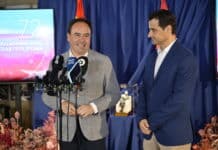
The statement came during the third session of the trial against Orihuela mayor José Vegara, who was joint CEO of the company, three other board members, and the representative of Oricofi, the firm that sold the advertising material. The defendants are being tried in Orihuela Criminal Court for alleged tax fraud and falsification of commercial documents.
According to the prosecution’s preliminary conclusions, each defendant faces a request for seven years in prison.
The case centres on the purchase of 100,000 promotional diaries, which the vehicle inspection station said were intended as gifts for customers. The company paid €17 for each diary, although the tax inspector said their real market price was less than €1.30.
The inspector told the court that this expense, recorded in the company’s 2005 accounts, allowed the firm to artificially increase its costs and reduce its declared profit. He said the aim was to lower the amount owed in Corporate Tax and VAT by about €488,000.
The €1.4 million spent on the diaries represented around a quarter of the company’s turnover that year and was even higher than its personnel costs.
The inspector described the price as “artificial,” “completely fictitious” and “exaggerated.” He said the transaction was real in the sense that the diaries were delivered, but not in the value assigned to them in the invoices.
“If the expense does not reflect reality, it cannot be deductible,” he told the court.
The investigation focused on three invoices linked to the diary purchase. The inspector said those invoices were relevant because they were included as expenses in the company’s 2005 accounts and affected both Corporate Tax and VAT.
He said the only purpose he could identify was to “claim more expenses” so the company would pay less tax. When asked whether he considered the expenses fictitious, he said yes, adding that the costs had been artificially inflated to reduce the company’s declared tax benefit.
The contract was between the Vega Baja vehicle inspection station, where Vegara and three other defendants were joint CEOs, and Oricofi, represented by the fourth defendant.
The inspector said the price immediately drew attention. He explained that the diaries were first bought for about €1.31 or €1.32 each. They then passed through several intermediary companies, rising first to €1.56 and then to €1.97.
He said those increases could be explained by normal profit margins. However, he considered the jump from under €2 to €17 per diary unjustified.
The witness said this represented an increase of around 5,000%.
The inspector appeared in court in place of the tax official who began the inspection proceedings in 2019 and has since died. The defence had previously tried, unsuccessfully, to prevent his testimony.
Under questioning from the prosecution and the State Attorney’s Office, the inspector said he stood by the offense report prepared by his colleague. However, he also said he had reviewed the file himself and corrected part of the tax calculation, removing items that should not have been included in the 2005 tax debt.
He insisted that he had not simply accepted the earlier report, but had checked whether its conclusions were supported by the documents in the case file.
The inspector said a company with annual turnover of about €6 million could not justify spending around a quarter of that amount on diaries whose original cost was just over one euro each, unless there was a real economic reason.
In his view, that was strong evidence of wrongdoing.
Defence lawyers questioned how the Tax Agency had concluded that €17 per diary was excessive. The inspector replied that the actual commercial chain already showed the real value of the diaries. He said it was not necessary to rely on general comparisons with other personalized planners because this case involved specific transactions between independent companies.
The inspector, who said he knew the vehicle inspection sector well, added that these businesses usually have high profit margins because they provide a regulated service through qualified staff, equipment and an administrative concession.
For that reason, he said it made no economic sense for the company to record such high third-party advertising expenses. He described the situation as “literally not possible.”
He also compared the cost of the diaries to the company’s wage bill, saying the advertising expense was similar to what the company spent on all staff salaries that year. In his opinion, that was unrealistic for the company’s structure and activity.
The inspector also referred to the movement of the money after the payments were made. He said some amounts were deposited into bank accounts and then quickly withdrawn in cash, while others were endorsed to a third company.
He was cautious in his explanation, because those transactions are not the central issue in the trial. However, he said the movements were relevant. He suggested that the money paid for the diaries may have been returned to people or companies linked to the vehicle inspection station.
He said the immediate cash withdrawals showed that the money did not remain in Oricofi, the company that billed the diaries at €17 each. In the case of the endorsed payments, he said the key issue was to determine where the funds eventually ended up, because that could show whether profits were transferred to third parties.
The inspector also highlighted the company’s audit report. He said the audit already included reservations about the accounts, which the Tax Agency considered a significant warning sign.
According to the inspector, auditors are generally close to the management of the companies they examine, so a qualified audit report is especially relevant. He said the audit firm, which continues to work with the company, had detected an anomaly involving a large amount of expenses, although it did not investigate further.
The trial, which had been postponed several times and was initially expected to last three sessions, will now run for five. The final hearing is scheduled for July 16, on the eve of Orihuela Day and during the city’s Reconquista and Moors and Christians festivities.
SEE ALSO:
Court Testimony Places Orihuela Mayor at the Center of Alleged ITV Tax-Fraud Decisions
https://theleader.info/2026/05/23/orihuela-mayor-denies-itv-role-as-tax-fraud-case-takes-shock-turn/