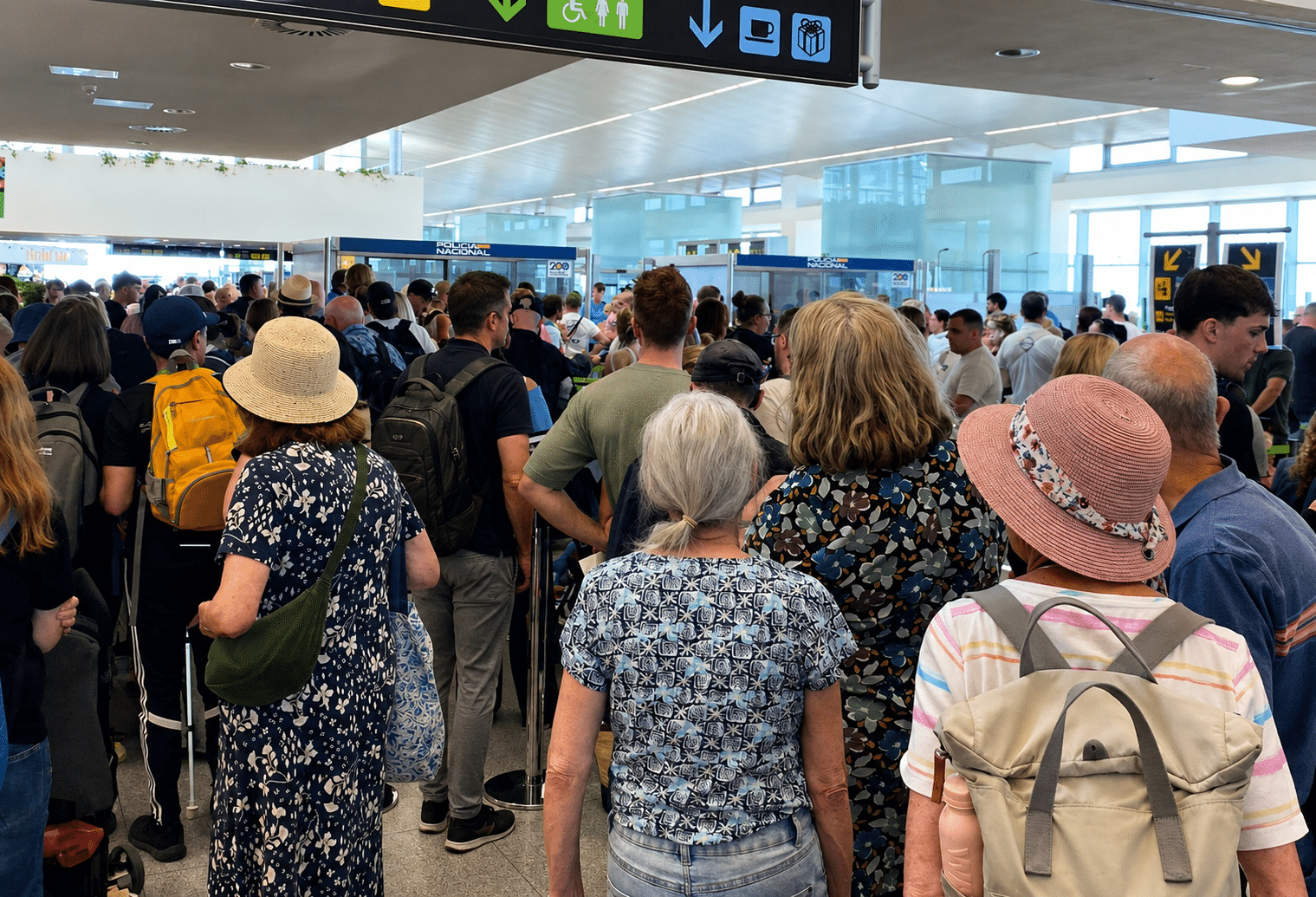
New EU border checks trigger long queues at key holiday airports, with Spain, Portugal and France among the worst affected
UK travellers flying between Europe and Britain are being warned to allow significantly more time at airports as new European border checks create longer queues and raise fears of missed flights.
Airlines and airport bodies say delays have intensified following the rollout of the European Union’s Entry Exit System, known as EES. The system requires non-EU travellers, including British passport holders, to register biometric information such as fingerprints when entering participating European countries. That data is then checked again when travellers leave, adding another layer to passport-control procedures.
Wizz Air has advised passengers returning from Europe to the UK to arrive at airports at least three hours before departure, instead of the usual two-hour guidance. The airline has also urged passengers with onward connections to leave a wider gap between flights, warning that some travellers have already missed return or connecting services because of unexpectedly long waits at border checkpoints.
The disruption has been uneven across Europe. Some airports have managed the transition with additional staff, self-service kiosks and smoother passenger flows. Others, particularly in popular holiday destinations, have faced serious congestion. Spain, Portugal and France have emerged as key pressure points, with passengers reporting lengthy queues both on arrival and departure.
Airport groups have warned that the problem could worsen as summer travel demand rises. A survey by Airports Council International Europe found that EES-related delays at some airports had reached as long as three and a half hours. The organisation has called for stronger border staffing and better technical support to reduce bottlenecks.
Greece has moved to ease pressure by effectively suspending biometric EES checks for British citizens during the peak holiday season, in an effort to prevent major disruption at busy tourist gateways.
The delays are already affecting passenger behaviour. A recent Booking.com survey found that a majority of UK holidaymakers planning European trips expect disruption linked to the new system. Many said they were worried about missing flights, while some planned to arrive as much as four hours before departure.
European Commission officials have maintained that the system is working effectively at most border points and that biometric registration usually takes around a minute per traveller. However, the Commission has also stressed that individual member states are responsible for ensuring enough staff and efficient implementation.
Portugal, where long waits have been reported, plans to deploy hundreds of additional border officers at airports from July.
For travellers heading to Europe this summer, the advice is clear: arrive early, allow extra time for passport control, leave generous gaps between connecting flights, and keep essential items such as water, chargers and travel documents within easy reach while queuing.