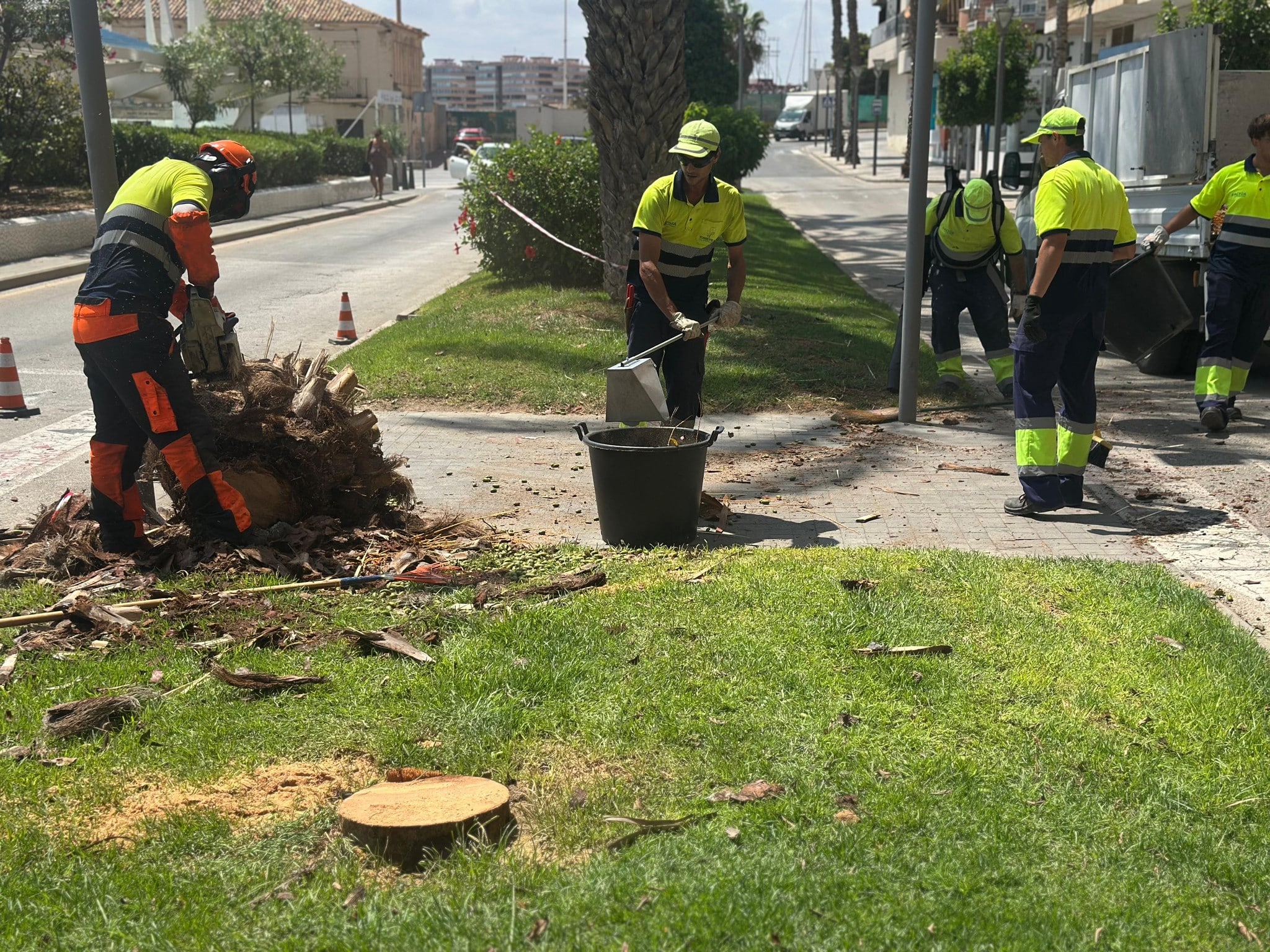
Torrevieja City Council has begun the felling and removal of 20 large palm trees from the Paseo Juan Aparicio after municipal technicians identified them as posing a potential structural risk.
The work started on Tuesday and is being carried out by Actúa, part of the Hozono Global Group, the company responsible for maintaining the town’s parks and gardens.
Councillor Concha Sala said the operation is focused on the most vulnerable specimens along the Paseo de las Rocas and is being carried out before Easter, when thousands of residents and visitors are expected to gather on the central seafront promenade. The remaining work will continue after the holiday period.
According to the council, the palm trees selected for removal are those considered most at risk of breaking or falling. The decision follows an emergency inspection of more than 5,500 municipal palm trees carried out after the fatal accident on 15 November 2025, when a falling palm trunk struck a vehicle on the CV-905, killing a young driver. The tree involved in that incident was found to be infested with red palm weevil.
During the subsequent review, only one additional palm affected by the pest was detected, also on the CV-905. However, technicians found that other trees showed structural weaknesses that could make them vulnerable in certain weather conditions, prompting the current intervention.
Sala also said the council does not plan to replace the removed palm trees, either with new palms or other species, as part of an effort to create more pedestrian space along the promenade.
Some of the date palms due to be removed have stood on the seafront for more than 50 years. Under the Valencian Community’s tree heritage law, trees of that age and height should be subject to special protection and maintenance, beyond the routine annual pruning of their crowns.
Over the past 25 years, following the remodelling of the promenade designed by architect Carme Pinós, more than 15 palm trees have already disappeared from the seafront without being replaced. Others, although municipally owned, have effectively become incorporated into the terrace areas of bars and restaurants, allowing outdoor seating to extend further along the promenade.
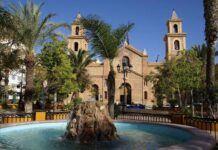
Palm trees have long been one of the most recognisable features of Torrevieja’s Paseo de las Rocas, also known as Paseo Juan Aparicio, and remain a traditional symbol of the town’s tourist image. Their removal highlights the growing tension between preserving that identity and expanding the seafront’s use as a pedestrian and hospitality space.