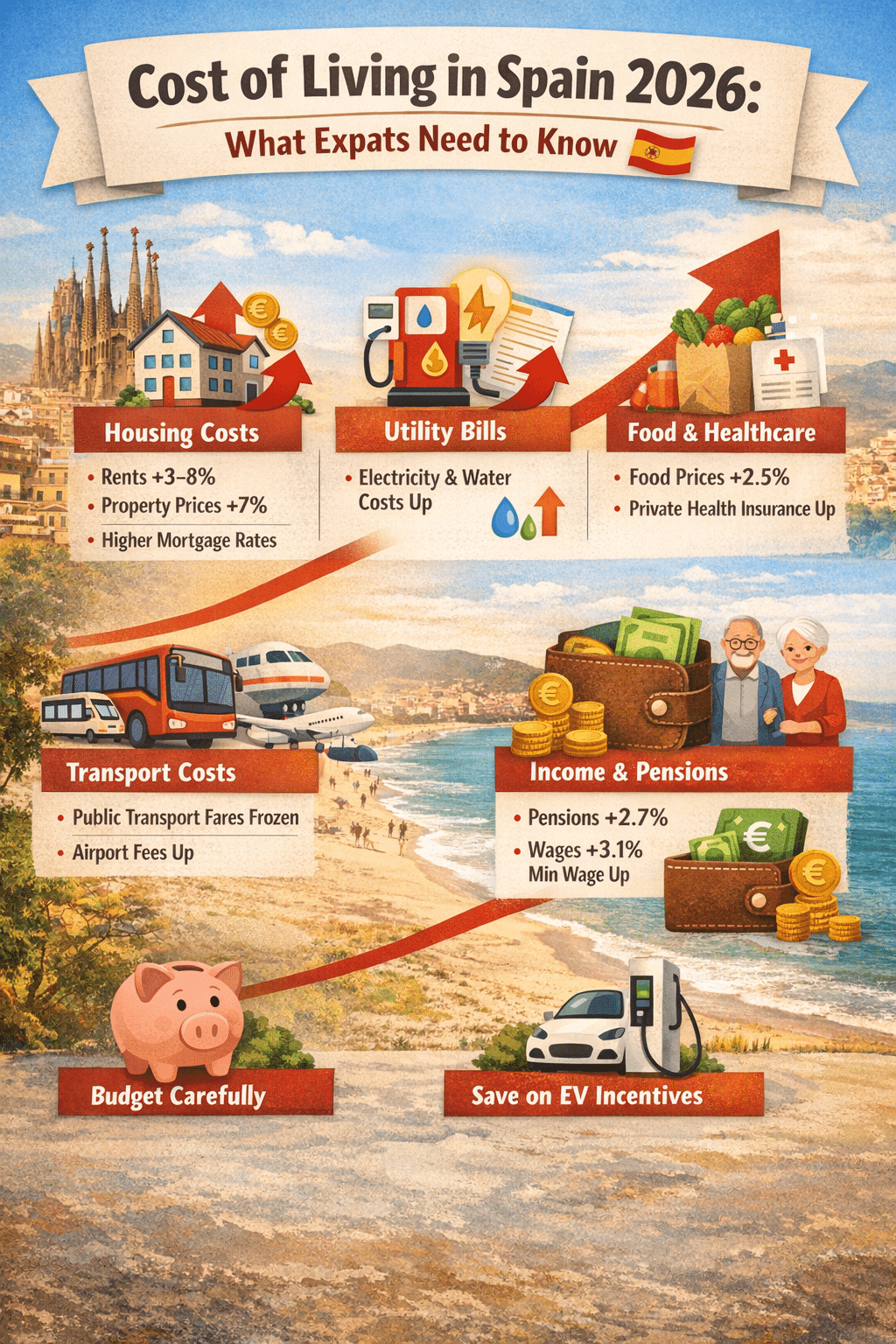
With 2026 now upon us, expats living in Spain are bracing for another year of rising costs. Housing remains the biggest challenge. Rental prices are expected to increase between three and eight percent, and leases signed during the post-pandemic period are set to expire, potentially adding more than €1,700 to annual rent bills.
For those looking to buy property, the market shows no signs of cooling. Purchase prices could rise by around seven percent, and mortgages are likely to become more expensive if tied to the Euribor, which has been steadily increasing. Expats in major cities like Madrid, Barcelona, and popular coastal areas will feel the pinch the most.
Utilities will also affect household budgets. Electricity bills may see a rise in the fixed portion of around 10.5%, along with new surcharges, although falling wholesale energy prices could lead to an overall reduction of five to ten percent. Water bills in big cities are increasing slightly, with Madrid seeing a three percent rise and Barcelona 2.9 percent. While these increases are moderate, expats should be prepared for slightly higher monthly costs.
Although unlikely to be felt by expats, public transport fares offer some relief, as they will remain frozen throughout 2026, with regional governments in Madrid, Valencia, Catalonia, and Andalucia continuing their support. However, airport fees are set to rise by 6.44 percent, and airlines are likely to pass this cost onto passengers, making air travel slightly more expensive.
The cost of living will continue to climb in other areas as well. Overall inflation is expected to reach 2.4 percent, with food prices increasing by 2.5 percent and unprocessed food rising over five percent. Private health insurance is also set for another round of price increases following a steep ten percent hike in 2025, a factor expats relying on private coverage should carefully consider.
On the income side, public pensions will increase by 2.7 percent, with minimum pensions rising between 7 and 11.4 percent depending on dependents. The minimum wage is projected to rise by at least 3.1 percent, while civil servants may see a 1.5 to 2 percent increase. Social Security contributions will also increase slightly, which may offset some of the income gains for those contributing locally.
In terms of taxes and incentives, deductions for electric vehicles and charging points will continue, offering some savings for those considering greener transportation options, however, they will be offset in the many local municipalities that have raised rubbish collection fees, with some charges almost trebling in parts of the Southern Costa Blanca.
Overall, 2026 will bring higher costs across most areas of life in Spain, from housing and utilities to food and healthcare. For expats, careful budgeting will be essential, especially for renters, homeowners, and those relying on private health insurance.
The good news is that commuting costs remain stable, and pension and wage adjustments offer some financial relief, helping to offset the overall increase in living expenses.