
Alicante — The Alicante City Council has openly accused the Spanish central government of turning a blind eye to the ongoing “top manta” problem, the practice of illegal street vending, often involving counterfeit goods, in order to avoid fuelling political controversy over immigration.
Municipal spokesperson Cristina Cutanda said the government’s inaction amounts to a “deliberate oversight” and claimed that, despite measures announced by the council itself, the problem remains entrenched along many of the Costa Blanca’s Alicante’s busy seafronts during the peak tourist season.
Frustration After Major Police Operation
The criticism comes just weeks after a large-scale police operation on 31 July in Alicante, which saw around fifty officers from the National Police, Local Police, and Port Police arrest six people and seize 700 counterfeit items. The operation was intended to curb the influx of unlicensed vendors in Alicante’s most crowded tourist areas during August evenings.
However, despite this intervention, the street vendors have quickly returned, much to the frustration of groups such as the Alicante Federation of Commerce (Facpyme), which has repeatedly called for increased and sustained policing.
Cutanda accused the Ministry of Transport, led by Óscar Puente, of softening enforcement due to “political tactics” and urged the government to resume full-scale joint operations between the Local Police and the Port Police.
Council’s Own Initiative Still Pending
On 22 July, the Alicante Council announced plans to formalise an agreement with the Port Police to intensify seafront surveillance. While a joint operation did follow nine days later, the promised agreement remains unsigned, despite initial expectations it would be approved at this week’s Government Board meeting.
The City Council now says the signing is “being finalized” and has called for a Local Security Board meeting with the Government Subdelegation to improve coordination.
Cutanda insists that failing to act for “political convenience” is unacceptable:
“It is causing headaches for Pedro Sánchez’s administration, but our city cannot be left to face the consequences alone.”
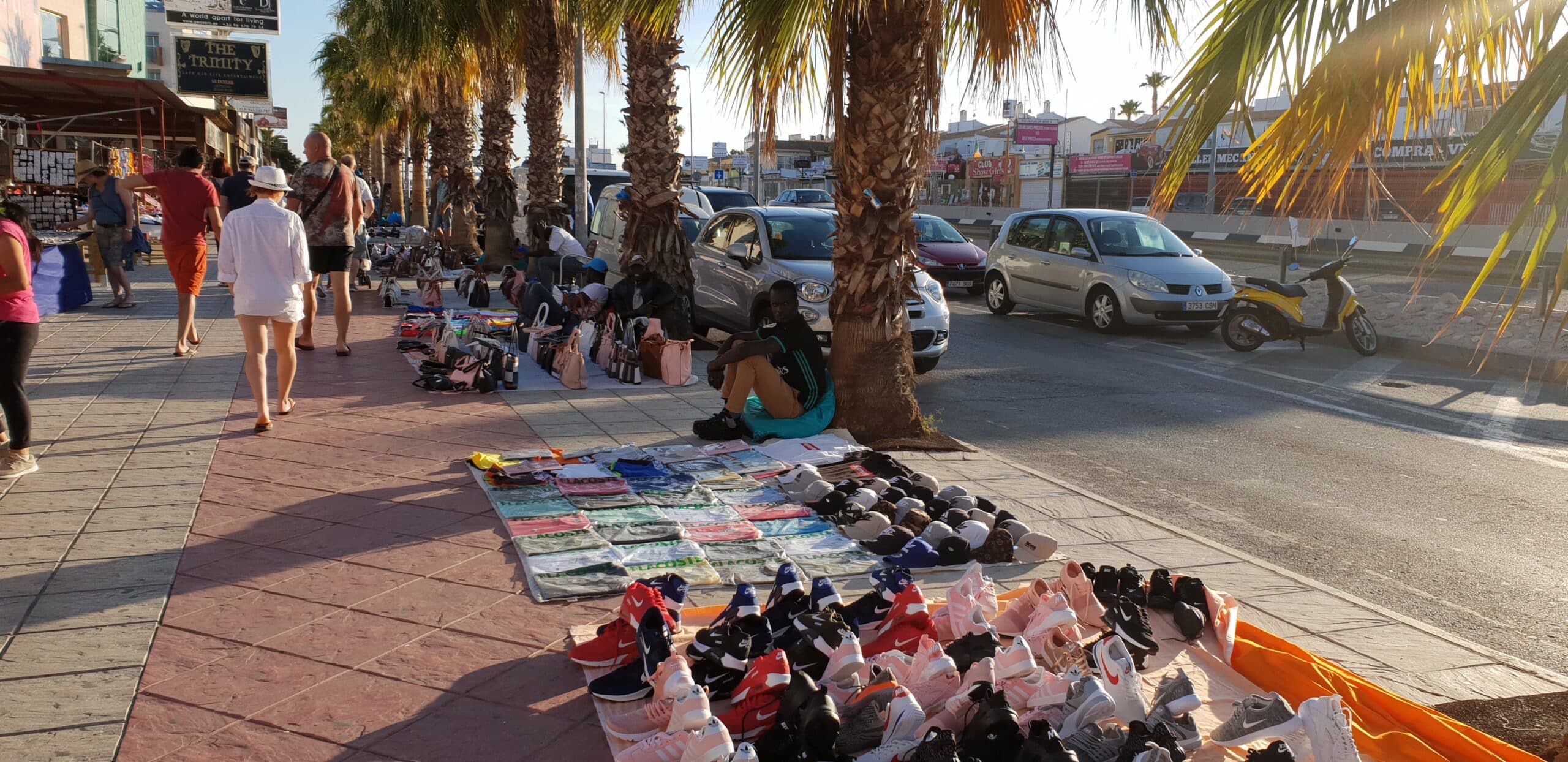
Broader Coastal Struggle — Torrevieja and Orihuela Costa
The challenge is not unique to Alicante. Torrevieja and Orihuela Costa, two other major coastal tourism hubs in Alicante province, have faced similar struggles for years.
In Torrevieja, the Paseo Marítimo and marina areas are frequently occupied by unlicensed vendors selling handbags, sunglasses, and counterfeit sportswear. Despite repeated summer crackdowns, vendors often return within hours of police sweeps, taking advantage of the high tourist footfall and the relatively low legal consequences for the offense.
Orihuela Costa — particularly its popular La Zenia beach and Cabo Roig strip — also sees regular confrontations between vendors and police. Local business owners have complained that legitimate shops cannot compete with the prices of illegal goods sold on towels or blankets spread across pedestrian promenades.
Some say the problem worsens during August, when staffing shortages in enforcement coincide with the busiest tourism weeks.
All of the cities have increased Local Police patrols in tourist zones, but in Alicante, officials acknowledge that without sustained coordination with the National Police and Port Authorities, the problem simply moves from one coastal municipality to another.
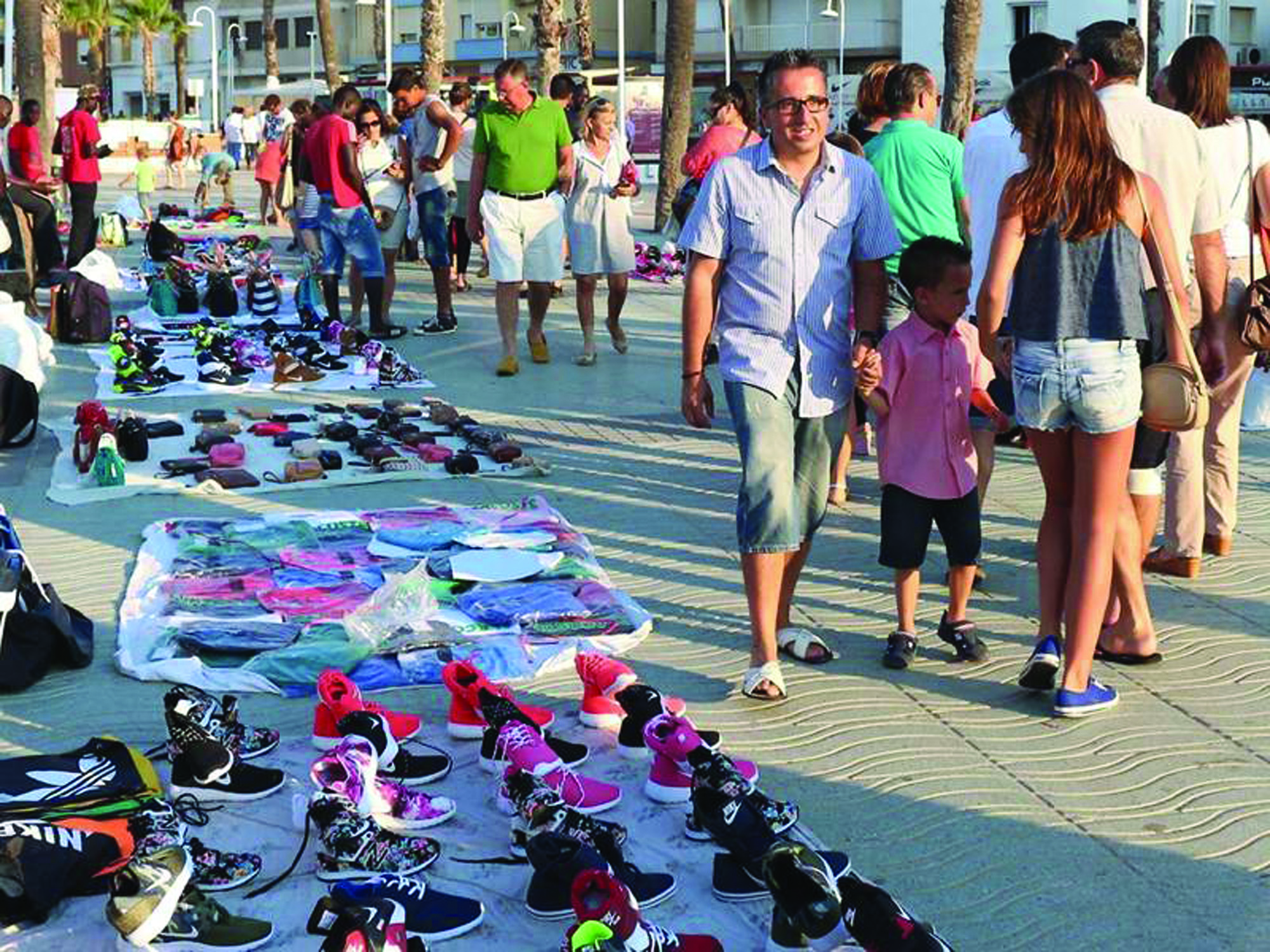
Limited Impact of Current Measures
While Alicante’s Fox Unit carried out 120 interventions against illegal vendors along the coastline and at Playa de San Juan in July, the persistence of “top manta” stalls suggests enforcement alone is not yet sufficient.
Local councils up and down the Costa Blanca are now watching closely to see whether the central government will commit more resources and sustained coordination — or whether, as Alicante claims, political considerations will continue to overshadow the problem.