The City Council will report the alleged breach of closure and sealing orders to the court. The market has operated without a license for three decades.
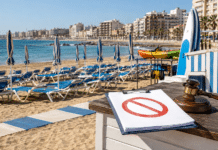
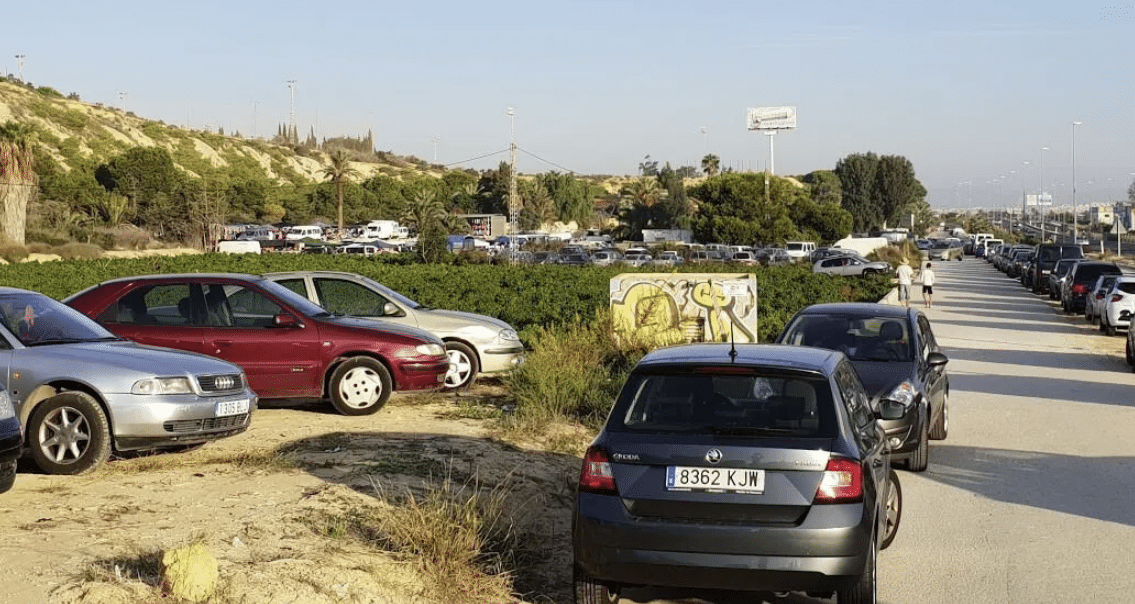
The market next to the N-332 in Guardamar del Segura, known as El Fogón de Guardamar, reopened its doors on Sunday despite a municipal order mandating its closure. The reopening occurred after the seals placed by the Local Police were broken.
Mayor José Luis Sáez (PSOE) confirmed that the City Council will now submit a report to the courts regarding the promoters’ alleged decision to resume activity in defiance of the closure and sealing orders. “That is the procedure the Council will follow,” Sáez stated.
For now, local authorities have ruled out deploying the Local Police next Sunday to prevent the market from operating again. “Under no circumstances do we want to provoke conflict or violence,” the mayor said. On Monday, police officers returned to the site to replace the seals although they too were removed during the following hours.
Three Decades Without a License
The Guardamar City Council ordered the closure of the popular El Fogón market, located alongside the N-332 opposite the Santa Ana industrial estate, after determining that the site had been operating without the required municipal license for around 30 years.
According to Mayor Sáez, the municipality has spent “many years” urging the market’s management to legalize the activity, which took place every Sunday. “There has been no way to achieve it,” he explained. The owners submitted incomplete documentation, preventing the licensing process from being finalized.
After all administrative deadlines were exhausted, the City Council issued a closure order two months ago. Initially, the company complied, but later reopened, submitting new documentation that municipal technicians ruled could not be accepted since the administrative file was already concluded.
Following this, the Local Police sealed the premises, a measure that had been effective for the past two weeks. However, by Saturday, most seals had been removed, and preparations were underway for reopening. The 20,000-square-meter site, which accommodates dozens of stalls and several terrace restaurants, resumed operations on Sunday despite the municipal prohibition.
SEE ALSO: Authorities shut down popular Guardamar market after 30 years
Possible Legal Action
Mayor Sáez noted that the company could seek precautionary measures from the courts to temporarily suspend the closure order and reopen the file. However, as of now, the City Council has received no notice of such a request.
“We have resealed the premises, but we are not going to create conflict or deploy officers at the entrances to stop people from opening. The court will decide,” Sáez emphasized.
A Popular but Controversial Market
El Fogón has long been one of the best-known Sunday markets in the Vega Baja region, attracting residents and foreign visitors alike. It was among the first in the area to adopt the Sunday trading model, a tradition maintained by other popular markets such as El Zoco in Algorfa and Campo de Guardamar.
Vendors offered a wide variety of goods—ranging from antiques and second-hand clothing to tools and miscellaneous products—often at low prices. However, some controversy has surrounded the market over the years, with law enforcement sources noting the sale of goods of “unclear origin.”
The market’s popularity also created frequent traffic congestion along the N-332, with vehicles parked along the roadside and pedestrians crossing continuously. These problems eased somewhat after a new roundabout was constructed to serve a future residential and commercial development—an infrastructure project from which the market has indirectly benefited.
Urban and Legal Context
The closure order is linked to the classification of the land, which is designated as developable and subject to future urban planning. “That classification does not permit this type of market activity,” Sáez explained.
He added that the market’s promoter, who also owns the land, was offered the possibility of applying for a temporary license “if an agreement could be reached with the urban development agent.” The affected sector, known as Z0-Oliverón, covers more than 500,000 square meters and includes plans for 2,365 homes and several commercial areas adjacent to the N-332.
Part of a Broader Legalization Effort
Mayor Sáez emphasized that the action against El Fogón is part of a decade-long campaign to regularize local economic activities lacking proper authorization. He recalled the closure of the Moncayo market last year “because there was no way to legalize it, either through a special plan or any DIC (Declaration of Community Interest).”
A similar situation exists with the Campo de Guardamar market, which remains open under court-granted precautionary measures pending approval of a special urban plan—although the proposed site overlaps with the Natural Park.
Sáez also cited positive examples, such as the legalization of a major animal feed factory that regularized its operations and financed the construction of a roundabout connecting Campo de Guardamar to the CV-905.
“The City Council has taken action with all companies and activities that have not yet been regularized,” the mayor concluded.