More than 500 guests attended the seventh Economy Night, where Grupo Doalco founder Domingo Alcocer received the Juan Cerdán Honorary Award.
Orihuela’s Chamber of Commerce celebrated the achievements of local businesses on Thursday, 1 October, at a gala marking its 125th anniversary.
Held in the cloisters of the former university at Santo Domingo Diocesan College, the seventh annual Economy Night brought together more than 500 guests from business, government and public life.
Journalist Ana Carrillo hosted the evening, which opened with a performance by a string quartet. Guests included José Antonio Rovira, the Valencian regional minister for Economy, Finance and Public Administration; José Vicente Morata, president of the regional Council of Chambers of Commerce; mayors and councillors from across the Vega Baja; and representatives of provincial, regional and national administrations. Civil, religious and military authorities also attended alongside local business leaders.
Welcoming guests, Chamber president Mario Martínez thanked the presidents, board members and staff who had served the institution throughout its 125-year history, before congratulating the award winners.
He also used the occasion to call for greater unity among the Vega Baja’s municipalities, urging them to work together to ensure the area’s voice is heard clearly in Valencia and Madrid.
Economy Night, he said, was an opportunity to recognise the area’s contribution while addressing the investment and support it still needs.
Martínez highlighted the close connections between the Vega Baja’s 27 municipalities, which together have almost half a million residents, with numbers rising further during holiday periods.
“No municipality is an island,” he said, explaining that developments on the coast affect inland communities, while agriculture, tourism, transport, commerce and industry are all interdependent.
He renewed calls for better roads, healthcare and education, arguing that stronger public services and infrastructure would help attract talent and support continued growth.
Martínez pointed to the regional coordination forum established after the devastating floods of 2019 as a means for local councils and the Valencian government to work together. He also proposed a Vega Baja office in Valencia to coordinate meetings for mayors and councillors, keep the area informed about regional decisions and champion its interests.
The awards recognised achievement across a range of sectors. Antonino Fabregat accepted the Internationalisation Award for Central Hisúmer, while Antonio Martínez Murcia received the Technological Innovation Award for Genetic PCR Solutions.
Francisco Martínez collected the Commerce Award for Caliente 1986, and Pablo Serna accepted the Business Achievement Award for TM Grupo Inmobiliario. Antonio Pedrera received the Sustainable Tourism Development Award on behalf of Las Ramblas Golf.
The evening’s Juan Cerdán Honorary Award went to Domingo Alcocer, president and founder of Grupo Doalco, in recognition of his long business career in Orihuela and the wider Vega Baja.
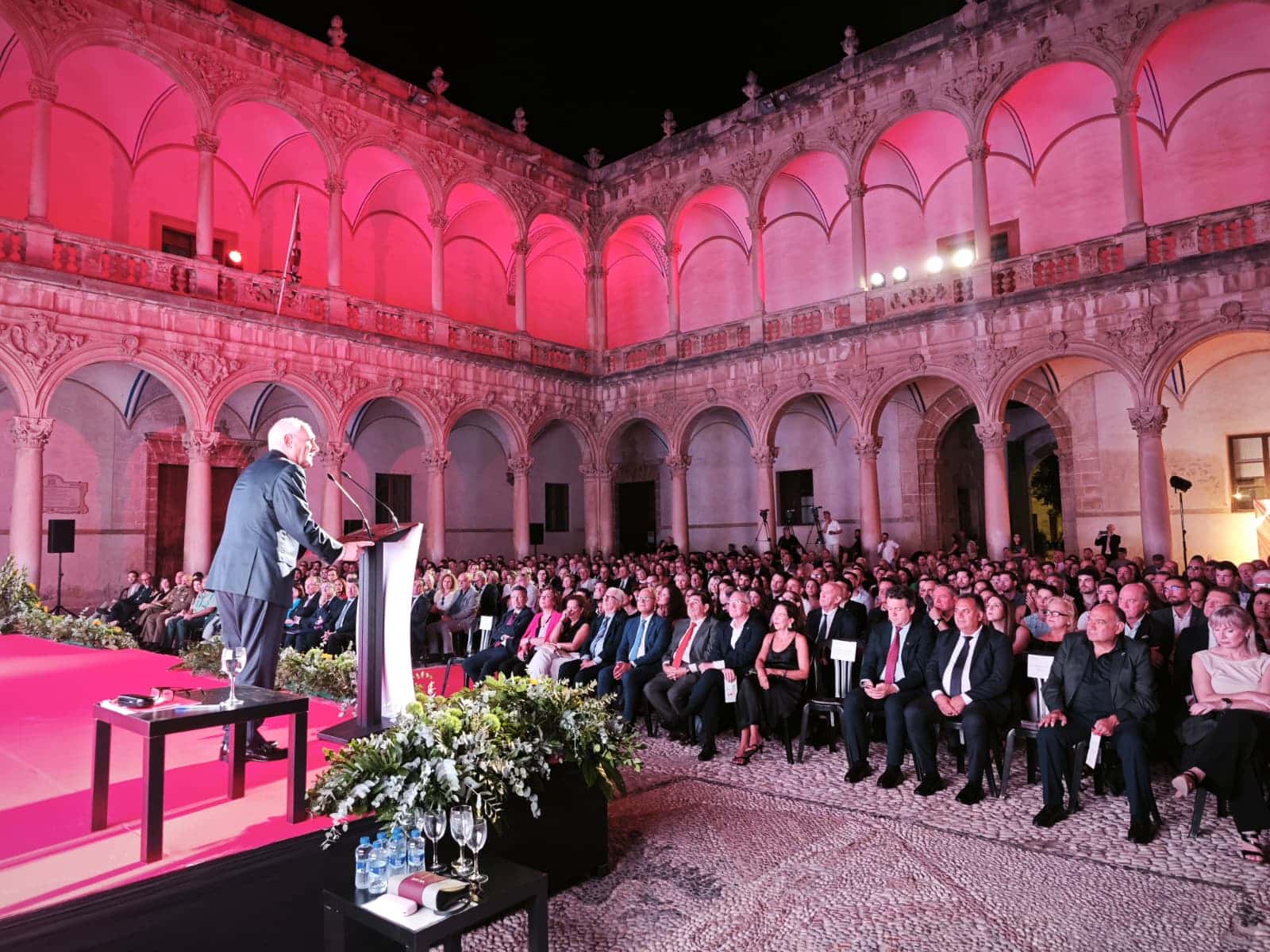
Accepting the honour, Alcocer thanked the Chamber, his family and Doalco’s employees. He also warned of a shortage of skilled tradespeople and called for vocational education to place greater emphasis on practical training.
Using the historic cloisters as an example, he questioned who would undertake their restoration in the future if traditional skills such as stonemasonry continued to decline.
Alcocer said the lack of younger workers entering established trades was affecting many sectors, particularly construction.
Addressing the gala, Rovira highlighted the Valencian government’s tax changes and efforts to simplify administrative procedures, describing them as measures designed to support business activity.
He said the region had moved from being among Spain’s most heavily taxed autonomous communities in May 2023 to offering the country’s highest number of personal income tax deductions. Higher income thresholds, he added, had extended access to those deductions to more middle-income households.
Rovira also highlighted measures intended to support the continuity of family businesses and the Generalitat’s Plan Simplifica programme.
The programme, he said, had reduced administrative burdens, removed duplication and coordinated procedures, allowing businesses to devote more time to production, sales, innovation and growth.
He concluded by praising chambers of commerce for their close relationships with businesses and their understanding of the challenges, needs and opportunities companies face.